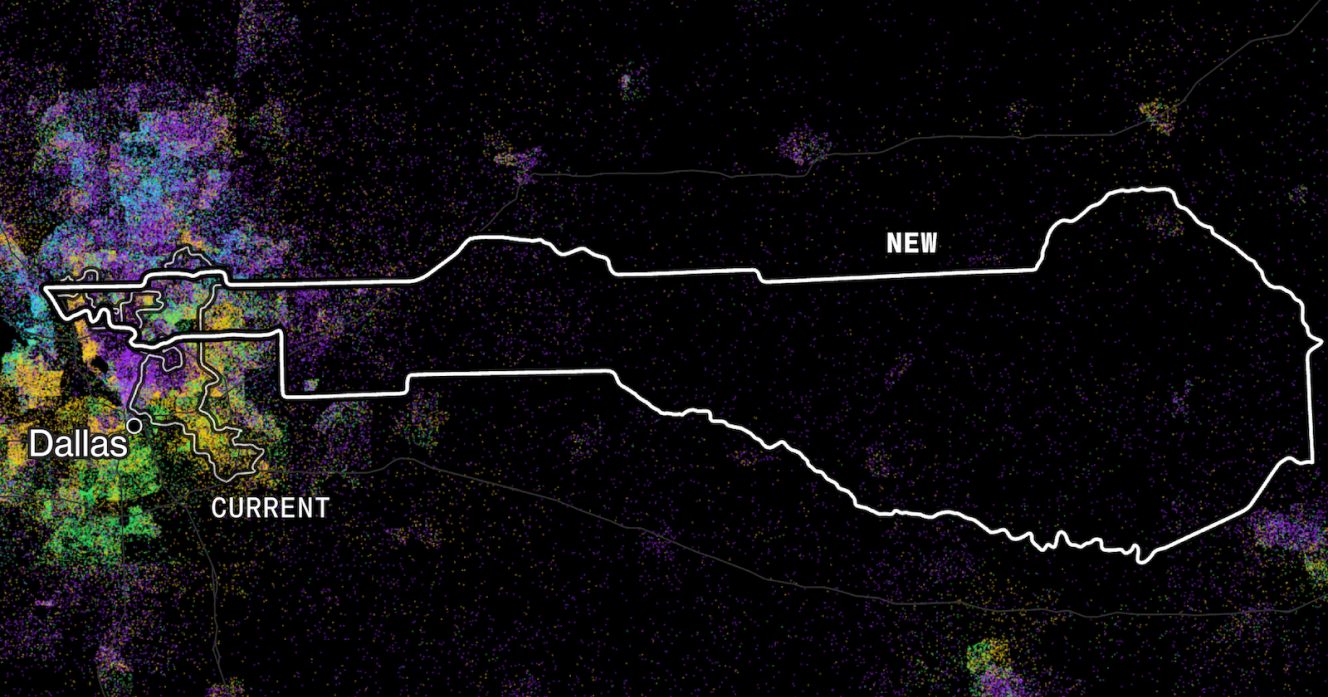
A federal judicial panel in Texas is reviewing the state's newly drawn congressional map, which is being challenged for allegedly diluting minority voting power and is projected to secure up to five additional Republican House seats. This mid-decade redistricting battle is pivotal as its outcome could determine control of the U.S. House after the 2026 midterms, thereby influencing legislative priorities and policy stability. The Texas case also underscores broader, ongoing national redistricting efforts that introduce uncertainty into the future partisan composition of Congress, despite expert warnings about the unpredictable nature of voter behavior.
A federal court case in Texas over congressional redistricting introduces significant political and policy uncertainty ahead of the 2026 midterm elections. The legal challenge centers on whether a new map, which could deliver Republicans up to five additional House seats, unlawfully dilutes minority voting power in violation of the Voting Rights Act. While Republicans defend the map as a purely partisan exercise, which is legally permissible, plaintiffs argue it constitutes impermissible racial gerrymandering. The state's shifting rationale for the redistricting—from addressing DOJ constitutional concerns to now asserting a purely partisan motive—could weaken its legal defense. This specific case is a microcosm of a broader national trend of mid-decade redistricting efforts, amplifying uncertainty over the future partisan composition of Congress. While the immediate market impact is moderate, the outcome will be a critical determinant of legislative control, with profound implications for policy stability, regulatory environments, and federal spending priorities. Investors should note that election experts cited in the article caution that even precisely drawn maps do not guarantee electoral outcomes, as voter behavior can be unpredictable.
AI-powered research, real-time alerts, and portfolio analytics for institutional investors.
Request DemoOverall Sentiment
moderately negative
Sentiment Score
-0.35
