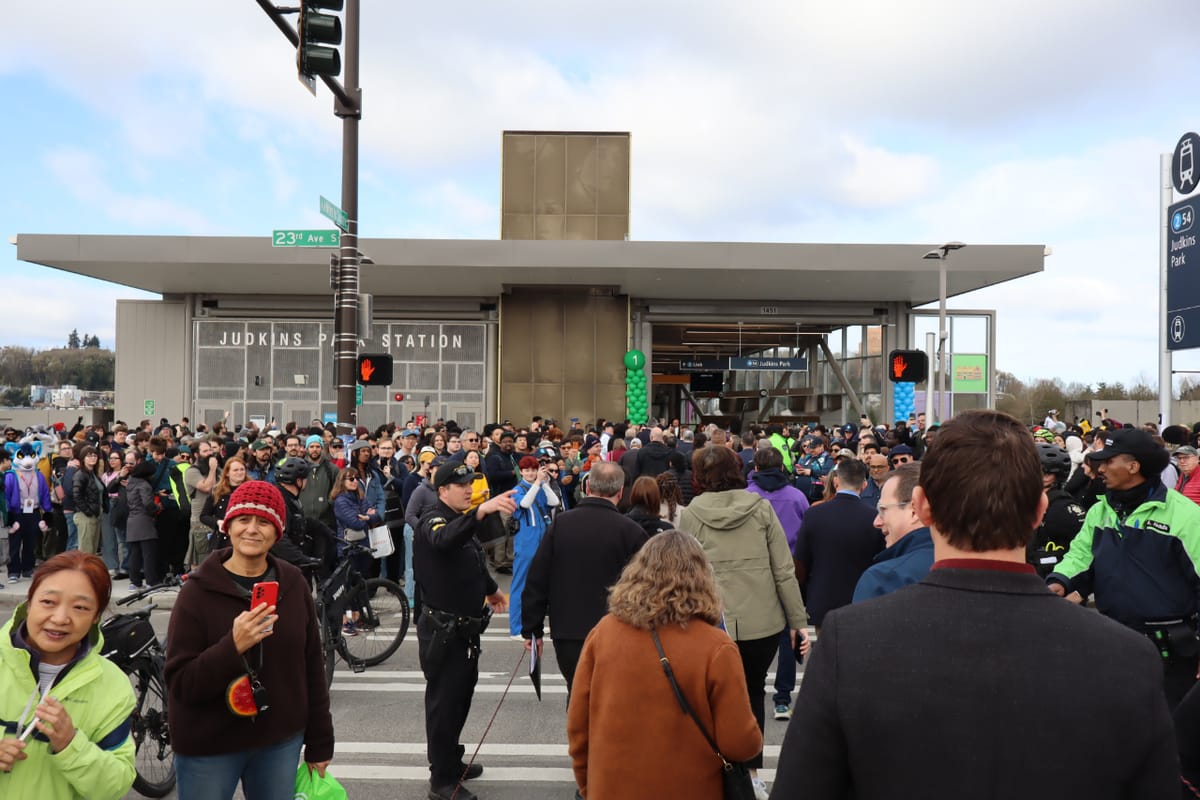
205,000 riders used Sound Transit's light rail on the first full day of 2 Line service, the second-highest day in agency history. Opening weekend was largely incident-free, but capacity constraints persist with 2–3 car trains on the 2 Line versus four-car trains on the 1 Line; 10 additional Siemens cars are due by early 2028. Operations saw a separate early-week delay that pushed headways to ~20 minutes for half a day, Pinehurst single-tracking continues through Friday, and the board is weighing project deferrals to address a $34.5 billion projected shortfall through 2046.
The opening-created demand shock has immediate operational consequences beyond headline usage: constrained vehicle availability creates a cascade of higher short-run maintenance, overtime, and spare-parts expenditure that is likely to compress operating margins for the agency and create urgent aftermarket revenue opportunities for OEMs and local contractors. Because fleet shortfalls are a function of both car delivery cadence and shop capacity, a supplier that can promise accelerated deliveries or turnkey maintenance will capture outsized incremental margin versus one-off car sales.
On the financing side, political capital from visible public enthusiasm changes the leverage equation for bond-sellers and project prioritization — it makes politically palatable revenue measures (e.g., targeted levies, TOD value capture, bond measures) easier to sell but simultaneously raises the reputational cost of near-term service failures. That tension will force pragmatic tradeoffs: defer lower-return capital (surface parking, ancillary projects) while protecting high-visibility service improvements, which benefits firms exposed to maintenance, signaling, and systems-integration work but hurts low-margin parking contractors and certain private parking operators.
Near-term catalysts that will change the market narrative are operational reliability metrics, short-term fleet reconfiguration plans, and the board’s budgeting votes; any publicized safety incident or multi-day headway collapse would materially reverse sentiment. Monitor OEM delivery updates and workshop throughput data as leading indicators of whether demand is structurally sticky (supports durable capex and recurring aftermarket revenues) or merely event-driven (a temporary PR spike that fades).
AI-powered research, real-time alerts, and portfolio analytics for institutional investors.
Request DemoOverall Sentiment
mildly positive
Sentiment Score
0.30
