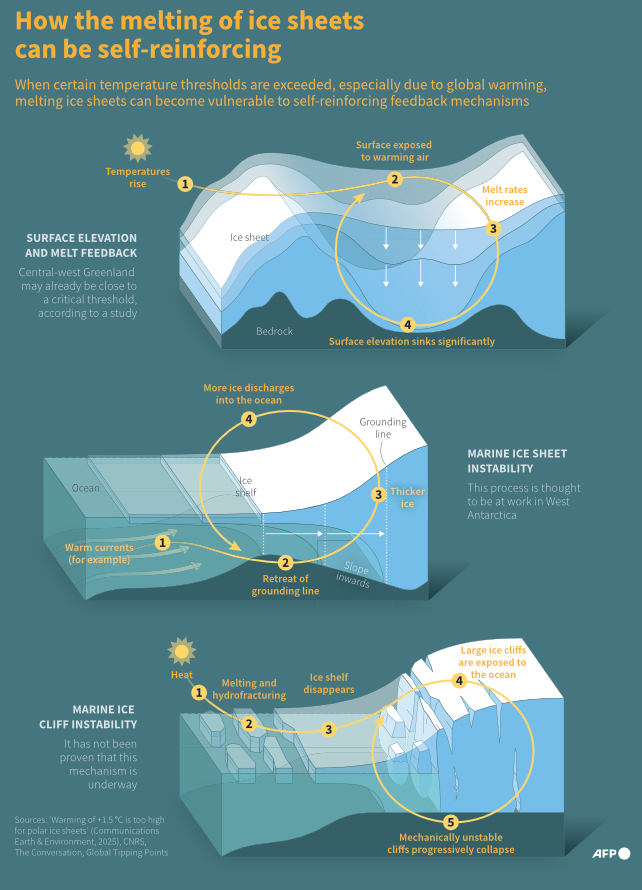
A new study indicates that even if global warming is capped at 1.5°C, sea levels are projected to rise at rates difficult to adapt to, potentially reaching one centimeter per year by 2100. The research highlights the accelerated melting of ice sheets in Greenland and West Antarctica, which have quadrupled in the last three decades, surpassing mountain glacier runoff. Scientists suggest that to manage sea level rise, long-term temperature goals need to be closer to +1°C or lower, as current trajectories are likely to lead to higher sea level rise than previously projected by the IPCC.
The study underscores a significant acceleration in global sea-level rise, with the pace having doubled in three decades and projected to double again by 2100 to approximately one centimeter per year, even if the ambitious 1.5°C global warming target is met. This presents substantial long-term economic risks, exemplified by potential annual flood damages of $1 trillion by 2050 in 136 major coastal cities from an additional 20 centimeters of sea-level rise. A key driver is the rapidly increasing melt from Greenland and West Antarctic ice sheets, which has quadrupled over 30 years to about 400 billion tonnes annually, surpassing mountain glacier runoff. Critically, the consensus tipping point for these ice sheets is now estimated at 1.5°C warming, a threshold the planet is perilously close to, with current warming at 1.2°C and a trajectory towards 2.7°C by century's end. Historical climate data further supports the potential for drastically higher sea levels, with past periods exhibiting 2-to-20 meter higher oceans under comparable or even less extreme CO2 concentrations and temperatures than present. The research suggests current IPCC projections for sea level rise (40 to 80 centimeters by 2100) may be conservative, and stabilizing sea-level rise to manageable levels necessitates a long-term global temperature goal closer to +1°C, or possibly lower. The reported negative sentiment, pessimistic tone, and moderate market impact score indicate growing awareness but potentially insufficient pricing of these profound, long-horizon physical climate risks by financial markets.
AI-powered research, real-time alerts, and portfolio analytics for institutional investors.
Request DemoOverall Sentiment
Negative
Sentiment Score
-0.60
Ticker Sentiment
