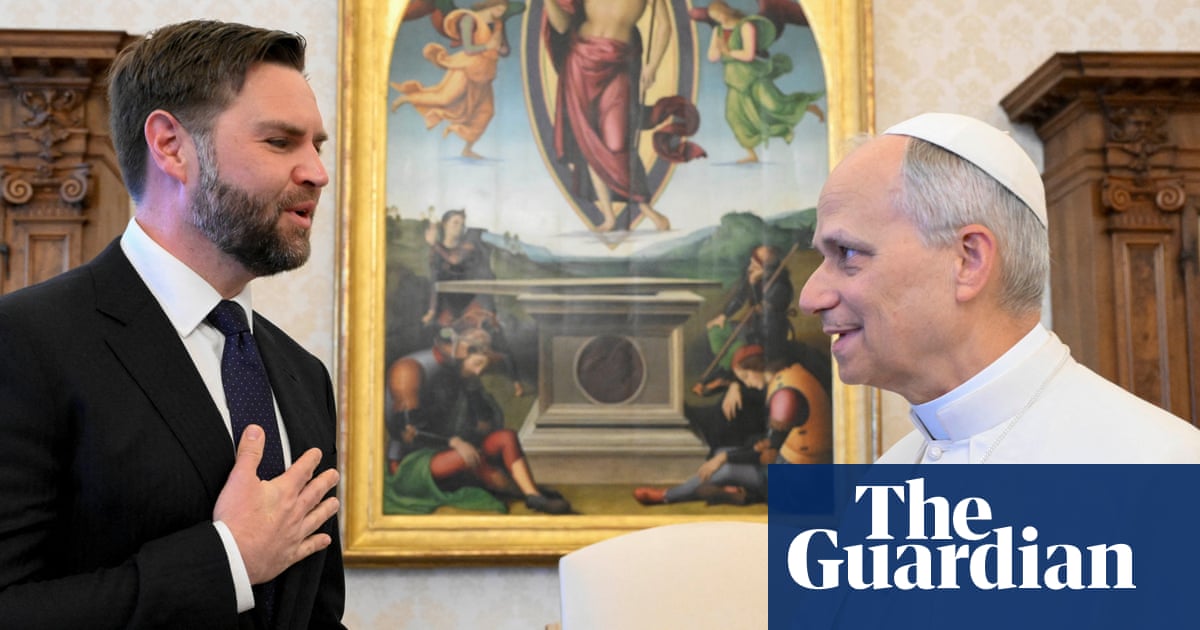
The article centers on a public dispute over just-war theology as Pope Leo XIV criticized the Trump administration’s framing of the Iran conflict and its threat that "a whole civilisation will die tonight" unless Iran made a deal. Cardinal Robert McElroy and Bishop James Massa backed the pope’s position as consistent with long-standing Catholic teaching, while Trump allies including JD Vance and Mike Johnson pushed back. The piece is politically charged but has limited direct market relevance beyond broader geopolitical risk sentiment.
This is less a theology dispute than a signal that the administration is narrowing its coalition while widening the credibility gap around war policy. When the moral case for force becomes rhetorically unstable, the market impact shows up first in governance risk: higher odds of surprise escalation, slower congressional buy-in, and more difficulty sustaining allied support. That raises the expected volatility premium on any Iran-linked headline cycle, even if spot assets do not immediately reprice.
The second-order effect is on sectors exposed to Middle East shipping and defense procurement. A more activist, ideologically framed posture increases tail risk for energy transport routes, insurance, and defense contractors, but it also increases the probability of policy whiplash if legal or religious pushback becomes politically costly. In practice, that means the trade is not directional on war itself so much as on uncertainty: the administration is making it harder for markets to anchor on a single base case.
The near-term catalyst set is days to weeks, not months: further papal intervention, US bishops’ pushback, or another inflammatory social post can all intensify the narrative and keep the issue alive. The reversal case is simple: if the White House shifts back to technocratic justification or de-escalatory rhetoric, the premium compresses quickly. But absent that, the bigger risk is that rhetorical maximalism creates room for a real policy mistake, which is when the market gap moves from reputational to kinetic.
Contrarian take: consensus is likely underestimating how much this damages the administration’s credibility with religious conservatives rather than with secular voters. That matters because the people defending the policy are increasingly forced into awkward, inconsistent arguments; once that happens, the coalition cost rises faster than the policy payoff. The overdone part is the assumption that this is only an intra-Catholic dispute — it is actually a broader signal that war messaging is losing coherence across the right-of-center ecosystem.
AI-powered research, real-time alerts, and portfolio analytics for institutional investors.
Request TrialOverall Sentiment
mildly negative
Sentiment Score
-0.15
