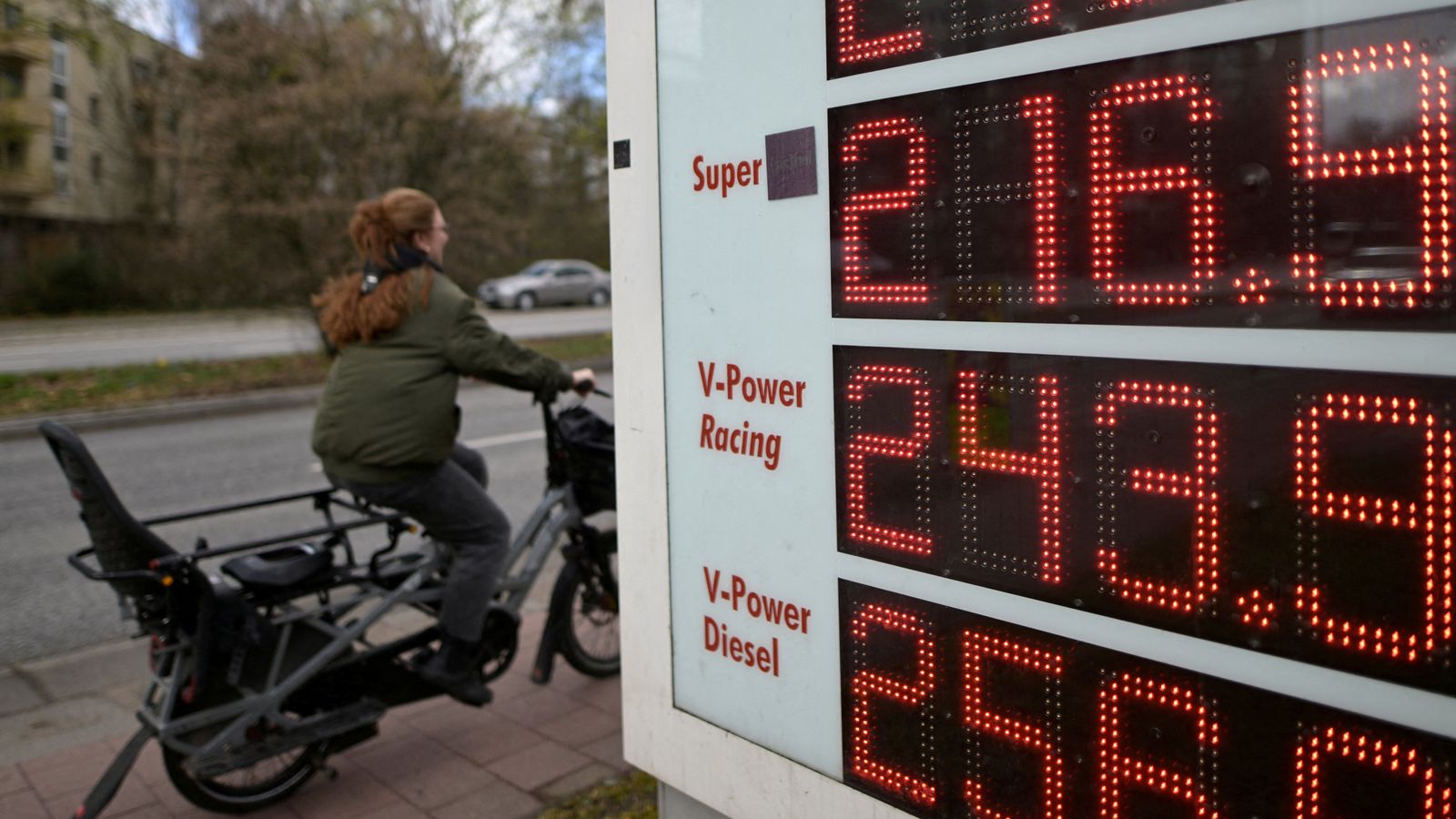
Gas prices in Europe have risen more than 70% since the Iran war began on Feb 28, and dwindling diesel and jet fuel supplies — with the last kerosene shipments through the Strait of Hormuz due to arrive around April 10 — risk localized shortages. The European Commission is preparing to revive 2022 emergency measures (gas price cap, windfall tax on energy firms, demand-reduction targets) and is urging adoption of the IEA's 10-point plan; the EU reaffirmed it will not resume buying Russian gas.
European middle‑distillate tightness is the transmission mechanism to watch: constrained product flows and higher freight/insurance premia will widen gasoil/jet cracks versus Brent, concentrating incremental margin in complex refiners and traders with storage and export flexibility. Expect volatility clustered in the next 2–8 weeks as tanker availability and re‑routing decisions create episodic squeezes; systematic demand measures (speed limits, remote work) will blunt peak consumption over 1–3 months, not eliminate price shocks.
Second‑order winners are merchant traders and storage owners who can capture time‑value by arbitraging regional product differentials (Mediterranean/Rotterdam <> US Gulf), while second‑order losers include carriers and asset‑light logistics companies that cannot hedge fuel costs and airlines without hedges on jet fuel. Higher premiums for war risk and longer voyage times effectively reduce seaborne product arbitrage capacity by ~10–20% in stress periods, amplifying localised shortages even if global barrels exist.
Tail risks: a broader escalation that impedes more sea lanes or triggers sanctions on secondary suppliers would push sustained margin gains into months‑long territory and force policy responses (SPR releases, coordinated exports) that can reverse the move in 30–90 days. The most probable mean‑reversion catalysts are a diplomatic de‑escalation, temporary surge in Atlantic exports into NW Europe, or coordinated demand curbs by large consumers — monitor cross‑regional tanker flows, product inventory draws at ARA hubs, and the ICE gasoil/Brent spread as high‑frequency signals.
AI-powered research, real-time alerts, and portfolio analytics for institutional investors.
Overall Sentiment
moderately negative
Sentiment Score
-0.60
