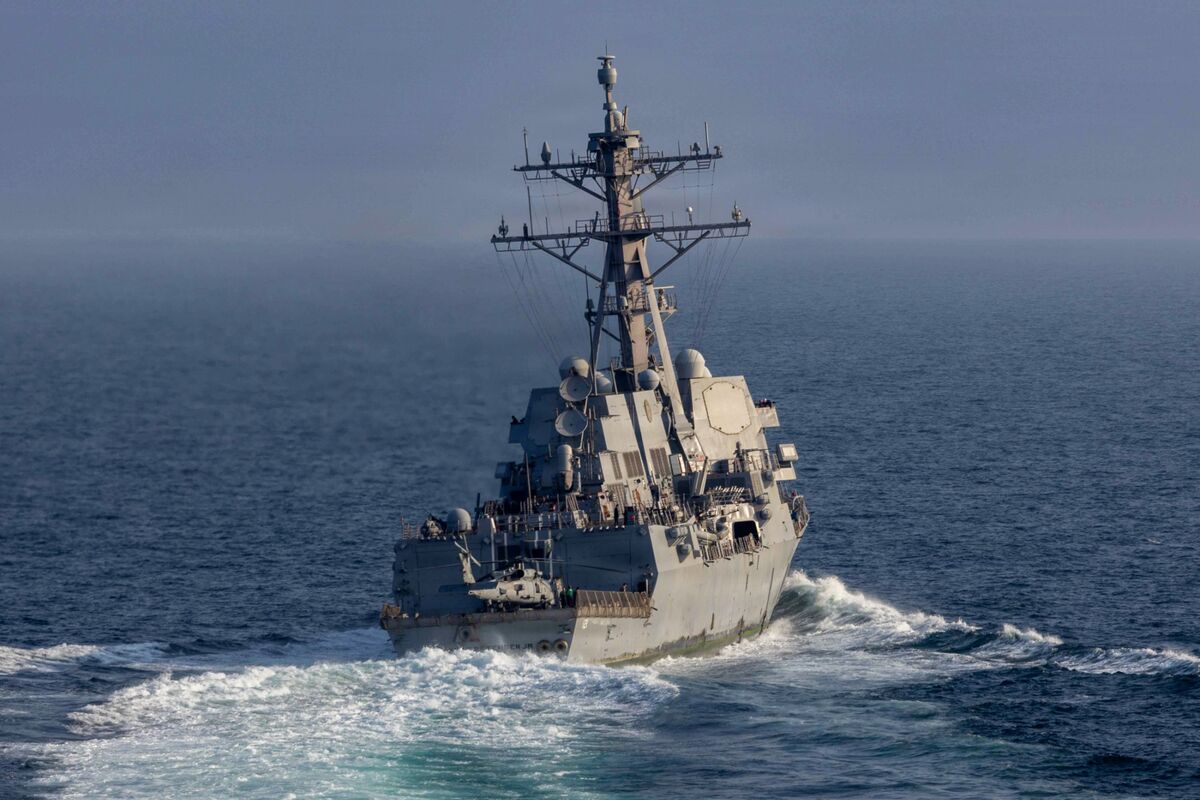
President Trump said the US will help ships stranded in the Persian Gulf transit the Strait of Hormuz under a new operation dubbed Project Freedom, with support from guided-missile destroyers, aircraft and drones. The plan is framed as a humanitarian gesture but signals an attempt to restore traffic through a critical global shipping chokepoint after the war with Iran began. The announcement carries high market relevance given the potential implications for oil flows, freight routes, and broader geopolitical risk.
The immediate market reaction should be less about the symbolic “humanitarian” framing and more about the creation of a temporary de-risking corridor. Even a partial restoration of traffic reduces the probability of a sustained capacity shock, which matters because the first-order pricing of chokepoint risk is usually far more violent than the eventual physical disruption. That sets up a classic fade: freight, tanker, and insurance markets can re-rate quickly on headline relief while actual transit normalization remains fragile and reversible.
Second-order beneficiaries are the maritime and energy names that earn on volatility rather than direction. If ships restart under military escort, the premium shifts from outright disruption to convoy/insurance/route-risk complexity, which can support defense contractors, naval systems suppliers, and select marine insurers more than bulk transport. By contrast, refiners and airlines likely see near-term relief through lower prompt crude and jet fuel volatility, but that benefit is vulnerable if the corridor is merely “managed” rather than genuinely secured.
The key risk is asymmetry: one successful transit window can compress implied geopolitical risk, but a single interdiction or attack can snap it back and gap energy prices higher within hours. The market is likely underpricing the operational burden on US assets—ships, drones, and aircraft can improve passage, but they also create a visible escalation ladder that the other side can target around the edges. Over the next 1–4 weeks, watch for whether freight rates and tanker insurance actually normalize; if they don’t, the equity market may be too eager to price a return to pre-crisis logistics.
Contrarian view: this is not necessarily bearish oil if the corridor becomes militarized. A “safe passage” regime can institutionalize a higher structural risk premium because every transit becomes contingent on US force protection, not legal certainty. In that scenario, the market may be underestimating how sticky the geopolitical premium becomes even after throughput recovers.
AI-powered research, real-time alerts, and portfolio analytics for institutional investors.
Request DemoOverall Sentiment
neutral
Sentiment Score
0.05
