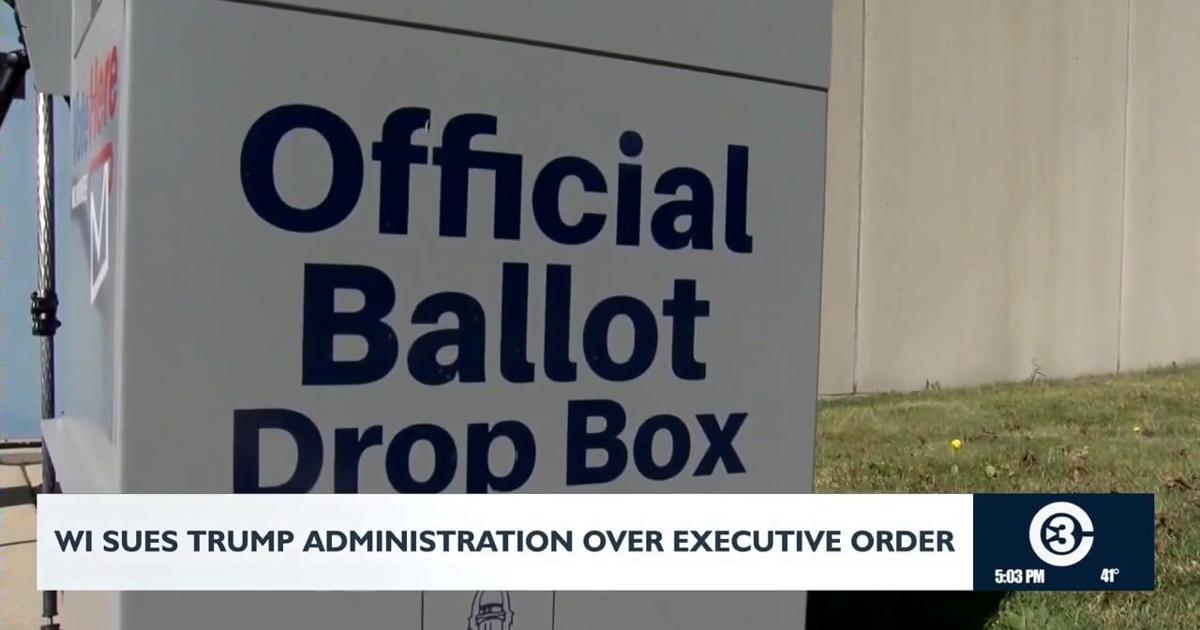
Wisconsin joined a multi-state lawsuit challenging President Trump's executive order to restrict mail voting and establish a nationwide verified voter list. The order follows Congress's failure to pass the Save America Act and seeks to impose requirements on states despite lacking clear authority. Dane County Clerk Scott McDonell said the order will have no impact on the upcoming Tuesday election. The development raises legal and political uncertainty but is unlikely to move markets or have direct financial consequences.
The immediate, non-obvious beneficiary set is providers of election infrastructure, data and cyberdefense: when states face legal uncertainty they accelerate vendor procurement and contingency contracts (procurement cycles compress to 3–12 months and deal sizes can jump into the low‑to‑mid hundreds of millions for multi‑state solutions). That dynamic lets a handful of vendors reprice services and expand margins through premium “compliance” feature add‑ons; bidders with existing state relationships have a clear competitive edge and outsized revenue optionality in the next 6–18 months.
A second‑order fiscal effect is state budget reallocation. High‑profile litigation and augmented administrative work historically costs states tens of millions per case; for smaller budgets that can translate into 10–30bp widening in limited‑tax muni spreads within 3–12 months as legal expense and election administration are prioritized over discretionary projects. This creates a dispersion trade across muni credits: higher‑rated, broader‑tax base munis will likely outperform battleground/state‑specific paper under legal pressure.
From a market‑structure point of view, expect episodic volatility — not a secular shock. Court actions and preliminary injunctions are the likely short‑term catalysts (days–weeks around filings), while final appellate/SCOTUS resolution is a 3–12 month story. The path to reversal is clear: a decisive judicial rebuke or federal retreat would compress implied vol and reprice vendor growth expectations sharply lower, so option structures that cap premium paid are preferable to naked directional exposure.
AI-powered research, real-time alerts, and portfolio analytics for institutional investors.
Request DemoOverall Sentiment
neutral
Sentiment Score
0.00
