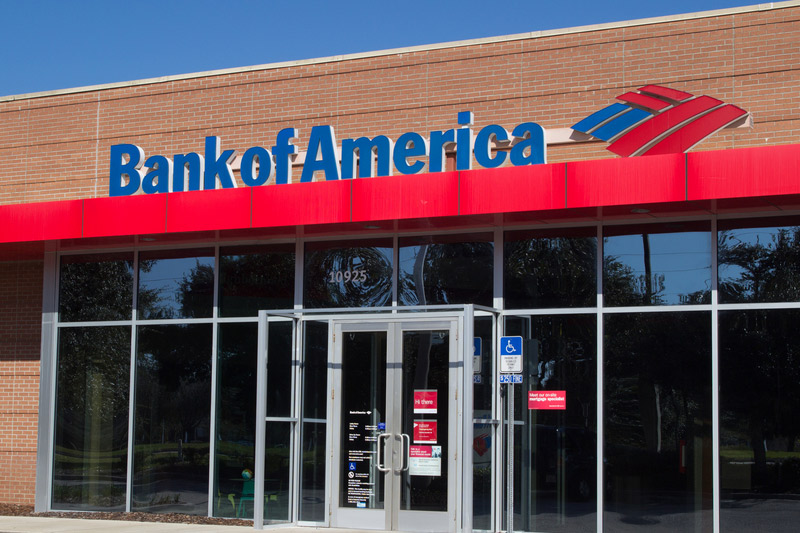
HSBC upgraded Bank of America to Buy from Hold and lowered its price target to $55 (from $57), implying ~16% upside; BAC trades at a P/E of 12.74 and PEG of 0.62. HSBC cited conservative credit posture and expected profitability expansion as fixed-rate assets re-price; shares are down ~14% YTD and down 10.86% in 2026 per InvestingPro. Management is executing buybacks and has raised the dividend 12 consecutive years; strategic initiatives include a Private Capital M&A team and two co-branded Royal Caribbean credit cards. Jefferies initiated coverage with a Buy and Truist kept a Buy while trimming its target to $57, underscoring mixed but generally constructive analyst sentiment.
The immediate narrative — improving NII trajectory and active capital returns — is a near-term re-rating lever, but the mechanics matter: banks like BAC are asset-sensitive so they benefit front-loaded as floating-rate loans and recently-originated credit cards reset. That boost is likely to show up in NII and operating leverage within 2-4 quarters, yet deposit beta creep and rising funding competition typically compress NIM in the 9-18 month window, turning a front-loaded gain into a mean-reversion risk if rates stabilize or fall.
Strategic moves such as a Private Capital M&A team and new co-branded cards are margin-accretive avenues that shift revenue mix from rate-driven to fee-driven income, lowering earnings volatility over a 12-24 month horizon if execution is clean. However, they also increase exposure to unsecured and sponsor-backed credit cycles: higher card balances and extended hold-times for PE portfolio companies amplify idiosyncratic credit and operational risk that would show up as loss provisions under a slowing economy.
Second-order competitive dynamics favor banks with scale in payments and wealth distribution: co-branded card wins translate into higher interchange and prototypically stickier customer relationships, squeezing smaller issuers and fintechs unless they match partnerships or pricing. On the flip side, sustained underperformance at peers (e.g., franchise- or capital-constrained competitors) creates an opportunity to harvest deposit flows and talent, but also concentrates systemic counterparty and CRE risk within the larger franchises.
Upside is therefore conditional: if macro stays steady and credit performance remains benign, expect a 2-4 quarter cadence of EPS upgrades; conversely, faster-than-anticipated deterioration in commercial real estate or consumer delinquencies would erase forward NII gains quickly. Key near-term catalysts to watch are published NII/loan-yield trajectories, deposit beta evidence in quarterly commentary, and upcoming regulatory/capital assessment outcomes which will govern buyback durability.
AI-powered research, real-time alerts, and portfolio analytics for institutional investors.
Request DemoOverall Sentiment
mildly positive
Sentiment Score
0.25
Ticker Sentiment
