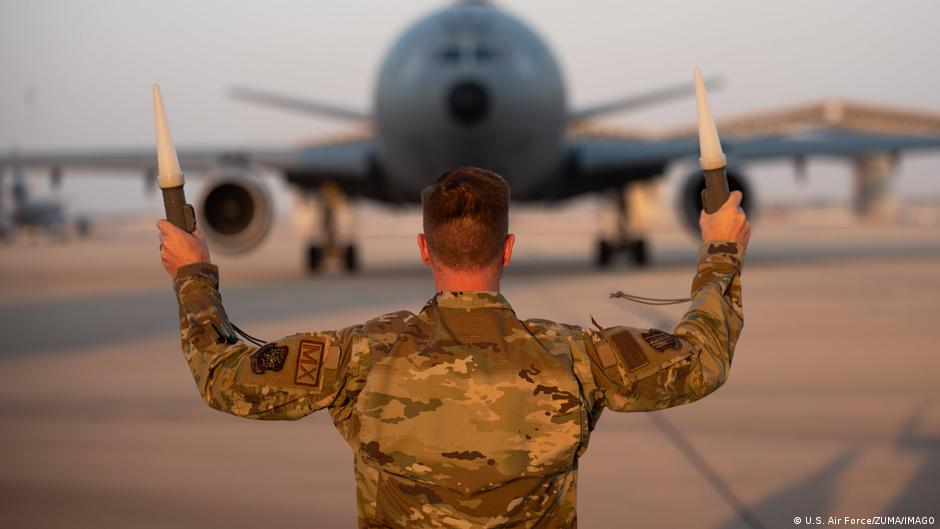
Twelve US service members were wounded (two seriously) in an Iranian missile-and-drone strike on Prince Sultan Air Base in Saudi Arabia that also damaged KC-135 refueling tankers. The incident is the latest escalation in the monthlong US-Israel war with Iran, which has resulted in 13 US deaths and more than 300 wounded since Feb 28 (273 have returned to duty). While US envoys express guarded optimism about possible talks, the breach of air defenses and damage to strategic aerial refueling assets raise near-term upside risk to oil prices and support for defense-sector equities amid broader risk-off market positioning.
The recent breach in regional force protection should be treated as a shock to operational logistics rather than only a headline escalation. Expect an immediate reallocation of airborne surveillance/tanker hours and MRO capacity toward defensive posture — our model suggests sortie-support costs for regional operations could rise 10–20% in the next 30–90 days as scarce spares and qualified personnel are diverted. That diversion reduces available capacity for contested missions elsewhere and increases incremental demand for sustainment work and parts over a 3–12 month window.
Procurement dynamics will shift from ad-hoc crisis buys to multi-year modernization plans. Regional partners with cash on hand are likely to accelerate orders for integrated air defenses, survivability modifications, and contracted MRO; award timing compresses into the next 3–18 months, favoring prime contractors and specialized mid-caps with production headroom. Separately, insurance and freight-cost rises and temporary route curvature will transfer a portion of energy and logistics costs to downstream transport and travel sectors, creating asymmetric winners (defense sustainment, insurers) and losers (short-cycle travel and cargo flows).
Market risk is front-loaded but binary: a durable diplomatic de‑escalation within days would remove the premium quickly, while further successful penetrations of regional defenses would prolong higher operational costs and sustain a risk-off regime for months. Tail risks include an extended attritional campaign that forces structural reallocation of US rotational assets for >6 months, amplifying defense-sector revenues but depressing cyclical industrials and travel demand. Monitor procurement announcements and tanker/AWACS sortie data as near-term trading signals; diplomatic noise remains the primary catalyst that can reverse pricing within 48–72 hours.
AI-powered research, real-time alerts, and portfolio analytics for institutional investors.
Request DemoOverall Sentiment
strongly negative
Sentiment Score
-0.65
