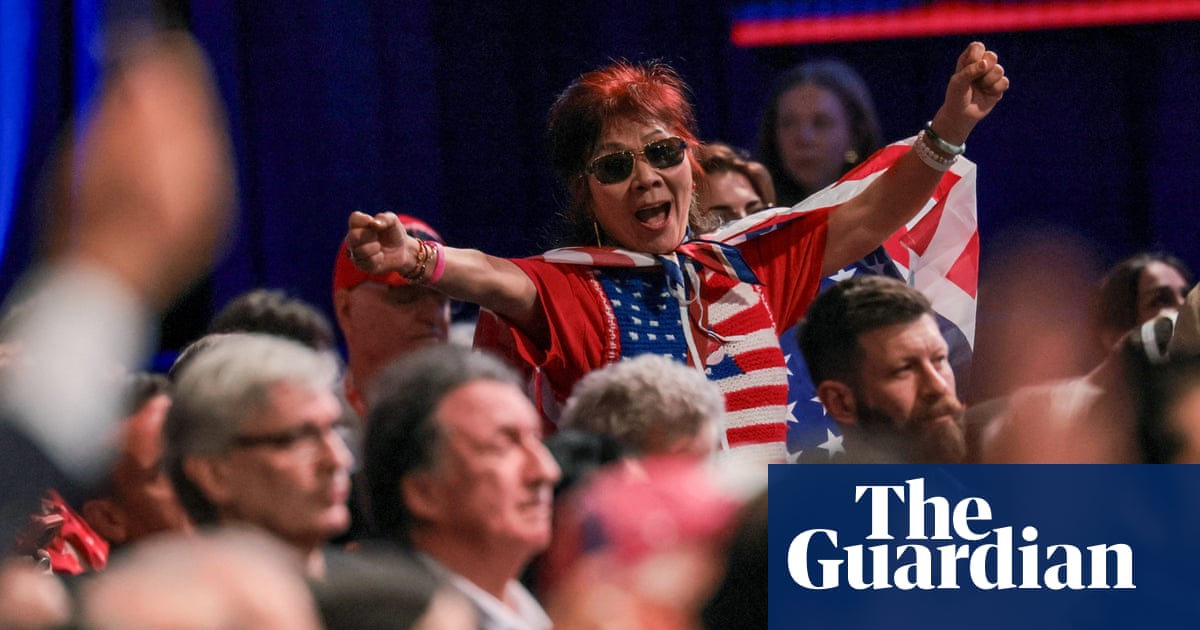
About 53% of more than 1,600 CPAC attendees voted for Vice‑President JD Vance as the preferred Republican presidential candidate while Marco Rubio received 35%; no other contender topped 2%. Reuters cautions the annual straw poll is not a reliable predictor, but the result suggests consolidation behind Vance and Rubio (Rubio up from 3% at last year’s CPAC; Vance led last year with 61%). The coverage also notes growing rifts in the MAGA movement—highlighted by Marjorie Taylor Greene’s resignation citing the Epstein files and US/Middle East wars—adding political uncertainty despite the apparent consolidation.
A consolidation of activist/conservative sentiment behind a narrower set of contenders at CPAC reduces one input into political-market uncertainty: donor allocation and messaging cadence become more predictable over the next 6–12 months. That matters because predictability short-circuits a portion of the “policy surprise” premium that caused episodic equity dispersion in 2023–24; sectors sensitive to domestic industrial policy (steel, defense, infrastructure) would see more durable flows if donors concentrate resources early.
Geopolitical fissures inside the movement — especially over Middle East policy — keep a non-trivial tail risk of regional escalation alive. Markets price that as a low-probability, high-impact event: defense contractors and energy insurance/shipping names typically show sharp, concentrated moves in the 1–3 month window after escalation headlines, while cyclicals and consumer discretionary suffer on near-term risk-off.
The CPAC signal is sample-biased: activist gatherings are leading indicators of grassroots narratives, not of broad national polling. If institutional donors interpret this as momentum they will overweight early-stage primary bets, compressing volatility around nomination outcomes but concentrating downside if the grassroots narrative reverses. Keep position sizes smaller and use option structures to manage binary politics risk.
Near-term catalysts to watch: donor fundraising releases and PAC ad buys (weekly to monthly), national primary polling and early debate performance (weeks–months), and any Iran/Israel incident (days). Reversals come fastest from a single foreign-policy escalation or a rapid cascade of high-dollar donor defections; both would re-price the insurance and defense complex within 72 hours.
AI-powered research, real-time alerts, and portfolio analytics for institutional investors.
Request DemoOverall Sentiment
neutral
Sentiment Score
0.00
