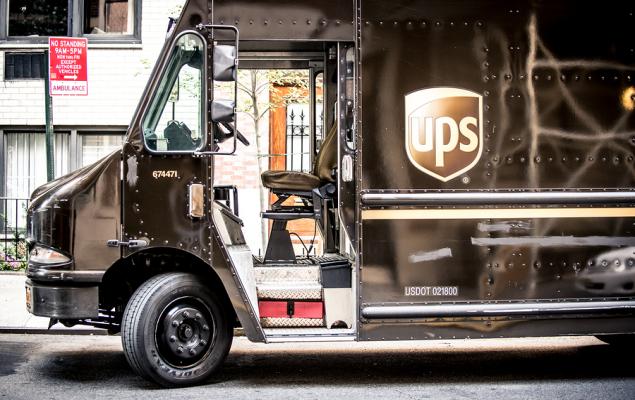
United Parcel Service (UPS) is raising international import processing fees, effective September 8, following the U.S. De Minimis trade exemption's expiration, mirroring competitor FedEx's actions. This strategic shift addresses significant operational headwinds, including weak demand, high labor costs, and declining package volumes (down 3.8% H1 2025), which have prompted aggressive cost-cutting measures: a planned 20,000-job reduction, 73 facility closures, and a substantial reduction in volume from Amazon. Consequently, UPS shares have fallen over 30% year-to-date, 2025 earnings and revenue estimates have been lowered, and concerns persist regarding the sustainability of its 87% dividend payout ratio, leading to a Zacks Rank #4 (Sell) despite an attractive valuation.
United Parcel Service (UPS) is facing a confluence of significant operational and financial headwinds, prompting both strategic pricing adjustments and aggressive internal restructuring. The company's decision to implement new international processing fees, including a $2.50 charge on key worldwide services, is a direct response to the expiration of the U.S. De Minimis trade exemption, a move that mirrors actions taken by competitor FedEx. However, this fee adjustment occurs against a backdrop of deteriorating fundamentals. UPS is grappling with weak consumer demand and high labor costs, which contributed to a 3.8% year-over-year decline in consolidated average daily volumes in the first half of 2025 and a 2.7% revenue decrease in the June quarter. In response, management is undertaking a significant cost-cutting program, aiming to reduce its workforce by 20,000 and close 73 facilities, alongside a strategic decision to cut business volume from its largest customer, Amazon, by over 50% by 2026. Despite these efforts, the market sentiment remains highly negative, reflected in the stock's over 30% year-to-date decline, which underperforms its industry peer group. This is compounded by downward revisions to earnings estimates, with 2025 adjusted EPS now projected to fall 15.4%. A critical concern for investors is the sustainability of the dividend, as the current payout ratio stands at an elevated 87%, and free cash flow of $742 million in H1 2025 was insufficient to cover the $2.7 billion in dividends paid.
AI-powered research, real-time alerts, and portfolio analytics for institutional investors.
Overall Sentiment
strongly negative
Sentiment Score
-0.80
Ticker Sentiment
