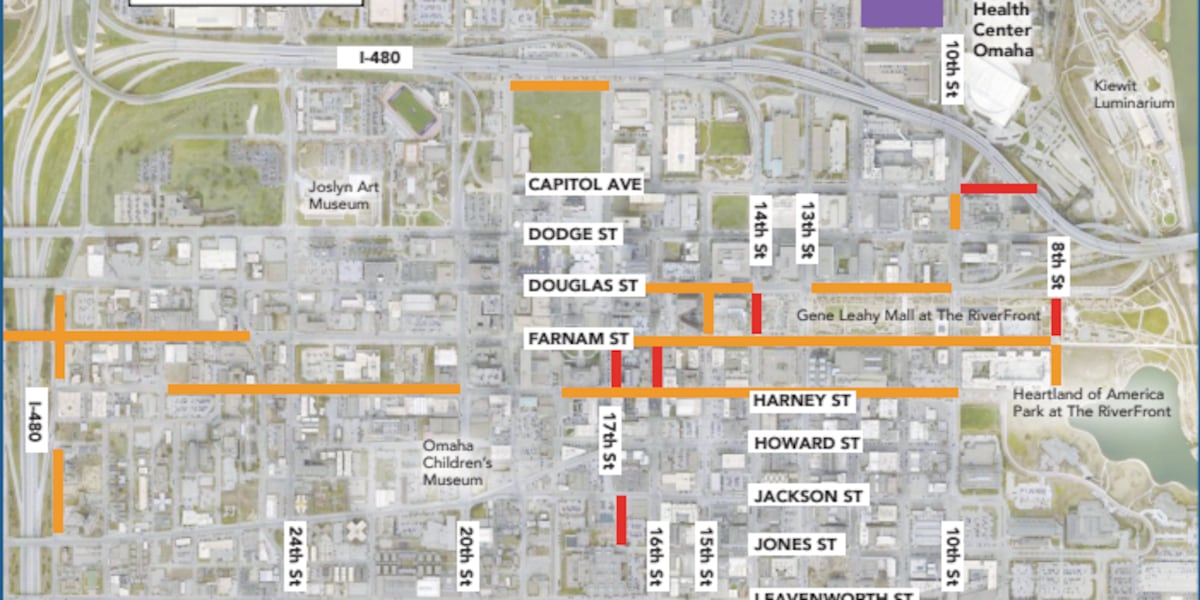
Omaha expects roughly 40,000 visitors for Berkshire Hathaway's annual meeting this weekend, with hotel occupancy previously reaching 95% across the metro. Ongoing downtown and airport construction may complicate access, prompting the city to distribute maps and alternate-route guidance to hotel guests. The article is operational and local in scope, with limited direct market impact.
The near-term beneficiaries are not Berkshire itself but the local nodes that monetize friction: hotels, parking, rideshare, airport concessions, and high-turn dining. With occupancy already effectively pinned, incremental demand likely shifts pricing power sharply upward for a few days, but the bigger second-order effect is that construction reduces throughput and raises the probability of spillover spend into more dispersed neighborhoods rather than the core downtown corridor. That favors operators with multiple off-downtown touchpoints and hurts any single-location businesses relying on walk-up traffic. The event is a good reminder that large, periodic demand shocks can still matter in mature leisure markets when infrastructure is constrained. The tail risk is operational, not fundamental: congestion, missed reservations, and airport/downtown bottlenecks can cap capture rates even if headline attendance is unchanged. Over months, the investment implication is limited unless the city uses this as a forcing function for infrastructure acceleration, which would matter more for local construction contractors and transport vendors than for the meeting itself. For BRK.B, the market impact is basically zero; the interesting angle is sentiment and legacy-brand durability. The absence of the founder makes the retail fan-tour more of a nostalgia trade than a governance signal, so any concern about a post-Buffett demand collapse looks overstated. If anything, the persistence of tourism behavior suggests the franchise value is broader than the individual and the meeting remains a dependable annual cash-flow event for the ecosystem around it. Contrarian read: the crowding and construction may be mildly bullish for operators with poor margins that can reprice quickly, while being bearish for commodity-like convenience businesses that cannot. The overdone take would be to extrapolate this into a meaningful macro read on Berkshire; the underdone take is to view the weekend as a localized stress test for Omaha’s hospitality and transport infrastructure, with the winners being those that can route around downtown friction.
AI-powered research, real-time alerts, and portfolio analytics for institutional investors.
Request DemoOverall Sentiment
neutral
Sentiment Score
0.05
Ticker Sentiment
