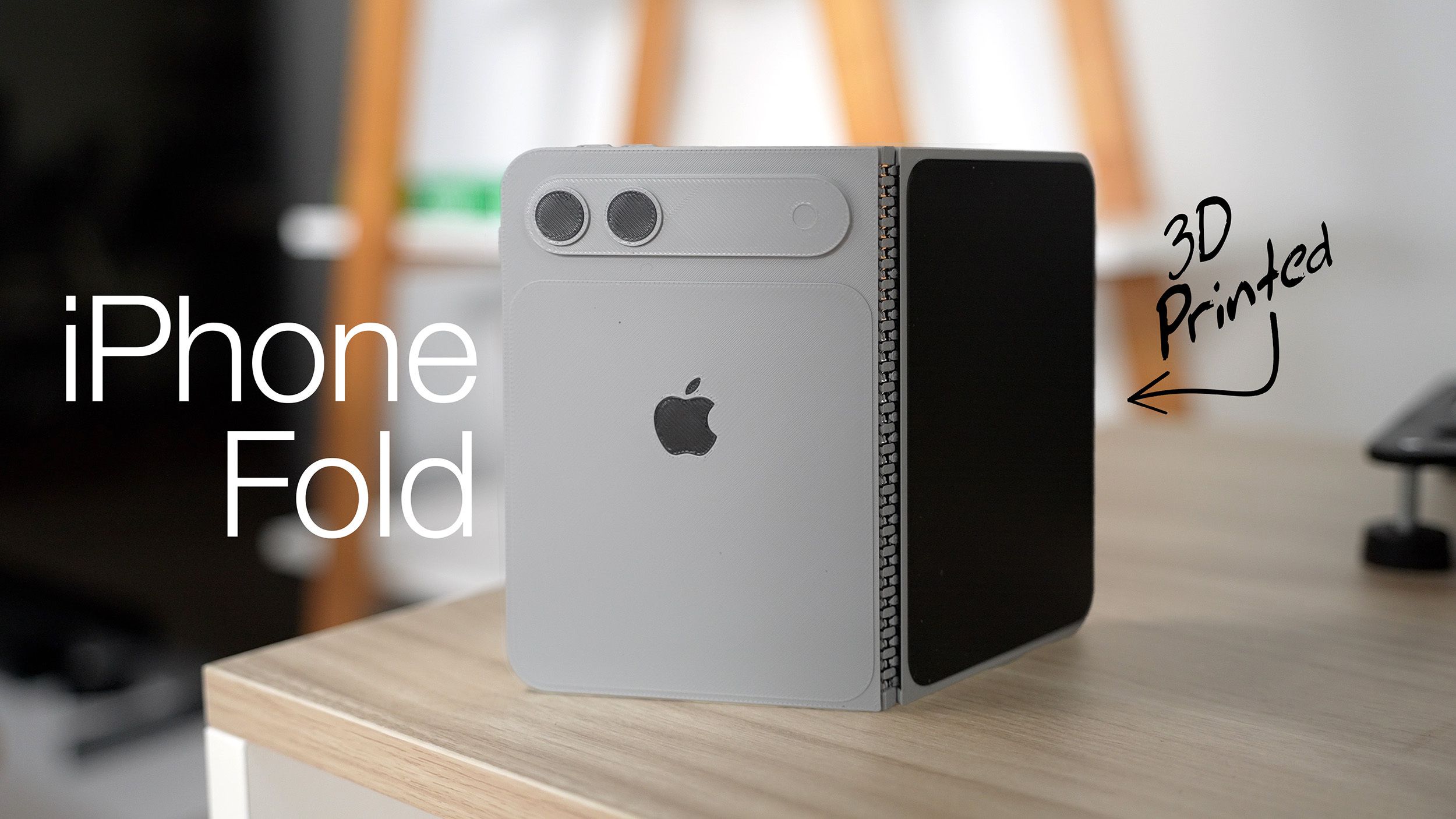
Apple is rumored to introduce a foldable iPhone in September 2026; a MacRumors reader’s 3D mockup (printed and reviewed) models a closed outer display roughly 5.3–5.5 inches (mockup 5.49") and an open inner display around 7.6–7.8 inches (mockup 7.76"), with an unfolded thickness rumored at 4.5–4.8mm and a book-like 4:3 aspect ratio. Key hardware details such as hinge design, crease visibility and camera housing remain unconfirmed, so while the device could create a new premium form factor and influence Apple’s product mix if realized, substantive investor implications are limited until official specifications and launch execution are confirmed.
Market structure: An Apple foldable (AAPL) would create winners among flexible-OLED and precision-hinge suppliers (benefiting panel makers and assemblers) and losers among lower‑end Android OEMs and the iPad mini subsegment due to cannibalization. Expect short-run pricing power: constrained initial yields for UTG/flexible OLED can keep component ASPs 10–30% above flat-panel levels for 6–12 months, supporting supplier margins and capex returns. Cross-asset: stronger AAPL sentiment tends to tighten USD and put downward pressure on long-duration US Treasuries if it accelerates device-led revenues, while AAPL options IV will reprice into product-cycle windows.
Risk assessment: Tail risks include hinge/crease failures forcing recalls (repeat of Samsung Fold>2019), a supplier yield shock, or China/US trade actions disrupting panels—each could erase >20% of anticipated incremental margin. Immediate: rumor-driven AAPL volatility and headline spikes (days); short (3–12 months): supplier order flows and capex shifts; long (2026–2028): structural handset mix change if foldables reach >10% of Apple unit sales. Hidden dependencies: UTG supply concentration, yield curves at panel fabs, and contract assembly capacity are single points of failure; watch supplier yields and component ASPs as early-warning indicators.
Trade implications: Tactical, defined‑risk exposure to AAPL via Sep‑2026 call spreads captures upside while capping capital; add selective supplier exposure (panel/assembly/glass) with 12–18 month horizons. Hedge with small, time‑staggered OTM AAPL puts to protect against launch delays or quality recalls. Rotate weight into display/glass names and reduce mid‑cycle exposure to iPad mini or small‑screen OEMs that face displacement.
Contrarian angles: Consensus assumes Apple will dominate quickly — history (Samsung Fold) suggests initial adoption is niche; market may be overpricing supplier booms while underpricing cannibalization risks to iPad mini and services revenue per device. Mispricings: suppliers with high concentration to Apple could gap lower on a single negative leak; unintended consequence: a premium Apple foldable could compress ASPs for non‑Apple foldables and trigger a multi‑quarter deflation in mid‑tier Android devices.
AI-powered research, real-time alerts, and portfolio analytics for institutional investors.
Request DemoOverall Sentiment
neutral
Sentiment Score
0.10
Ticker Sentiment
