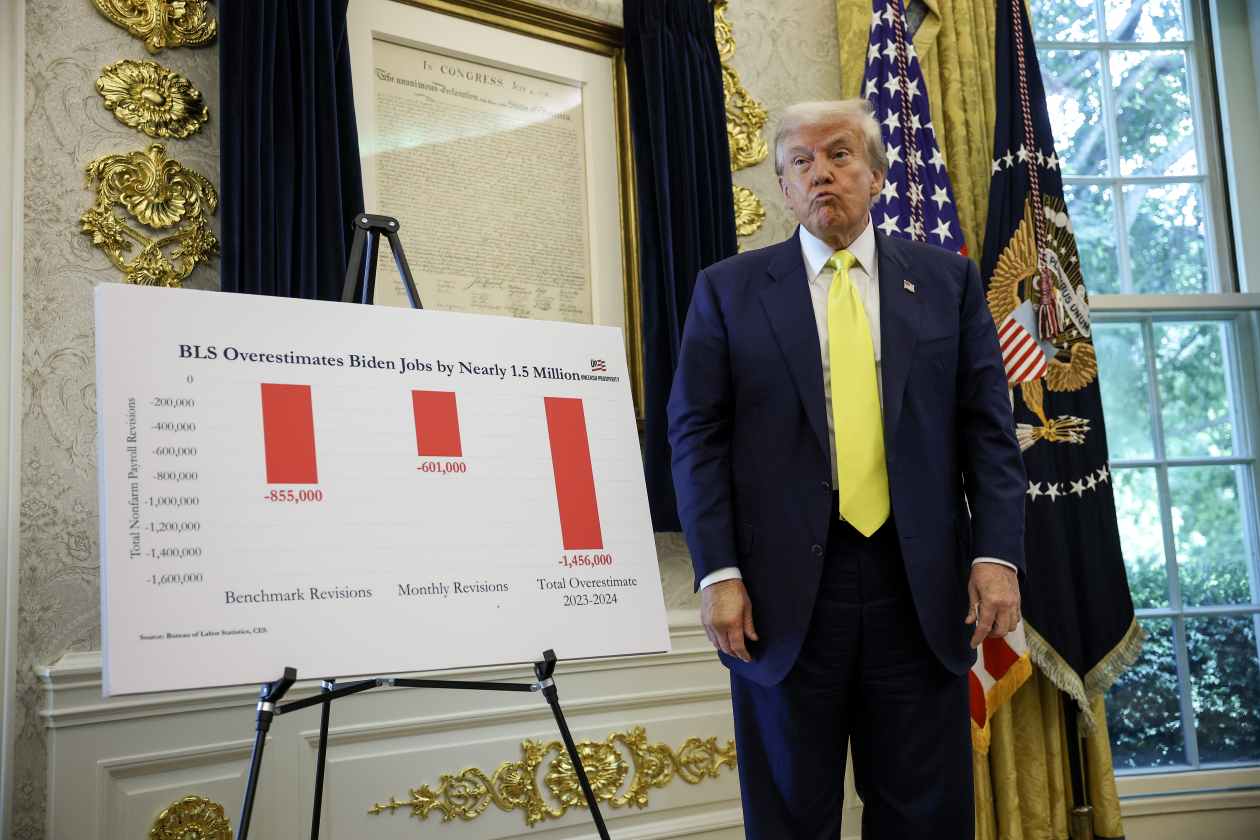
The U.S. jobs report is under intense scrutiny following significant revisions, such as the June/May job gains being slashed from 291,000 to 34,000, which notably influenced Federal Reserve policy decisions and triggered political backlash. These accuracy issues stem from declining survey response rates (e.g., 58% vs. 83% a decade ago), pandemic-related disruptions to seasonal patterns, and chronic underfunding and staff shortages at the Bureau of Labor Statistics. While the BLS's revision process eventually corrects data, the ongoing challenges and potential for politicization threaten the credibility of this vital economic indicator, necessitating increased funding and methodological improvements to maintain market and policy confidence.
The reliability of the U.S. employment report, a top-tier economic indicator, is facing a crisis of credibility due to a confluence of systemic and political challenges. Significant downward revisions, such as the May-June job gains being slashed from an initial 291,000 to just 34,000, highlight the growing inaccuracy of preliminary data. This unreliability stems from a steep decline in survey response rates, which fell to 58% from 83% a decade ago, and pandemic-induced distortions in seasonal employment patterns that the Bureau of Labor Statistics' (BLS) models have not yet fully absorbed. These data inaccuracies have material consequences, having directly influenced the Federal Reserve to maintain higher interest rates based on an erroneously strong labor market signal. The situation is exacerbated by chronic underfunding and a 20% staff reduction at the BLS, alongside unprecedented political intervention, including the firing of its chief statistician. This raises significant concerns about the potential for future politicization, threatening the integrity of data crucial for market and policy decisions.
AI-powered research, real-time alerts, and portfolio analytics for institutional investors.
Overall Sentiment
moderately negative
Sentiment Score
-0.55
Ticker Sentiment
