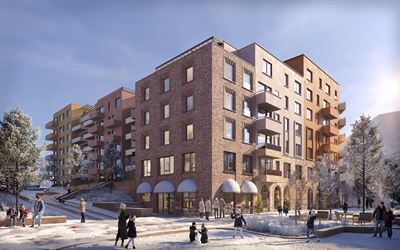
Veidekke has been awarded a design-and-build contract by Stor-Oslo Eiendom to deliver the first phase of the Linderudløkka residential project (241 apartments) valued at approximately NOK 490 million excl. VAT, with construction starting early March and completion planned for autumn 2028. The project (950 apartments total) has shown robust demand—Stor-Oslo sold 120 units in five months—and the contract will be recorded in Veidekke’s Q1 2026 order book; the contract size represents roughly 1.2% of Veidekke’s ~NOK 41 billion annual turnover, indicating modest but positive contribution to near-term revenues and backlog.
Market structure: The NOK 490m design-and-build award (≈1.2% of Veidekke’s ~NOK41bn revenue) is a positive but modest win that reinforces Veidekke’s Oslo residential pipeline and repeat-customer advantage with Stor-Oslo Eiendom. Winners: Veidekke (VEI.OL) for short-term orderbook visibility and subcontractors/local suppliers for steady work; losers: smaller local builders who compete on scale or margin. The contract signals continued demand for Oslo housing (120 units sold in five months) supporting pricing power in urban residential pockets, but it is not a market-wide demand shock.
Risk assessment: Tail risks include sharp Oslo housing correction (pre-sales fall >25%), materials/labor cost inflation >7% YoY, or permit/regulatory delays that push profits into 2029; any of these could compress contractor margins by 200–400bp. Immediate effect (days): negligible stock move; short-term (weeks/months): orderbook recognition in Q1 2026 could lift sentiment; long-term (2026–2028): cash flow and margin impact materialize as projects complete. Hidden dependencies: reuse of Frysjaparken team lowers execution risk but concentrates operational key-person risk and local labor capacity.
Trade implications: Small, targeted long exposure to Veidekke to capture orderbook-driven re-rating is sensible (size 1–3% NAV), while avoiding broad contractor crowding. Use a capped options spread to lever upside around Q1 orderbook release without unlimited downside; favor pair trades long VEI.OL vs short similarly sized, higher-levered peers (AFG.OL) if valuation divergence appears. Rotate modestly into Norway construction names and reduce cyclical residential developer exposure if mortgage costs spike.
Contrarian angle: The market may underprice the repeat-customer, low-execution-risk premium—Veidekke’s shareholder-employee base and local footprint support steadier margins relative to fragmented peers. Conversely, consensus may overvalue any Oslo housing micro-strength as sector-wide upside; if Norges Bank hikes aggressively (+50–75bp in next 3m) the resiliency trade will reverse. Historical parallel: contractor re-ratings from repeat municipal work are gradual (6–12 months), not immediate, so front-loaded rallies are risky.
AI-powered research, real-time alerts, and portfolio analytics for institutional investors.
Request DemoOverall Sentiment
mildly positive
Sentiment Score
0.35
