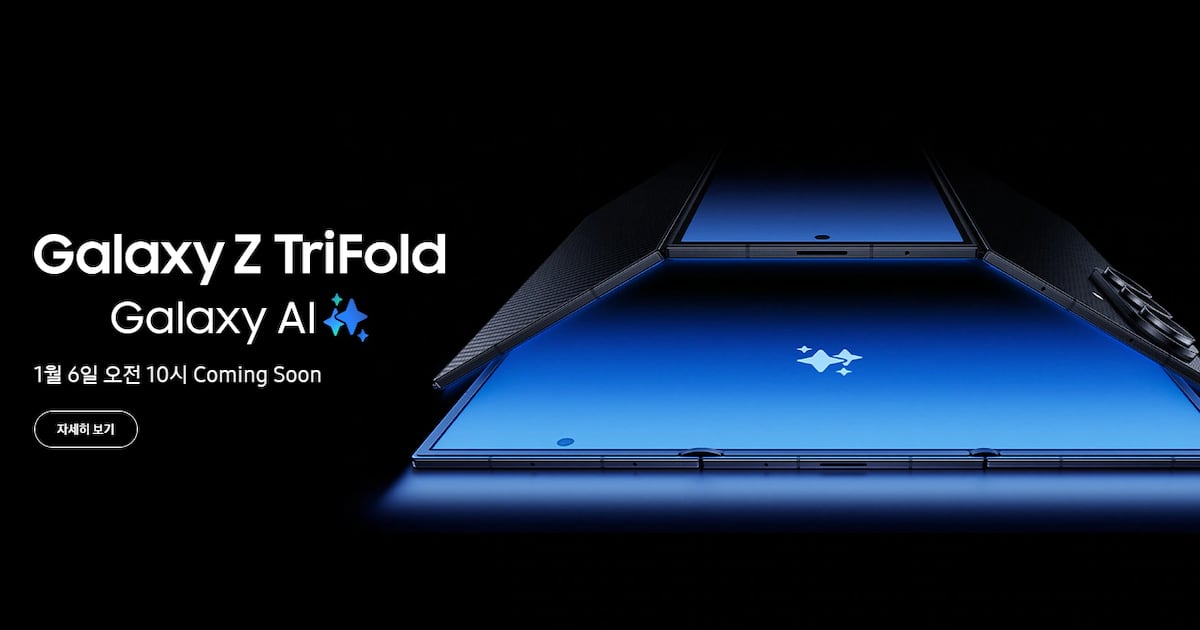
Samsung sold out the third production batch of its Galaxy Z Trifold despite its premium price, signaling resilient consumer demand for the company's high-end foldable form factor. Repeated sell-outs validate Samsung's premium handset strategy and could support incremental handset revenue and margin upside while providing a positive read-through for component suppliers and market sentiment. The device's limited scale relative to Samsung's total smartphone business suggests the impact on company-wide results will be modest but constructive for near-term expectations.
Market structure: The sell-out of Samsung’s Galaxy Z Trifold at high price points implies pricing power in the ultra-premium handset niche and a higher ASP trajectory for Samsung Electronics (005930.KS) over the next 2-4 quarters. Direct winners: Samsung (005930.KS), display and cover-glass suppliers (LG Display 034220.KS, Corning GLW), and memory vendors (SK Hynix 000660.KS, Micron MU) via component pull-through; losers are low/mid-tier Android OEMs and any volume-oriented competitors facing ASP erosion. Supply/demand signal: initial constrained supply with likely backorders suggests stronger-than-expected component demand for the next 1–3 quarters, supporting supplier revenues and possibly KRW strength vs USD by 1–3% if sustained.
Risk assessment: Tail risks include a manufacturing/recall event (yield or battery safety) that could wipe out premium sentiment, regulatory export constraints to China affecting supply, or a rapid macro downturn that collapses demand elasticity for >$1,200 phones. Immediate (days) risk is headline-driven stock moves; short-term (weeks–months) is order ramp execution and channel inventory; long-term (quarters–years) depends on sustained adoption and cannibalization of Galaxy S. Hidden dependencies: Samsung Display concentration, tight OTG supplier windows, and potential channel stuffing; key catalysts are Samsung’s next earnings (within ~60 days) and official component-supply/ramp disclosures.
Trade implications: Direct play — establish a tactical 2–3% long position in Samsung Electronics (005930.KS) sized to portfolio volatility, and 1% longs in LG Display (034220.KS) and Corning (GLW) to capture upstream pull-through over 3–6 months. Pair trade — long 005930.KS vs 1% short Xiaomi (1810.HK) or broader EM handset OEM ETF to express upside in premium share gains. Options — buy 3-month 5–7% OTM call spreads on 005930.KS (cap financing risk) or buy GLW 3–6 month calls if implied vol is depressed; set stop-loss at 12–15% drawdown per leg. Entry/exit — enter after confirmation of >60% sell-through on second batch within 30 days; trim positions if guidance fails or if outperformance exceeds +20% vs sector in 90 days.
Contrarian angles: Consensus may over-index to sustainable premium margins; historical analogs (early foldable waves) saw limited total addressable market and rapid price cuts after initial hype, so a 25–35% downside scenario in supplier equities is plausible if adoption stalls. Mispricings likely in smaller suppliers already priced for flawless ramp — prefer larger-cap, integrated names (005930.KS, GLW) for convexity. Unintended consequences include accelerated capex by competitors (Apple/Chinese OEMs) compressing long-term returns for display suppliers; therefore cap position sizes conservatively and reassess after two quarterly results.
AI-powered research, real-time alerts, and portfolio analytics for institutional investors.
Request DemoOverall Sentiment
mildly positive
Sentiment Score
0.35
