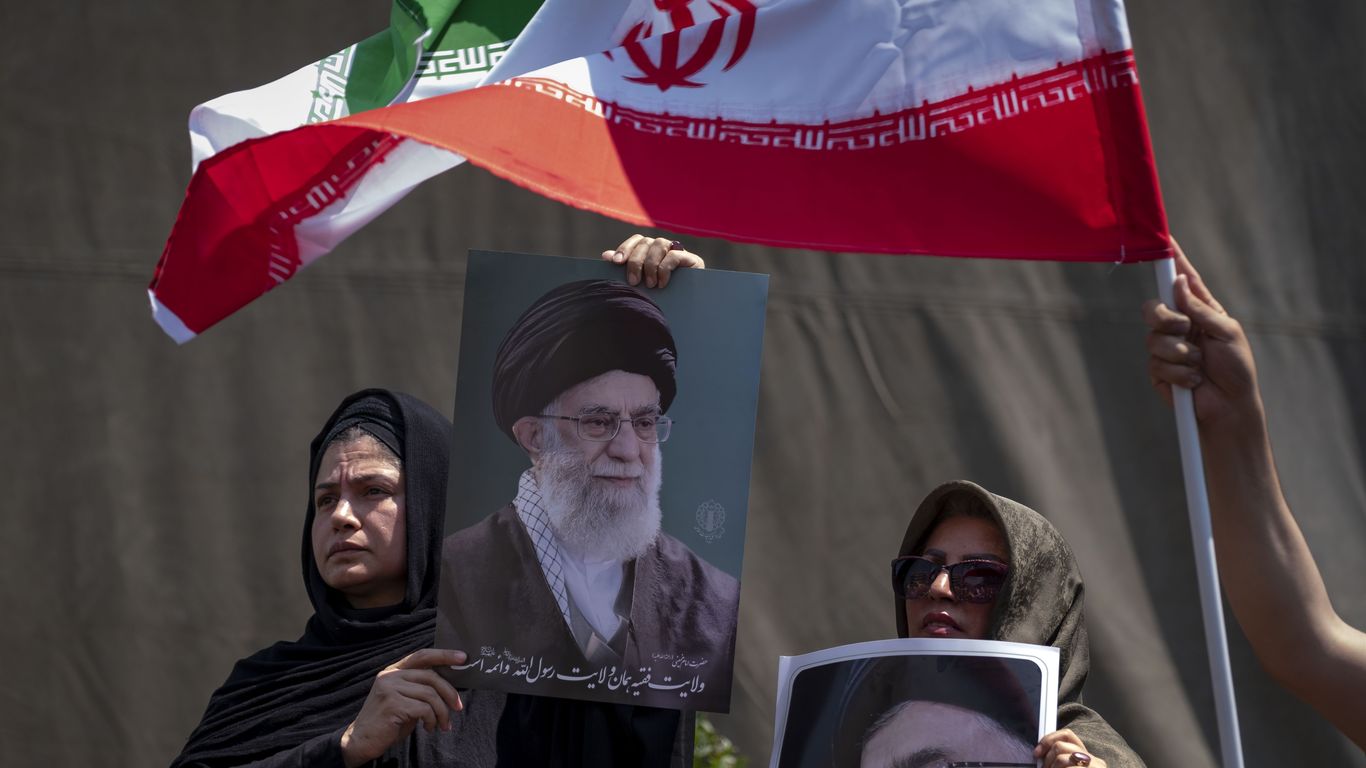
U.S. officials told Axios that Israel had an opportunity to assassinate Iran's Supreme Leader Ali Khamenei, but President Trump opposed the action, aiming to de-escalate tensions and resume nuclear deal talks with Iran. While the Trump administration distanced itself from the operation, arguing against Iranian retaliation on U.S. targets, Israeli officials have downplayed the report, with Netanyahu dismissing it as false and Hanegbi calling it "fake news," while Israel's ambassador to the U.S. suggested Khamenei remains a potential target.
The reported U.S. opposition, conveyed by officials to Axios, to a potential Israeli assassination of Iran's Supreme Leader Ali Khamenei during an operational window underscores a significant divergence in approach amidst escalating conflict. President Trump's stance, aimed at preventing further war escalation and reviving nuclear deal talks, contrasts with the ongoing missile exchanges between Israel and Iran, including an Israeli attack on an Iraqi air base in Mashhad, Iran, over 1400 miles from Israel. While U.S. officials assert their communication to Israel against targeting Khamenei, Israeli National Security Adviser Tzachi Hanegbi and Prime Minister Benjamin Netanyahu have publicly dismissed these accounts as "fake news" and "false reports" respectively. However, Israel's ambassador to the U.S., Yechiel Leiter, implied that no individual threatening Israel's destruction is off-limits, adding complexity to the situation. The associated data signals, indicating "strongly negative" sentiment (-0.7), an "uncertain" tone, and a "high" market impact score (0.85), reflect the severe geopolitical tension and the substantial risk of market disruption stemming from these developments in a region critical for global stability.
AI-powered research, real-time alerts, and portfolio analytics for institutional investors.
Request DemoOverall Sentiment
strongly negative
Sentiment Score
-0.70
