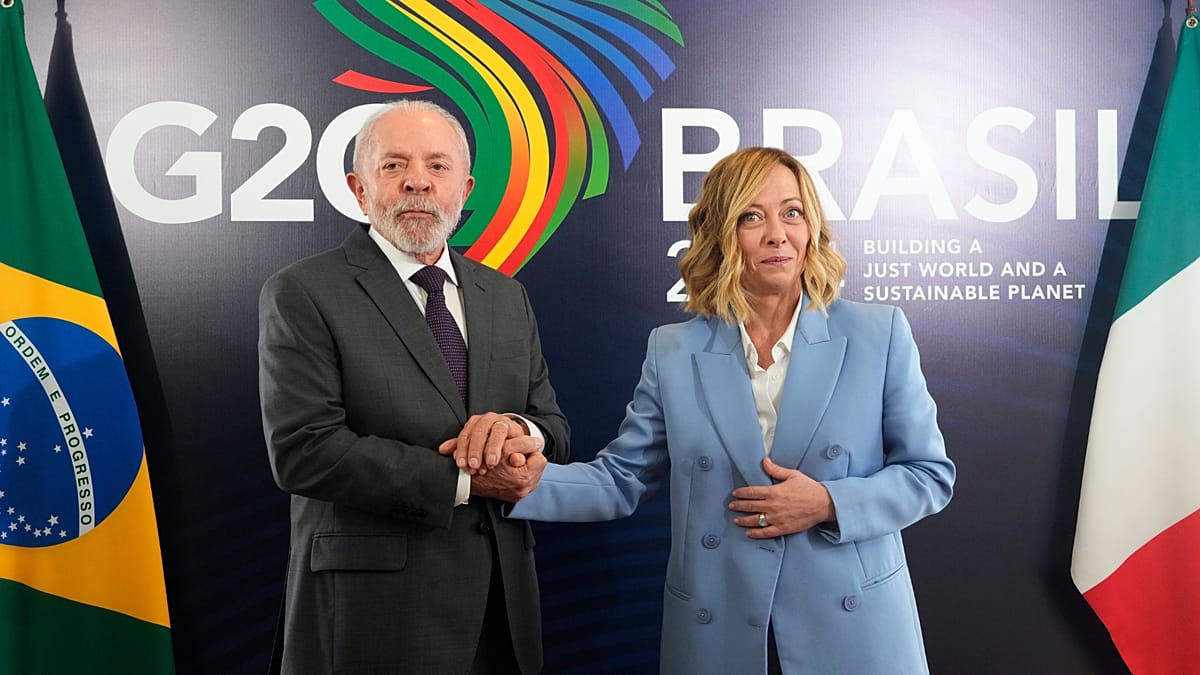
The European Commission has postponed the signing of the long‑awaited Mercosur trade agreement to early January after Italian Prime Minister Giorgia Meloni sought additional assurances for farmers, denying a planned December 20 signing ceremony. The deal, which would create a free‑trade area between the EU and Argentina, Brazil, Paraguay and Uruguay, faces opposition from France, Poland and Hungary and requires a qualified majority, raising the risk that protectionist concerns or further delays could scuttle decades‑long negotiations and alter market access dynamics for agricultural and industrial exporters.
Market structure: A signed Mercosur deal is a clear win for South American agricultural exporters (soy, beef, sugar) and large processors; expect 6–12% downward pressure on EU domestic prices in those commodities over 12–24 months if ratified, shifting margin to exporters. EU farmers, regional dairy/beef players and food processors in France/Italy are direct losers in the near term, preserving pricing power for EU incumbents while delaying cheaper imports. Cross-asset: delays keep food inflation elevated in the eurozone, supporting short-term ECB hawkishness and upward pressure on 2–10y Bund yields; conversely a signed deal would boost BRL and EWZ and pressure EUR modestly (1–3%).
Risk assessment: Tail risks include a Mercosur walkaway (low probability, high impact) that would force EU exporters to redeploy goods to other regions, causing ~3–6% hit to EU manufacturing exports over 12 months and political blowback across trade policy. Time horizons: immediate (days) = FX/option volatility around announcements; short (weeks) = ETF and equity re-pricing as votes surface; long (quarters) = structural supply-chain reallocation. Hidden dependency: ECB policy sensitivity to food CPI; a 0.2–0.4ppt food-driven CPI rise would materially change rate expectations.
Trade implications: Tactical plays favor long Brazil/commodity exposure and short EU staples: buy EWZ or Brazil exporters (1–3% book) and SOYB (1–2%) with 30–90 day option overlays to capture event timing. Hedge by buying 3-month puts on EU food leaders (e.g., Danone BN.PA) sized 0.5–1% notional; consider short 2y Bund futures (2% notional) if food inflation surprises upward >0.2% m/m. Entry triggers: initiate within 7–30 days if Commission signals January window or Lula re-iterates timeline.
Contrarian angles: Consensus underestimates political fragility — Italian and French concessions could buy only a brief window; historical precedent (CETA delays) shows deals often sign then face slow ratification, so volatility can persist 3–12 months. Market may underprice BRL upside on a signed deal; conversely EU food equities may remain supported if protections/subsidies are announced, creating mispricings to exploit with pair trades (long EWZ, short BN.PA) and event-timed options.
AI-powered research, real-time alerts, and portfolio analytics for institutional investors.
Request DemoOverall Sentiment
moderately negative
Sentiment Score
-0.35
