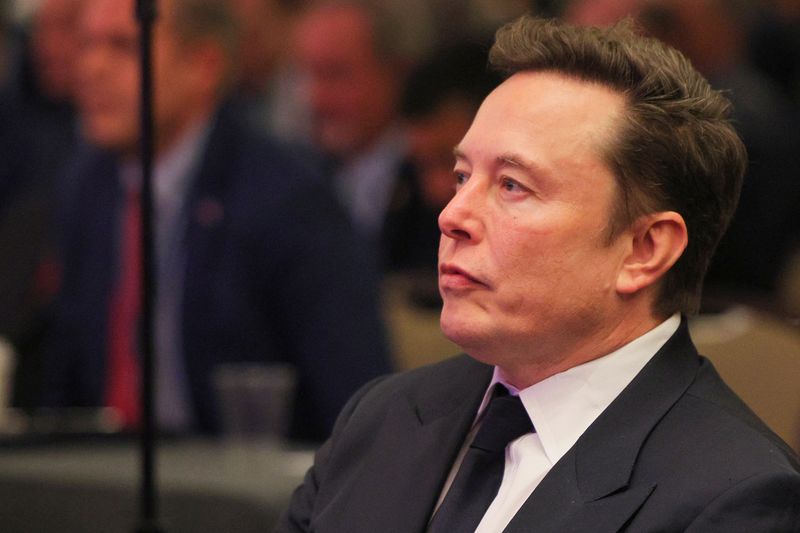
Elon Musk announced 'Terafab,' a Tesla–SpaceX advanced fab in Austin to produce 2nm chips targeting support for a terawatt of computing annually, with two chip families for Optimus/robotaxi edge inference and high-power SpaceX/xAI use cases. SpaceX plans to fund related orbital data-center ambitions via a proposed $50B IPO, and Tesla has invested $2B into xAI (Grok integration noted); the initiative materially increases vertical integration and could reshape supply chains but carries substantial engineering and capital risk.
Consolidation of critical silicon design and in-house manufacturing by a large OEM will shift margin capture away from contract foundries and toward the OEM’s consolidated business lines; for public foundries this is a demand-composition effect, not just headline revenue loss — remaining customers face higher price elasticity and could see multi-year repricing power as capacity tightens. Building and qualifying an advanced-node fab is a multi-year, multi-billion-dollar cadence: expect 24–36 month tool delivery windows, 3–6 years to steady-state yields, and upfront capital in the mid‑teens to low‑30s billions. That timeline creates a staggered wave of order flow for equipment and materials suppliers over 6–36 months even if the OEM ultimately internalizes finished silicon.
Second-order beneficiaries are specialty tool and materials providers (EUV/advanced etch, metrology, high-density packaging, radiation‑hard substrates) and outsourced advanced packaging houses; these firms will see more predictable multi-year backlog regardless of whether logic wafer starts migrate. Conversely, large-volume commodity memory vendors are more exposed to platform design substitution and spot-price volatility if a marquee customer shifts to bespoke integrated memory solutions. Geopolitical and regulatory responses (export controls, incentive programs, antitrust reviews) are a realistic tail that can reshape supplier access and timing, compressing or stretching the ramp.
Key catalysts and reversals are execution (yield curves missing internal milestones), capital-markets access (if a major equity event stalls, capex will be reprioritized), and tool-supply chokepoints (ASML-like lead times and industry equipment shortages). In the near term (days–weeks) headlines will move the OEM stock and peers, in the medium term (3–12 months) orderbooks and semicap vendors will re-rate, and in the long term (3–6 years) foundry economics and market structure could materially change.
AI-powered research, real-time alerts, and portfolio analytics for institutional investors.
Request DemoOverall Sentiment
strongly positive
Sentiment Score
0.55
Ticker Sentiment
