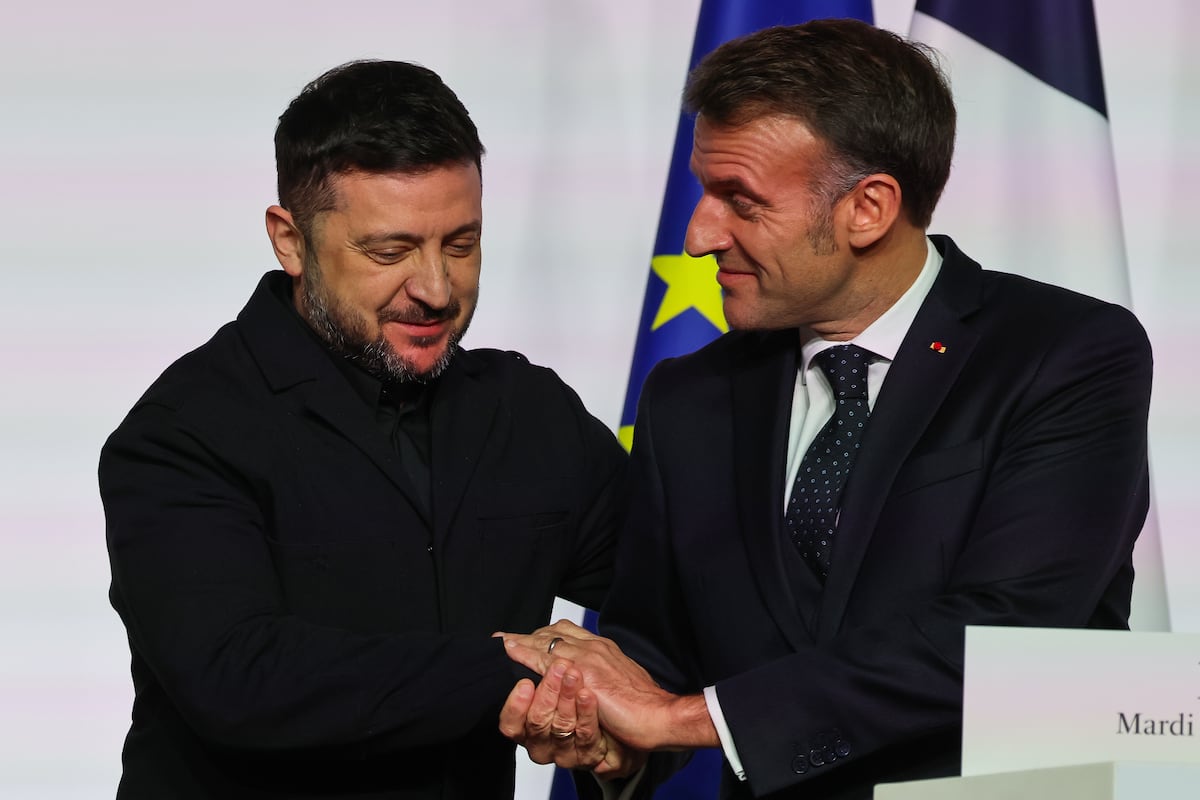
Leaders from 27 European countries, Canada, U.S. representatives and senior EU/NATO officials met in Paris to outline post-ceasefire security guarantees for Ukraine, including U.S.-led ceasefire monitoring, air/land/sea deterrence, equipment and training, military hubs in Ukraine and plans to replenish arms; French President Macron said the plan envisages a Ukrainian army of 800,000 troops. Key elements remain non-binding and subject to ratification, while the situation on the ground is volatile—Ukraine reportedly struck Russian ammunition and oil depots in Kostroma and Lipetsk—keeping geopolitical risk and potential energy/defense-sector market impacts elevated until commitments and implementation details are finalized.
Market structure: The Paris talks shift demand toward defense primes, munitions makers and logistics suppliers (higher near-term order visibility) while pressuring travel/commercial aerospace and Russian energy exposure. An 800,000-troop target implies multi-year procurement and training demand — conservatively $10–30bn incremental equipment/munitions over 12–36 months — tightening inventories and improving pricing power for specialized suppliers. USD safe-haven flows and higher oil/gas price tail-risk are likely near-term, supporting energy producers and LNG players.
Risk assessment: Key tail risks include NATO escalation or widened sanctions (5–10% probability) that could disrupt supply chains and spike energy prices; a false start or Russian non-compliance could invert demand quickly. Immediate (days): risk-premium repricing; short-term (30–180 days): ratification and contract awards; long-term (1–3 years): sustained European defence capex. Hidden dependencies include microelectronics and specialty-metal supply from constrained jurisdictions; export controls are a critical failure point.
Trade implications: Bias toward large-cap defense (LMT, NOC, RTX) and sector ETFs (ITA) via 6–12 month structured option exposure; favor LNG/European energy producers (EQNR, E) for energy security upside. Pair trades: long defense vs short airlines (AAL, IAG) to capture relative rerating; maintain a 1–2% portfolio tail hedge (VXX/VIX calls) for escalation spikes. Entry: scale 25% now, 75% on 5–10% pullbacks; exit or trim on verified 90-day de-escalation.
Contrarian angles: Consensus assumes fast, large procurement flow — risks underpriced include bureaucratic ratification delays and supply-chain bottlenecks that can defer revenue 6–18 months. Defense primes may be priced for victory; prefer mid-cap munitions/logistics names where EBITDA leverage is higher and multiples may rerate more if contracts materialize. Unintended consequence: credible long-term guarantees could reduce future orders if deterrence succeeds, so size positions with 12–24 month stop/trim rules.
AI-powered research, real-time alerts, and portfolio analytics for institutional investors.
Request DemoOverall Sentiment
neutral
Sentiment Score
0.00
