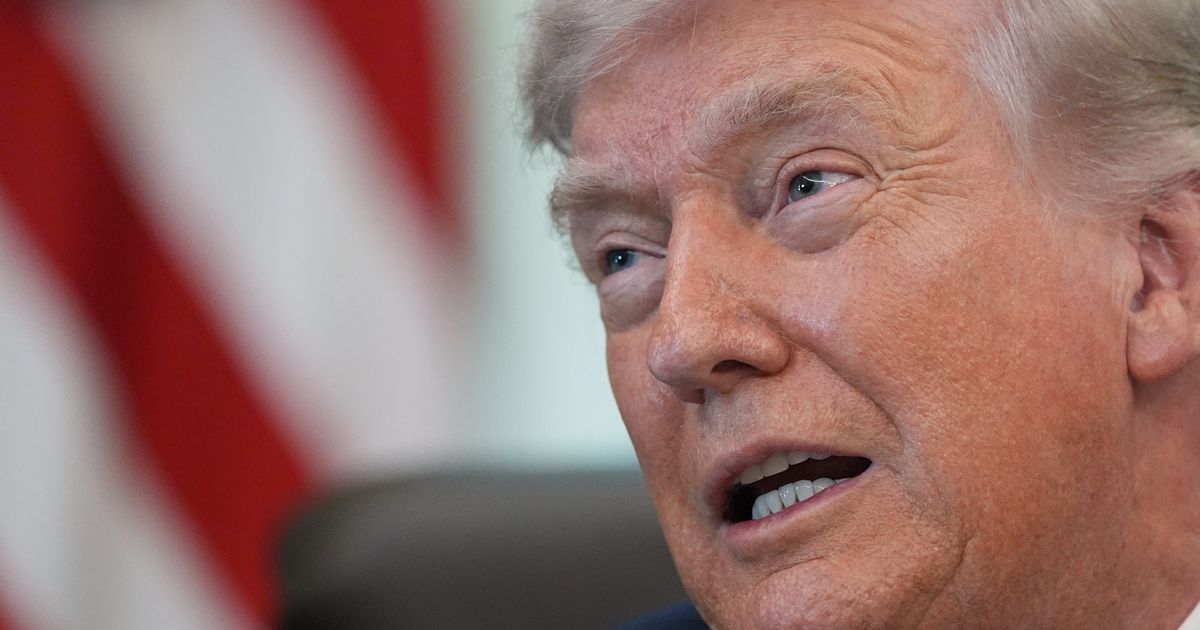
President Trump will deliver a primetime address on a war with Iran that has killed more than a dozen U.S. service members and prompted thousands of additional U.S. troops to head to the Middle East. The conflict has disrupted the Strait of Hormuz — which normally carries about one-fifth of global oil — pushing energy prices higher and contributing to inflationary pressure at the pump while financial markets swing on mixed policy signals. Trump is approaching the 60-day War Powers Act deadline to seek congressional approval, and his comments on NATO and potential further escalation (including a possible ground invasion) add geopolitical uncertainty ahead of the midterm elections.
Geopolitical escalation centered on Persian Gulf chokepoints will transmit to energy and transport costs more quickly than to headline production outages. Expect a mechanically larger Brent vs WTI basis as tankers reroute or demand for insured passage rises; a sustained 2–8 week disruption window could push the spread $5–15/bbl via longer voyage times and higher tanker dayrates before physical rebalancing occurs. Refinery runs and product cracks will be the first to feel margin compression, creating a temporary margin windfall for upstream producers with light tight-oil exposure and storage capacity.
Political noise around alliance commitments increases policy uncertainty for defense procurement decisions on a 6–24 month cadence. Even if formal treaty withdrawal is legally constrained, talk alone accelerates European rearmament budgeting and fast-tracks short-cycle munitions and missile defense buys; contracts placed in the next 3–12 months disproportionately benefit mid-cap primes and specialized suppliers with available capacity and short lead times. Conversely, commercial cyclicality (air travel, leisure shipping) will underperform near-term as elevated fuel and insurance costs compress demand elasticities.
Market structure effects will amplify volatility: equity risk premia rise, cross-asset correlations increase, and liquidity in energy and tanker markets tightens episodically. That makes time-decaying convex hedges and targeted pair trades superior to directional outright exposures. The next major catalysts are (1) any announced coalition naval/security plan (days–weeks), (2) Congressional posture on war-authority funding at ~60 days, and (3) visible procurement awards from NATO/EU budgets over the next 3–12 months — each capable of materially re-rating different sector winners within narrow windows.
AI-powered research, real-time alerts, and portfolio analytics for institutional investors.
Request DemoOverall Sentiment
strongly negative
Sentiment Score
-0.70
