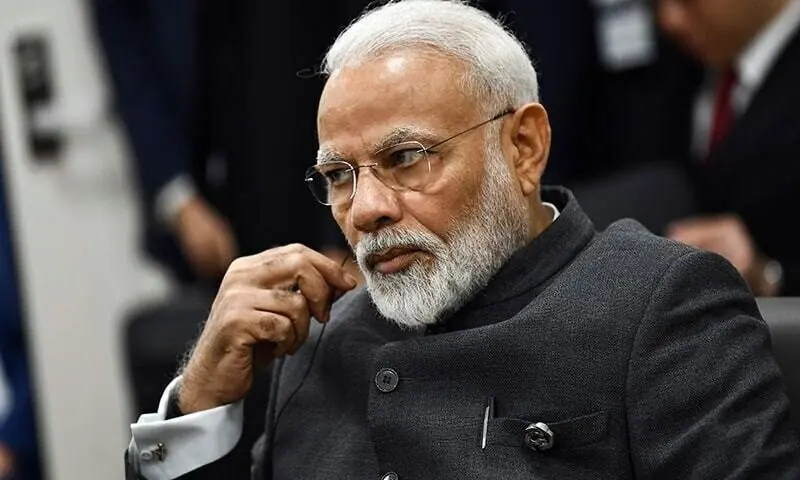
India's ruling BJP claimed a record win in West Bengal, leading in 156 of 293 seats and winning 48 others, while also securing returns to power in Assam and Puducherry. The results strengthen Prime Minister Narendra Modi's position ahead of the 2029 general election, though the article also highlights electoral violence, voter-roll disputes, and an upset loss for Tamil Nadu chief minister MK Stalin to Vijay's TVK. Overall, the piece is politically significant for India but not a direct market-moving event.
The market implication is less about the headline winners and more about mandate durability: a stronger national ruling party now has a clearer runway to press a reform agenda into the next fiscal cycle, which should keep policy continuity premium intact for Indian financials, infrastructure, and capex-sensitive cyclicals. That matters because India’s equity risk premium has increasingly been justified by stable execution rather than cheap valuation; a politically emboldened center can accelerate bank recapitalization, project approvals, and disinvestment, all of which tend to show up first in domestic-facing lenders and capital goods before broad GDP data catches up. The second-order loser is not just the opposition, but any factor basket relying on fragmentation and federal pushback to constrain central policy. If regional parties weaken, expect faster normalization of land, labor, and subsidy decisions at the state level in large industrial states over the next 6-18 months, which is constructive for logistics, cement, power equipment, and private-sector capex. The immediate risk is that louder majoritarian politics and election-related frictions increase social volatility, but that tends to be a short-lived headline risk unless it bleeds into credit conditions or urban consumption. The bigger medium-term swing factor is execution versus expectations: a stronger mandate can lift reforms, but it also raises the probability of overconfidence on taxation, trade, and regulatory pressure on sectors viewed as politically strategic. That creates a bifurcation where domestically oriented growth names outperform, while rate-sensitive sectors and exporters may lag if policy prioritizes inflation control and local manufacturing over external competitiveness. The contrarian takeaway is that the move is likely underpriced for banks and capex names, but over-optimism around consumer discretionary could be premature if election-driven volatility and income stress persist. For Tamil Nadu, the emergence of a new political force is a reminder that anti-incumbency is becoming personality-driven, not ideological. That is a warning sign for any state-level incumbent cash-flow model in India: voter churn is increasingly faster than traditional polling suggests, which raises the discount rate on regional champions with concentrated exposure to one geography and one leadership brand.
AI-powered research, real-time alerts, and portfolio analytics for institutional investors.
Request DemoOverall Sentiment
neutral
Sentiment Score
0.10
