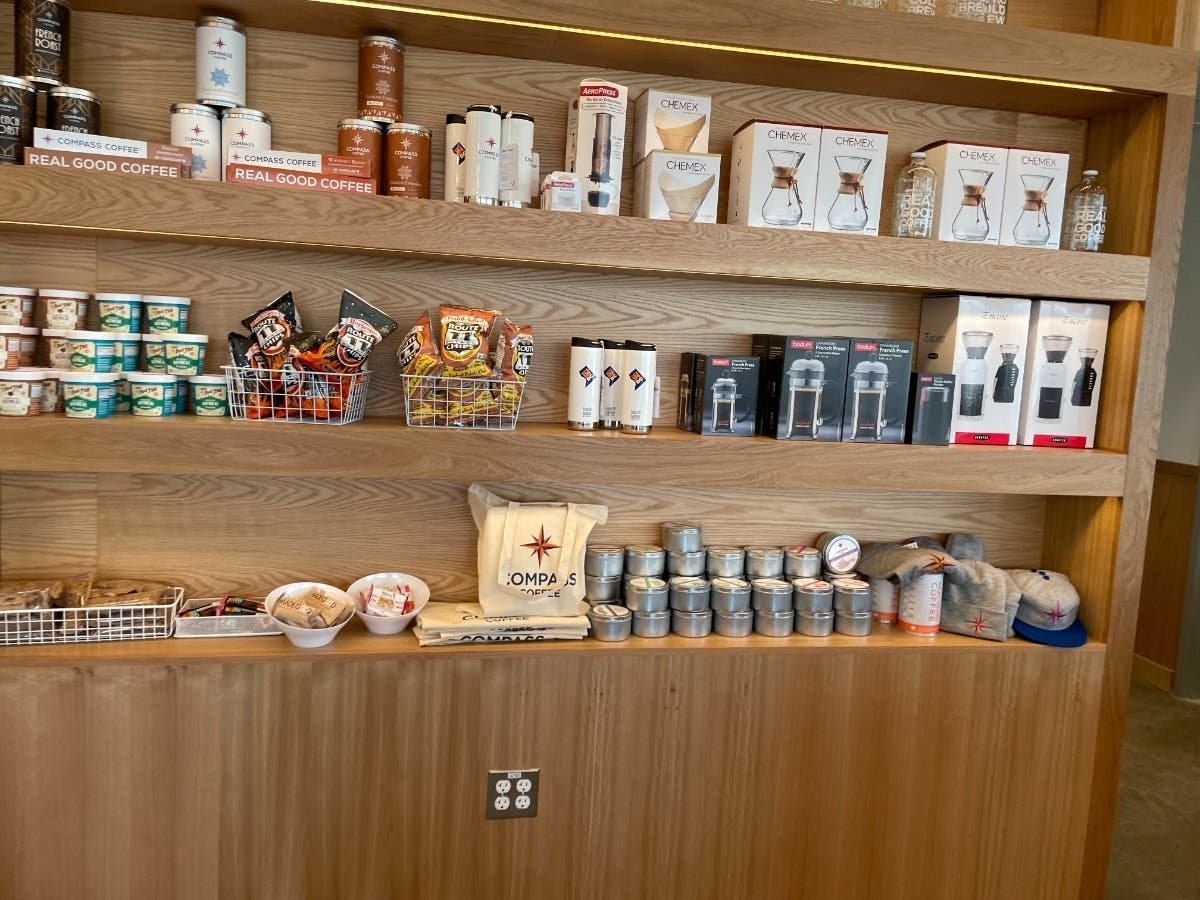
Compass Coffee, operator of 25 cafes across D.C., Maryland and Virginia, filed for Chapter 11 in Washington D.C. after multi-year revenue declines that began in 2020; CEO Michael Haft says a strategic global coffee buyer has been identified and a purchase agreement will be filed for court approval as an asset sale of the business as a going concern. The company owes roughly $1.7 million to four secured creditors (including EagleBank $643,779.25, SBA $464,782.07 and Square $518,083.19), about $5.2 million to insider and outside investors, ~$100,000 to inKind, and over $4.8 million to 100+ unsecured creditors; Compass employs 166 workers. Haft expects the proposed sale to pay secured lenders in full, cover restructuring costs and yield proceeds for unsecured creditor distributions; the filing also requests an automatic stay in an ongoing lawsuit between founders.
Market structure: The Compass Coffee bankruptcy is a local manifestation of a broader bifurcation in foodservice — national/global chains (e.g., SBUX, MCD, YUM) and well-capitalized buyers gain share while independents and mall/office-adjacent cafés lose scale and negotiating power. Expect pricing/lease leverage to tilt toward large operators and landlords will face pockets of vacancy; empirically, consolidation can widen EBITDA margin dispersion by 200–400 bps over 12–24 months.
Risk assessment: Tail risks include an asset-stripping sale that leaves landlords with high vacancy, contagion to other regional chains, and litigation (insider suits) delaying recovery; these risks crystallize immediately (days–weeks) and play out over 3–12 months as the Chapter 11 sale completes. Hidden dependencies: SBA disaster loans, receivables financing (Block/SQ) and landlord co-tenancy clauses — monitor those balances as second‑order stress points. Key catalysts: court approval of buyer (30–90 days) and regional office re-occupancy metrics (monthly) that will govern foot-traffic recovery.
Trade implications: Tactical winners are large branded operators and defensively positioned foodservice names; losers are small-cap, office/mall‑centric operators and certain local landlords/office REITs. Short-term (0–3 months) volatility around the sale process favors buy-write/call-spread structures on leaders; medium-term (3–12 months) play is reallocation from small-cap restaurants into SBUX/MCD and hedges on office REITs and exposed regional banks. Maintain position sizing discipline (2–3% core longs, 0.5–1% protective hedges).
Contrarian angle: The market may overstate contagion — a strategic buyer with global scale often preserves higher-value locations, reducing unsecured losses and limiting systemwide defaults. Square/Block exposure here is likely modest relative to its total merchant book, so a surgical hit, not systemic stress; historical parallels (post-2008 consolidation, post-2020 shakeout) show national brands recover share within 12–24 months, creating asymmetric upside for well-capitalized operators.
AI-powered research, real-time alerts, and portfolio analytics for institutional investors.
Request DemoOverall Sentiment
moderately negative
Sentiment Score
-0.60
