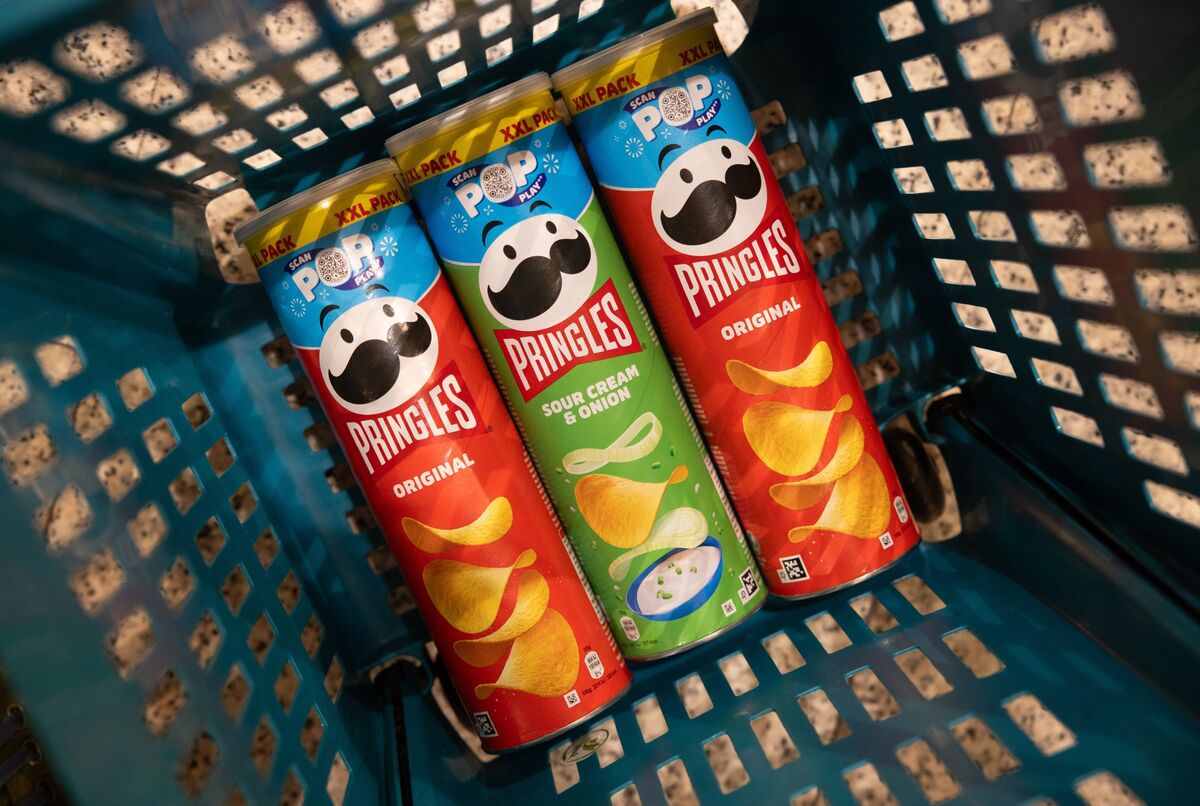
The European Commission granted unconditional approval for Mars Inc.'s $36 billion acquisition of cereals and Pringles maker Kellanova after regulators withdrew earlier concerns about Mars leveraging increased portfolio power in retailer negotiations. The clearance removes a major regulatory hurdle for what is the largest packaged-food deal in nearly a decade and paves the way for consolidation in the packaged-food sector, with potential implications for retailer bargaining dynamics and shareholder value for Kellanova.
Market structure: Mars’ $36bn acquisition of Kellanova (K) consolidates branded snacks/cereals and likely raises Mars’ negotiating leverage with large grocers. Winners: Mars (private), branded peers (MDLZ, PEP, GIS) that can justify price increases; Losers: concentrated retailers with thin grocery margins (KR, WMT) and private‑label suppliers. Expect a modest immediate uplift to sector M&A comps (valuation re‑rating of branded staples +3–7% over 3–12 months) and small upward pressure on corn/wheat input forward curves (~1–3% over 6–12 months) if pricing power is exercised.
Risk assessment: Tail risks include a second‑wave regulatory push (US/UK remedies or divestiture demands within 30–90 days), financing stress at Mars (if deal levered) that forces asset sales, or integration failures causing 200–400bps margin erosion. Near term (days–weeks) the arb/pricing reaction will dominate; short term (3–6 months) retailer renegotiations and commodity moves matter; long term (12–36 months) realized synergies or private‑label pushback dictate fair value. Hidden dependencies: slotting fees, private‑label growth, and co‑op advertising agreements—these can flip beneficiary/loser status quickly. Catalysts: DOJ/UK filings, Mars debt offerings, and quarterly retail merchandising negotiations.
Trade implications: Direct plays — small merger‑arb/long K exposure until close, plus selective longs in MDLZ/PEP to capture re‑rating and pricing tailwinds. Pair trades — long branded staples (MDLZ) vs short large grocers (KR/WMT) to express brand pricing vs retail margin squeeze. Options — use 3–6 month call spreads on MDLZ/PEP (limit cost to <1% notional) to leverage possible +5–10% rerating while capping downside. Rotate 1–3% portfolio weight from grocery retailers into packaged staples over 1–3 months.
Contrarian angles: Consensus assumes consolidation automatically equals pricing power; risk that grocers push deeper private‑label or require promotional concessions, capping margin upside. Historical parallel: Kraft/Heinz era showed short‑term synergies but long‑term brand fatigue and retailer pushback; expect similar mixed outcomes. Unintended consequence: stronger Mars balance sheet pressure could accelerate category price hikes that depress volumes >2–4% in lower‑income cohorts, inviting regulatory scrutiny and consumer backlash.
AI-powered research, real-time alerts, and portfolio analytics for institutional investors.
Request DemoOverall Sentiment
moderately positive
Sentiment Score
0.45
Ticker Sentiment
