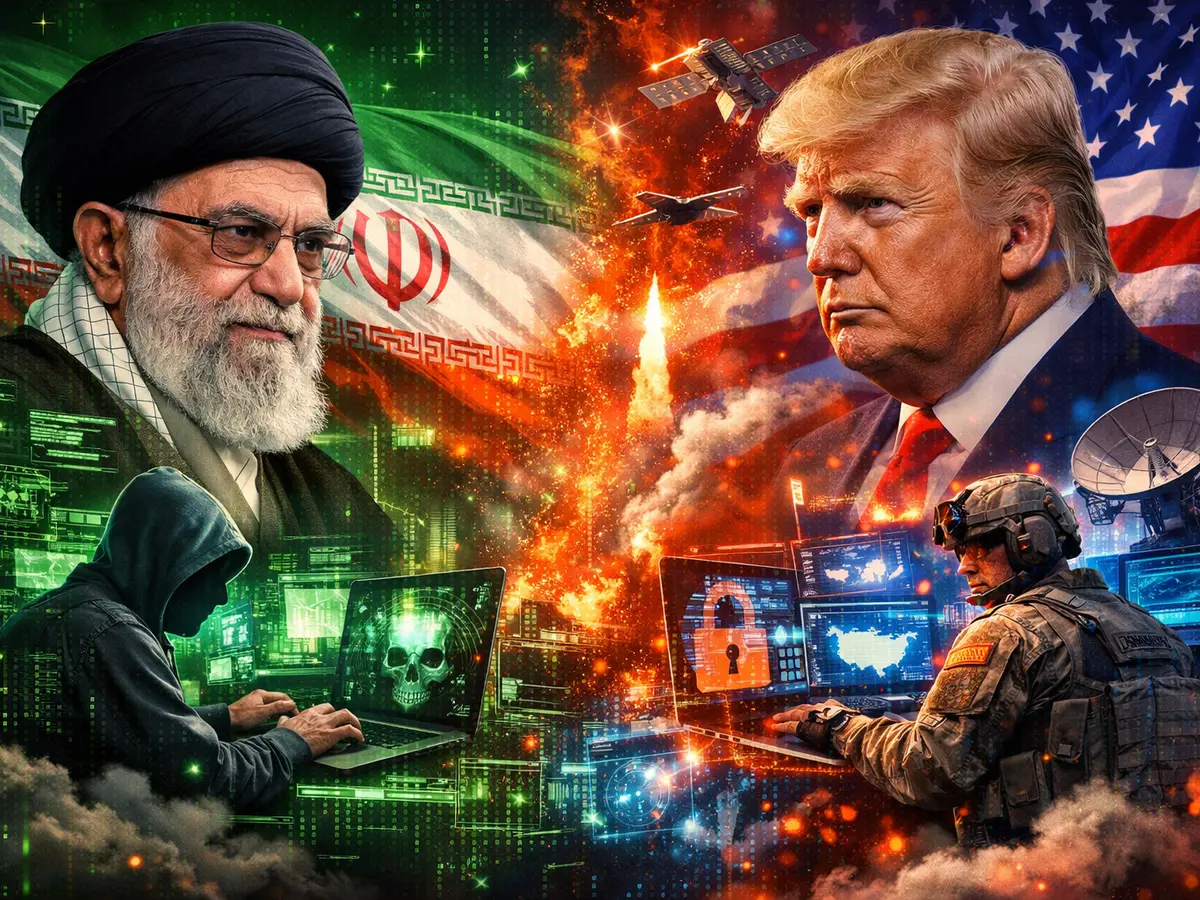
The U.S. has sharply escalated its posture near Iran by deploying the USS Abraham Lincoln Carrier Strike Group to the Arabian Sea and forward-basing B-52 Stratofortress bombers at Al Udeid Air Base in Qatar (capable of carrying up to 70,000 lbs of weapons), alongside F-35 squadrons, Tomahawk-armed destroyers, and additional Patriot and THAAD batteries protecting roughly 10,000 U.S. personnel. The buildup — described as moving from deterrence to combat readiness and timed after stalled indirect talks in Oman — increases regional military tail-risk, raising the risk premium for oil markets and likely supporting defense-related equities while prompting risk-off positioning across broader markets.
Market structure: Defense primes (LMT, NOC, RTX, GD) and munitions/aircraft-systems suppliers are direct beneficiaries as forward basing and missile-defence buys lift near-term procurement and spare-parts demand; expect 3–12 month revenue visibility to firm and bid multiples to rerate by 5–15% on sustained tension. Losers include airlines/cruise (AAL, UAL, CCL), regional tourism/EM carry trades and oil-dependent industrials; a 5–15% crude move would immediately widen fuel costs and compress airline margins. Cross-asset: expect a classic risk-off mix—Treasuries bid (10yr yields -10–30bps), USD stronger vs EM (EMFX -3–8%), gold +3–8%, implied equity vol (VIX) +20–50% from baseline; commodity volatility rises most in Brent/WTI and Gulf-linked LNG flows.
Risk assessment: Tail risks include a kinetic strike on Gulf shipping or the Strait of Hormuz closure (low prob, high impact) which could spike Brent >20% and force strategic inventory releases; escalation risk window is immediate–90 days. Hidden dependencies include defence firms’ supplier concentration and long contract close-out lags (supply-chain bottlenecks can delay revenue recognition); central bank reaction to commodity-driven inflation is a second‑order fiscal/monetary risk. Catalysts to accelerate or reverse markets: proxy attacks, failed diplomacy, or visible damage to US assets (upside for defense, downside for risk assets) and conversely credible de-escalation talks or Iranian restraint.
Trade implications: Tactical longs in large-cap defense for 1–4 quarters, paired with short/underweight travel & EM carry. Option structures to buy convexity—short-duration WTI Brent call spreads on a volatility spike trigger, and long-dated gold exposure for insurance. Entry/exit: initiate within 1–7 days for defense/gold; size oil trades off observable triggers (Brent +7% or >$95) and trim defense on +15–25% rallies; keep overall portfolio risk tilt to 1–4% per trade.
Contrarian view: The market may overpay for permanent escalation; historical parallels (2019 tanker incidents) show oil rallies often fade inside 4–8 weeks absent sustained supply disruption. If no kinetic exchange in 6–8 weeks expect mean reversion: defense sentiment can unwind, oil premiums contract, and volatility decays by 30–50%. Unintended consequence: a sustained defense rerating could lift industrial inflation and force hawkish central-bank messaging, pressuring long-duration equities—manage convexity accordingly.
AI-powered research, real-time alerts, and portfolio analytics for institutional investors.
Request DemoOverall Sentiment
moderately negative
Sentiment Score
-0.50
