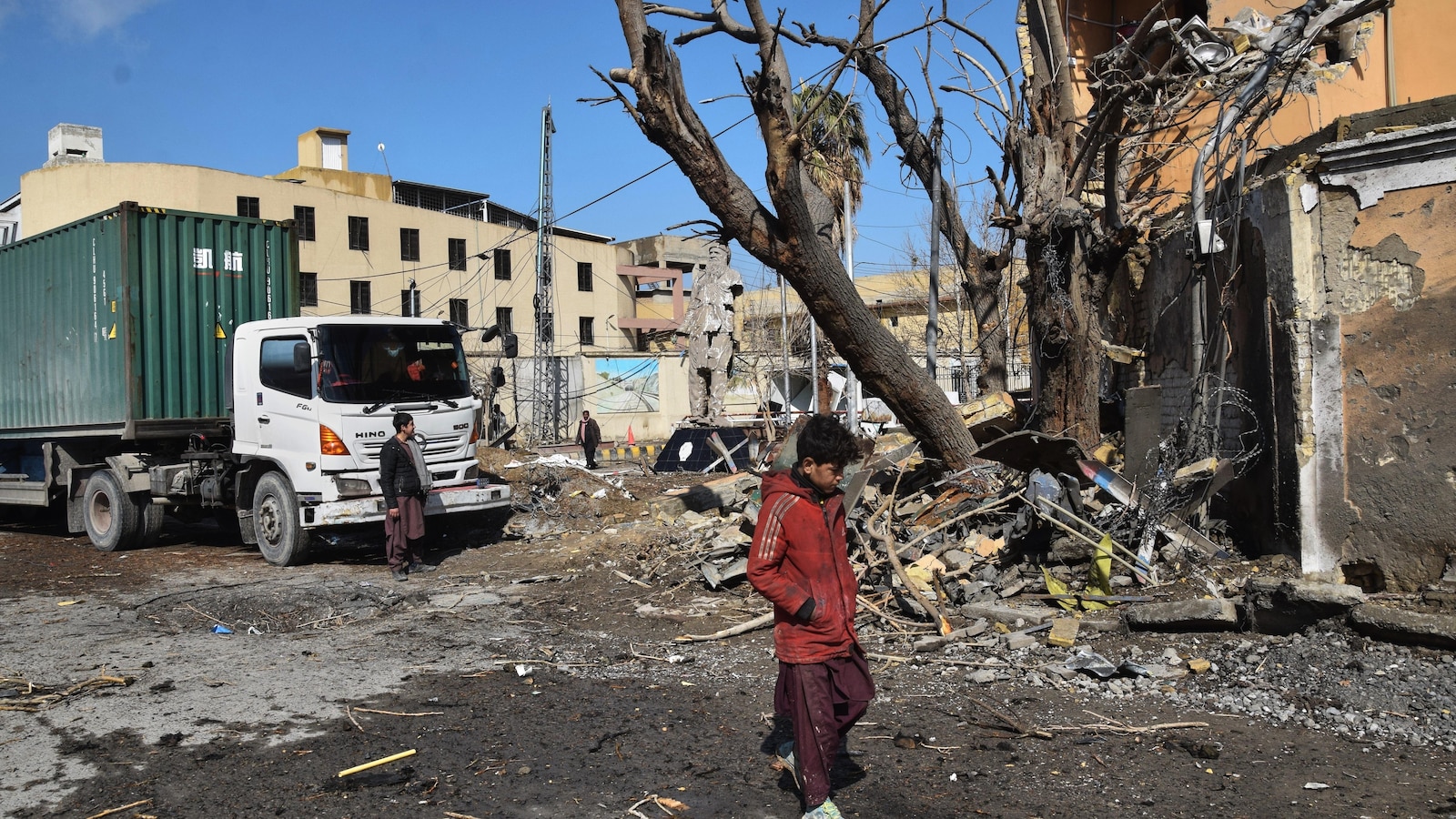
A surge of coordinated militant attacks in Pakistan's Balochistan province killed dozens—officials report at least 36 civilians and 17 security personnel—and Pakistani forces say they have killed 197 militants, with the Baloch Liberation Army claiming responsibility. The U.N. Security Council condemned the attacks as Pakistani security operations continue in the insurgency-hit region. The violence increases political and security risk in Pakistan, with potential near-term pressure on investor sentiment, sovereign risk premia and local markets sensitive to regional instability.
Market structure: Immediate beneficiaries are safe-haven assets and security/defense suppliers while Pakistan-risk assets (equities, sovereign/local bonds, PKR) face direct outflows. Expect rapid liquidity deterioration in Pakistan-listed instruments (PAK liquidity decay, bid-ask spreads widen), upward pressure on sovereign yields (5y spreads could widen 200–500 bps in stressed weeks) and PKR depreciation 5–15% in 1–3 months absent capital support. Cross-asset: USD and gold (GLD) bid; regional FX like INR may firm; oil impact muted but regional insurance and shipping rates could tick up.
Risk assessment: Tail risks include large-scale escalation that forces capital controls, suspension of IMF/Chinese inflows, or prolonged insurgency reducing GDP by 2–4% annualized; such scenarios could make sovereign default or rescheduling >20% probability in worst case over 12 months. Time horizons: days—spikes/flow squeezes and volatility; weeks–months—FX weakness and yield curve repricing; quarters—structural FDI and project delays. Hidden dependencies: IMF tranche timing, China-Pakistan Economic Corridor funding, and remittance flows; these are binary catalysts that materially change outcomes.
Trade implications: Tactical short Pakistan exposure (PAK) and hedge EM local rates; buy protection on PKR/sovereign risk and rotate into gold and select defense names. Options: use 1–3 month put spreads on PAK to cap cost (buy 10% OTM, sell 5% OTM) and buy 3-month USD/PKR forwards if available. Entry: hedge immediately (0–7 days); build directional positions over 2–6 weeks; exit or reduce after two consecutive weeks of materially lower attack cadence or IMF tranche disbursement.
Contrarian angles: Consensus may overshoot; if security operations materially reduce attacks and China/IMF release support, PAK could rebound 20–40% in 3–12 months given small market cap and low liquidity. Consider disciplined re-entry after >25% drawdown with hard triggers (7-day decline in attacks >50% and central bank FX reserves stabilization within 30 days). Beware of policy missteps—capital controls would wipe out liquid trade assumptions.
AI-powered research, real-time alerts, and portfolio analytics for institutional investors.
Request DemoOverall Sentiment
strongly negative
Sentiment Score
-0.50
