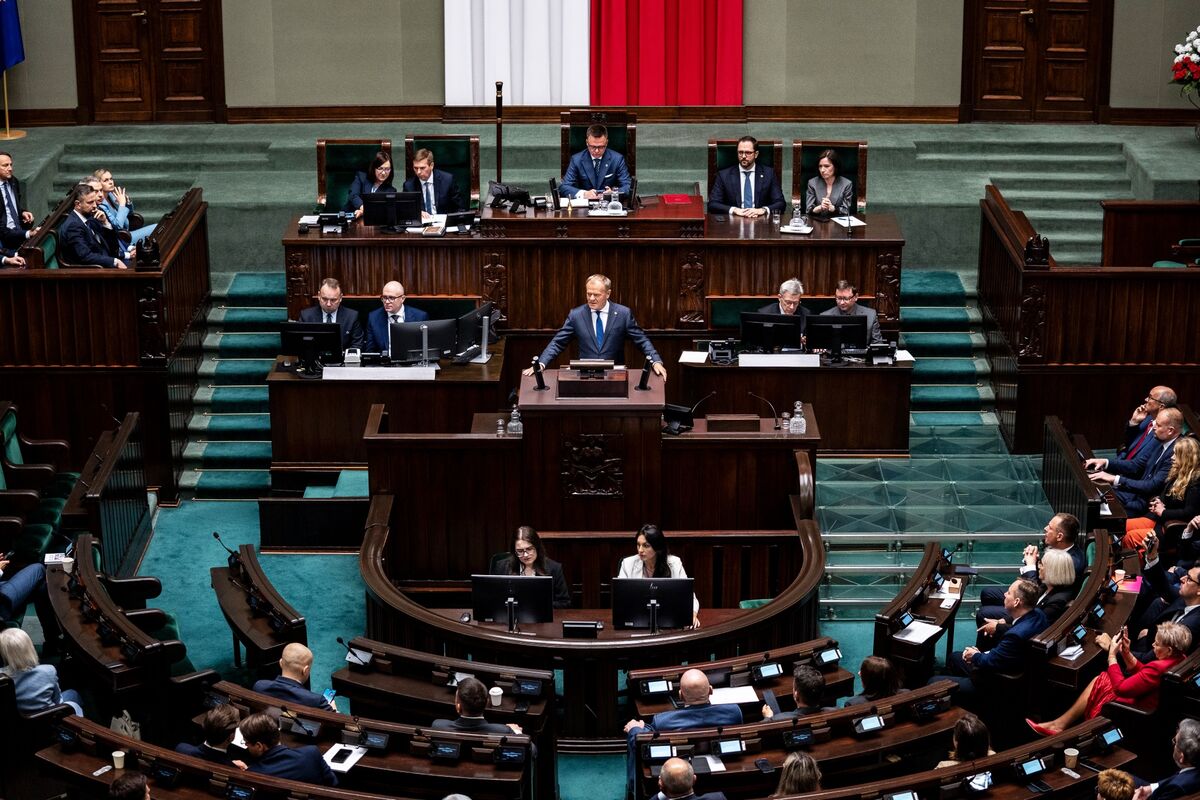
Polish Prime Minister Donald Tusk announced a government reshuffle slated for July as he seeks to consolidate his coalition's position ahead of a parliamentary confidence vote. The move comes in response to the defeat of Tusk's ally in the recent presidential election, which exposed rifts within the ruling coalition and triggered calls for his resignation. Tusk is aiming to reaffirm his leadership and stabilize the government through this vote.
Polish Prime Minister Donald Tusk has announced a government reshuffle scheduled for July, a strategic maneuver preceding a parliamentary confidence vote intended to reinforce his leadership and stabilize his ruling coalition. This development is a direct consequence of the defeat of Tusk's ally in the June presidential election, an outcome that revealed internal rifts within the coalition and prompted calls for the Prime Minister to resign. The upcoming confidence vote is therefore a critical test for Tusk's administration. The prevailing sentiment surrounding this situation is moderately negative, accompanied by an uncertain tone, reflecting the inherent political instability. While the assessed immediate market impact score is low at 0.3, ongoing domestic political uncertainty and governance challenges in Poland could still influence investor sentiment and potentially affect Polish assets if instability persists or escalates.
AI-powered research, real-time alerts, and portfolio analytics for institutional investors.
Request DemoOverall Sentiment
moderately negative
Sentiment Score
-0.50
