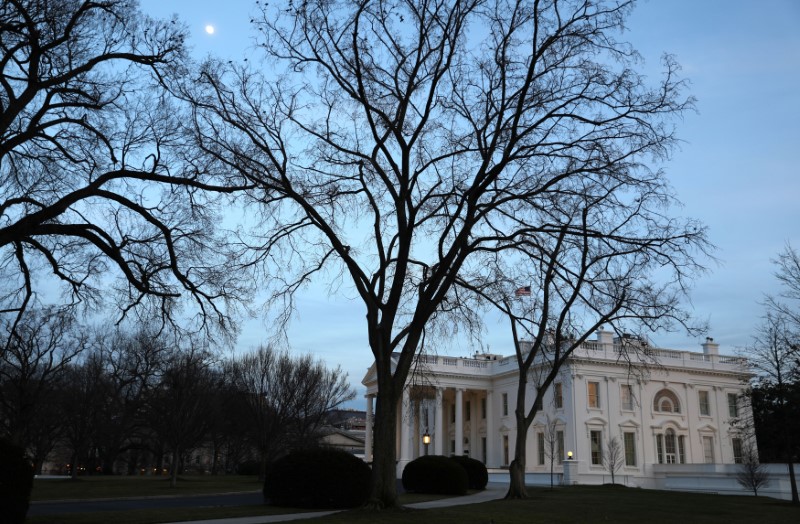
The administration filed an emergency motion to restart construction on a $400M White House ballroom after U.S. District Judge Richard Leon ordered work halted; the judge allowed a 14-day window to appeal. The National Trust for Historic Preservation sued, arguing the project requires congressional approval, while the administration says the pause creates national security risks and that the legal claims are baseless. The project follows demolition of the historic East Wing (built 1902) and forms part of broader Trump plans to reshape Washington landmarks.
The legal-and-political environment around high-profile federal projects increases uncertainty for capital allocation and procurement timing; that dynamic favors suppliers who win on speed-to-contract and have product differentiation that is hard to substitute (secure on-prem AI/compute, ruggedized hardware). Firms selling modular, certification-ready compute systems capture outsized share when procurement windows re-open quickly, while pure ad-tech and consumer-facing revenue streams are more exposed to cyclical political ad budgets and regulatory scrutiny.
Near-term catalysts are court rulings, election calendar noise, and any incremental guidance from federal procurement offices — these operate on week-to-month cadences and can flip demand curves. Tail risks include rapid de-escalation of political tensions or a court precedent that tightens oversight of executive-driven projects, which would compress near-term government spend; conversely, a protracted legal fight or geopolitical spike could accelerate secure-hardware buys within 3–12 months.
Tradeable asymmetry: overweight companies with direct, quickly-deployable hardware that meet security/sovereign requirements (higher idiosyncratic upside if government or defense budgets reallocate), and underweight ad-monetization businesses that depend on sustained, high-frequency political ad cycles and tolerant privacy regimes. Time horizon: 3–12 months for conviction trades, with options used to define capital at risk around binary legal/ political events.
Contrarian angle — market consensus treats this as transitory political noise; we see a structural shift where litigation/friction raises the option value of on-prem solutions and raises customer switching costs away from cloud programmatic spend. That underappreciated micro tailwind makes select compute vendors structurally more attractive than ad-platform peers over the next 6–18 months.
AI-powered research, real-time alerts, and portfolio analytics for institutional investors.
Request DemoOverall Sentiment
neutral
Sentiment Score
0.00
Ticker Sentiment
