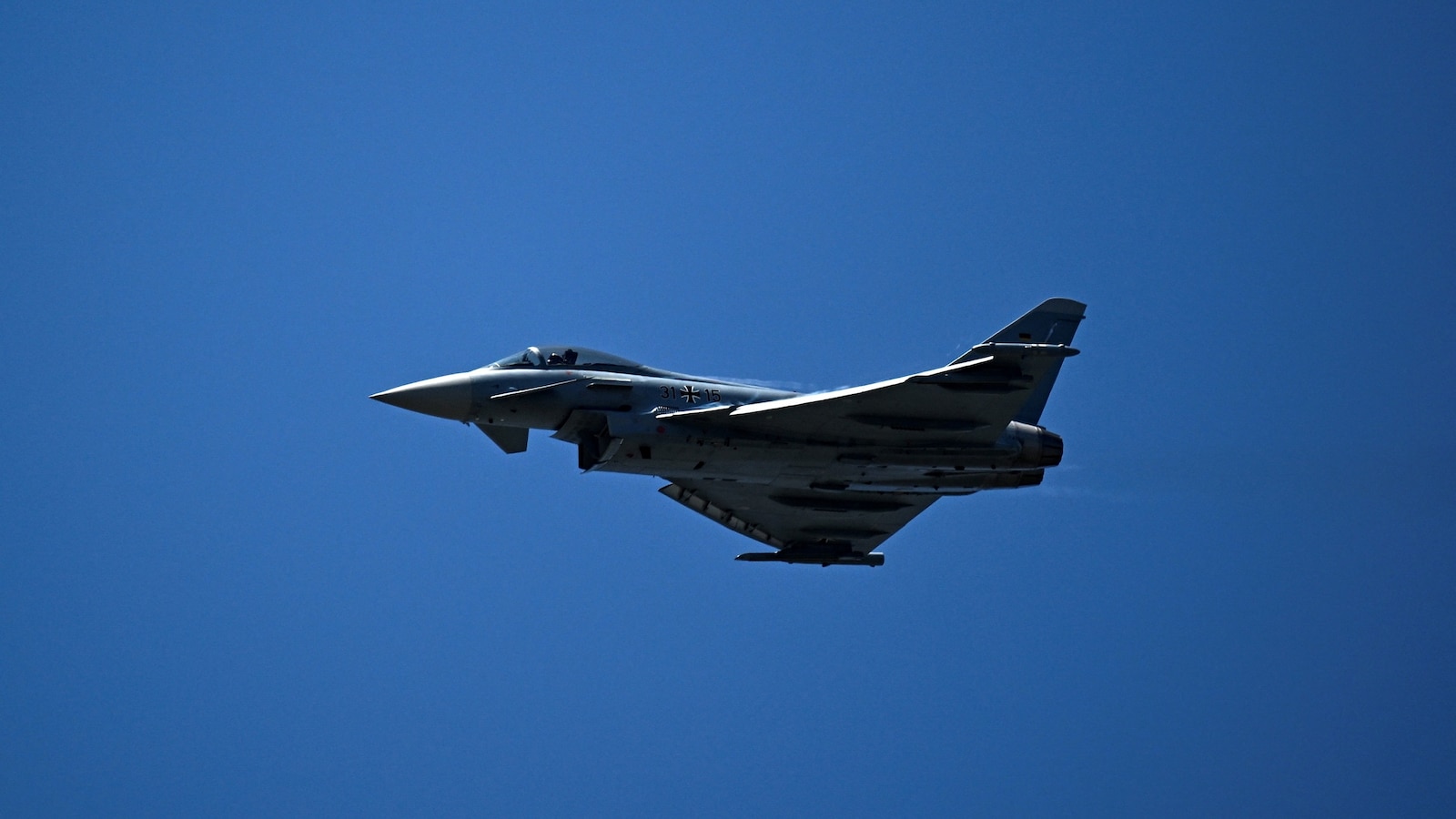
Russia conducted large-scale drone and missile attacks overnight on Ukrainian infrastructure, notably impacting the Danube port of Izmail near the Romanian border. The proximity to NATO territory prompted Romania to scramble two German Typhoon fighters for air situation monitoring, underscoring persistent geopolitical tensions along the alliance's eastern flank.
The latest Russian aerial assault on Ukraine, involving 93 drones and two ballistic missiles, signals a continued strategic focus on degrading Ukrainian infrastructure, with significant geopolitical implications. The targeting of port facilities in Izmail, situated on the Danube river directly across from NATO member Romania, prompted a direct, albeit precautionary, military response from the alliance: the scrambling of two German Typhoon fighters to monitor the situation. This action, part of NATO's Enhanced Air Policing mission, underscores the heightened state of alert and the persistent risk of spillover along the eastern flank. While Romanian authorities confirmed no penetration of national airspace occurred during this specific mission, the incident fits a pattern of Russian attacks near NATO borders, with prior instances of munitions fragments landing in Romania, Lithuania, and Latvia. Ukrainian President Zelenskyy's subsequent call for new sanctions and tariffs indicates a potential for further economic measures, while Russia's own temporary flight restrictions at several domestic airports suggest a broader operational scope and reciprocal military activity.
AI-powered research, real-time alerts, and portfolio analytics for institutional investors.
Request DemoOverall Sentiment
strongly negative
Sentiment Score
-0.70
