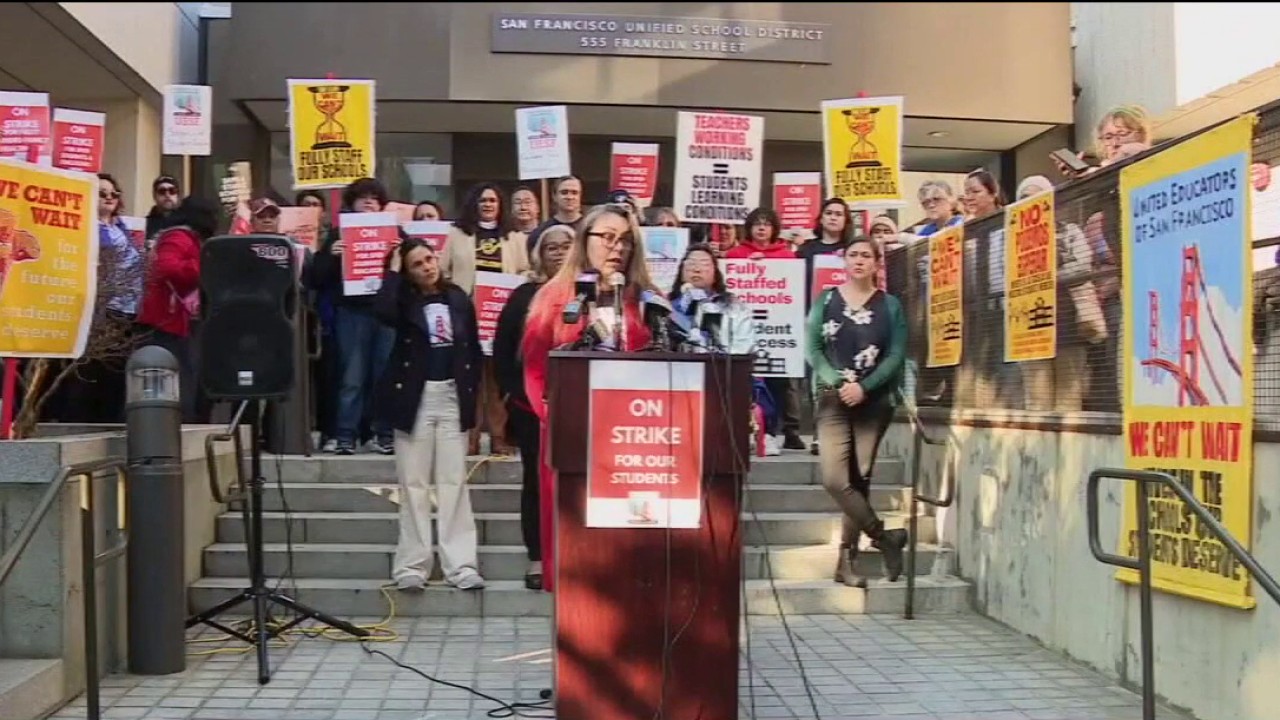
San Francisco Unified School District and teachers' union continued last‑minute negotiations ahead of a Monday deadline after the district preemptively cancelled classes affecting roughly 50,000 students. The dispute centers on teacher pay, health care, special education resources and services for immigrant and homeless students; a prolonged strike — the last major walkout was in 1979 and lasted seven weeks — would create operational disruption, childcare burdens for families and potential budgetary pressure for the district.
Market structure: A short SFUSD strike is a localized shock benefiting backup childcare providers, private tutoring/ed‑tech and temp staffing for 1–3 weeks while depressing foot traffic to SF micro-economies (cafes, after‑school retail). Expect a small rotation into Bright Horizons–type providers and online tutors with revenue bumps of a few percent in affected weeks; broader corporate revenues and statewide fiscal metrics remain unchanged unless strike >2–4 weeks.
Risk assessment: Tail risks include a prolonged strike (≥4 weeks, historical outlier: SF 1979 = 7 weeks) that forces SFUSD to seek incremental funding or state aid, pressuring San Francisco muni spreads by an estimated +10–50bps and forcing budget re‑prioritization. Immediate risk (days): operational disruption and local consumer softness; short term (weeks–months): wage precedent for other CA districts; long term (quarters+): potential higher labor costs baked into municipal budgets and increased private childcare demand.
Trade implications: Tactical plays favor childcare/ed‑tech longs and short-duration muni protection if the strike extends. Options can monetize short-dated volatility around settlement windows (48–96 hour news sensitivity). Size positions small (1–3% allocation) and scale only if strike duration breaches 5 school days or settlement implies >3% recurring labor cost increase.
Contrarian angles: Markets underprice recurrent municipal labor risk — a protracted settlement that raises annual teacher compensation 3–5% would be a persistent budget shock, not a one‑off, benefiting scalable private tutoring (CHGG, LRN) and child‑care operators (BFAM). Conversely, if settlement is swift (<5 days) the uplift for private providers will be transitory and likely overbought; avoid paying up for long-dated exposures on this single event.
AI-powered research, real-time alerts, and portfolio analytics for institutional investors.
Request DemoOverall Sentiment
mildly negative
Sentiment Score
-0.25
