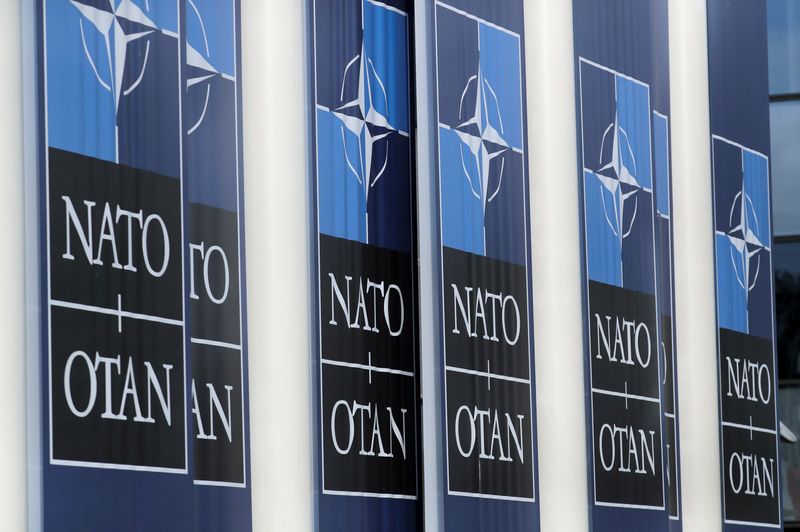
European officials are reportedly developing a NATO-based contingency plan in case the U.S. exits the alliance, reflecting rising concern over America’s security commitment. The WSJ says the proposal would shift more command-and-control roles to Europeans and replace some U.S. military assets, implying a major structural change for NATO. The article is risk-off for European defense and broader markets, with implications for sentiment, the dollar, and volatility rather than a direct company-specific move.
The market is pricing a regime shift from U.S.-anchored security to a more self-funding European defense architecture, and that matters more for relative value than for headline defense spend. The second-order winner is not just primes; it is the enabling layer—munitions, electronic warfare, command-and-control, satellite comms, drones, and hard infrastructure—because Europe can substitute away from American platforms faster than it can rebuild the logistics/intelligence stack. That creates a multi-year capex cycle with unusually sticky procurement once programs are approved, which should favor companies with exportable EU footprints and local production capacity.
The more interesting trade is in FX and rates than in equities. If European governments accelerate defense spending while reducing strategic dependence on the U.S., the euro gets a medium-term tailwind from higher fiscal impulse and a lower geopolitical discount, even if near-term risk-off flows keep it choppy. Meanwhile, U.S. safe-haven demand may fade at the margin: a weaker structural bid for dollars plus lower policy uncertainty premium can compress implied vol in FX, but only after the market becomes confident that NATO institutional continuity survives the transition.
The obvious contrarian risk is that this becomes a negotiation headline rather than a policy regime. If Washington reaffirms NATO commitments, the unwind could reverse quickly over days to weeks, crushing any crowded long-vol or defensive FX positioning. The bigger tail risk is implementation: Europe can announce procurement intentions quickly, but actual command reorganization, procurement, and industrial scaling will likely take 12-36 months, so equity winners should be those with order-book visibility rather than pure narrative exposure.
AI-powered research, real-time alerts, and portfolio analytics for institutional investors.
Request TrialOverall Sentiment
mildly negative
Sentiment Score
-0.15
