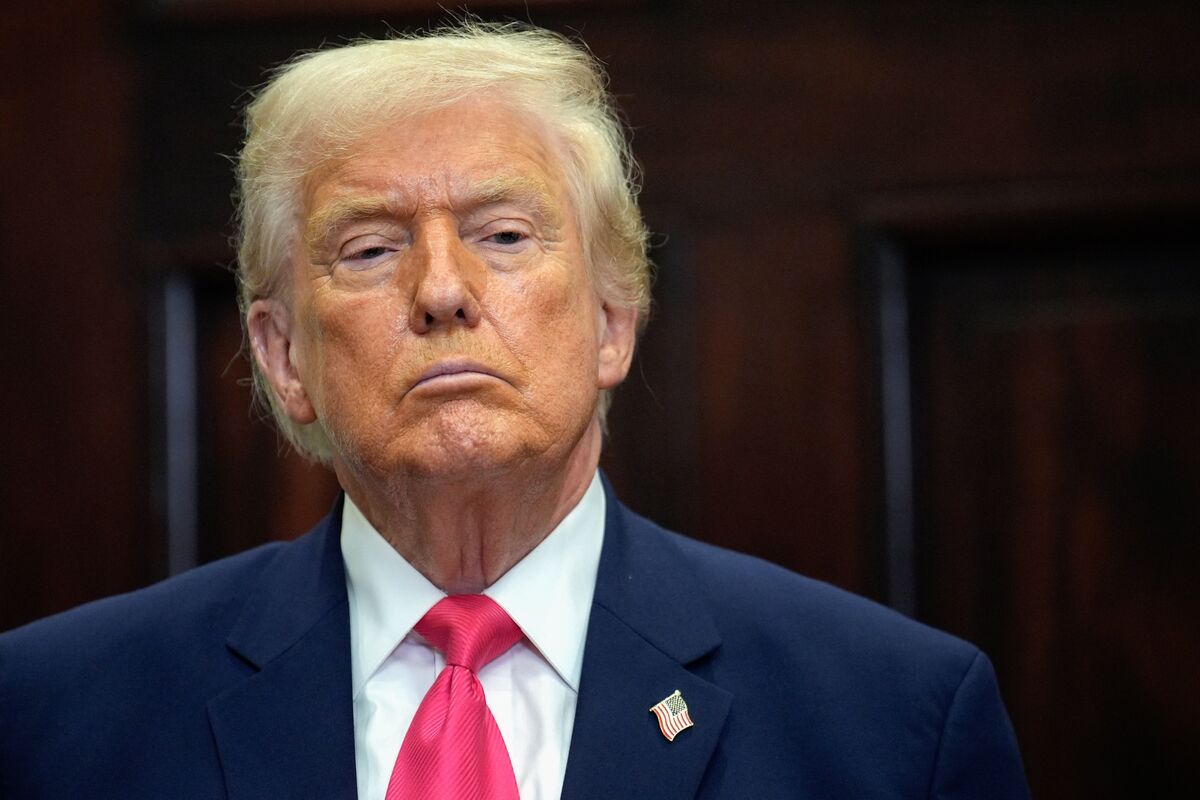
President Trump has signed legislation aimed at deepening U.S. ties with Taiwan, a move that heightens tensions with China and signals a more assertive legislative posture on cross-Strait relations. The action is likely to increase geopolitical risk premiums and warrant closer monitoring of defense contractors, semiconductor and tech supply chains, and potential diplomatic or economic responses from Beijing that could create short-term market volatility.
Market structure: The law increases the probability of sustained US support for Taiwan — net winners are US defense primes (LMT, RTX, GD) and semiconductor capital-equipment (AMAT, LRCX, ASML) and fabs (TSM, NXPI exposure via NVDA/AMD). Expect 6–18 month demand lift for advanced packaging and fab capex: 10–25% potential upside to equipment providers if subsidy/capex announcements materialize, while China-exposed consumer and export names (AAPL, FXI constituents) face downside pressure from trade frictions.
Risk assessment: Tail risks include kinetic escalation or Chinese sanctions that would materially disrupt shipping/TSMC output — a <5% probability but >$100bn economic impact to global tech supply chains. Near-term (days–weeks) market moves will be volatility spikes and safe-haven flows; medium (3–12 months) hinge on appropriation votes and export-control rules; long-term (1–3 years) depends on reshoring speed and capex deployment.
Trade implications: Tactical plays: overweight LMT (2–3% notional), AMAT/LRCX (combined 2–3%), and TSM (1–2%) for 6–12 months on capital spend and security premiums; hedge with short FXI (1–2%) or buy 3-month FXI put spread to monetize China downside. Use options: buy 6-month LMT calls 10–15% OTM (size ~0.75% portfolio) and 3-month AMAT/TSM covered-call overlays after entry; set stop-losses 8–12% and targets +15–30% depending on catalyst realization.
Contrarian angles: The market may be pricing defense/semiconductor winners too optimistically — the bill is strategic posture until Congress funds programs; imply 20–40% of expected capex upside could be delayed >12 months. Historical parallels (post-2018 tariff episodes) show initial sector outperformance followed by multi-quarter mean reversion; consider taking profits on >15–20% rallies and maintain hedges for a blockade or export-control shock.
AI-powered research, real-time alerts, and portfolio analytics for institutional investors.
Request DemoOverall Sentiment
mildly negative
Sentiment Score
-0.25
