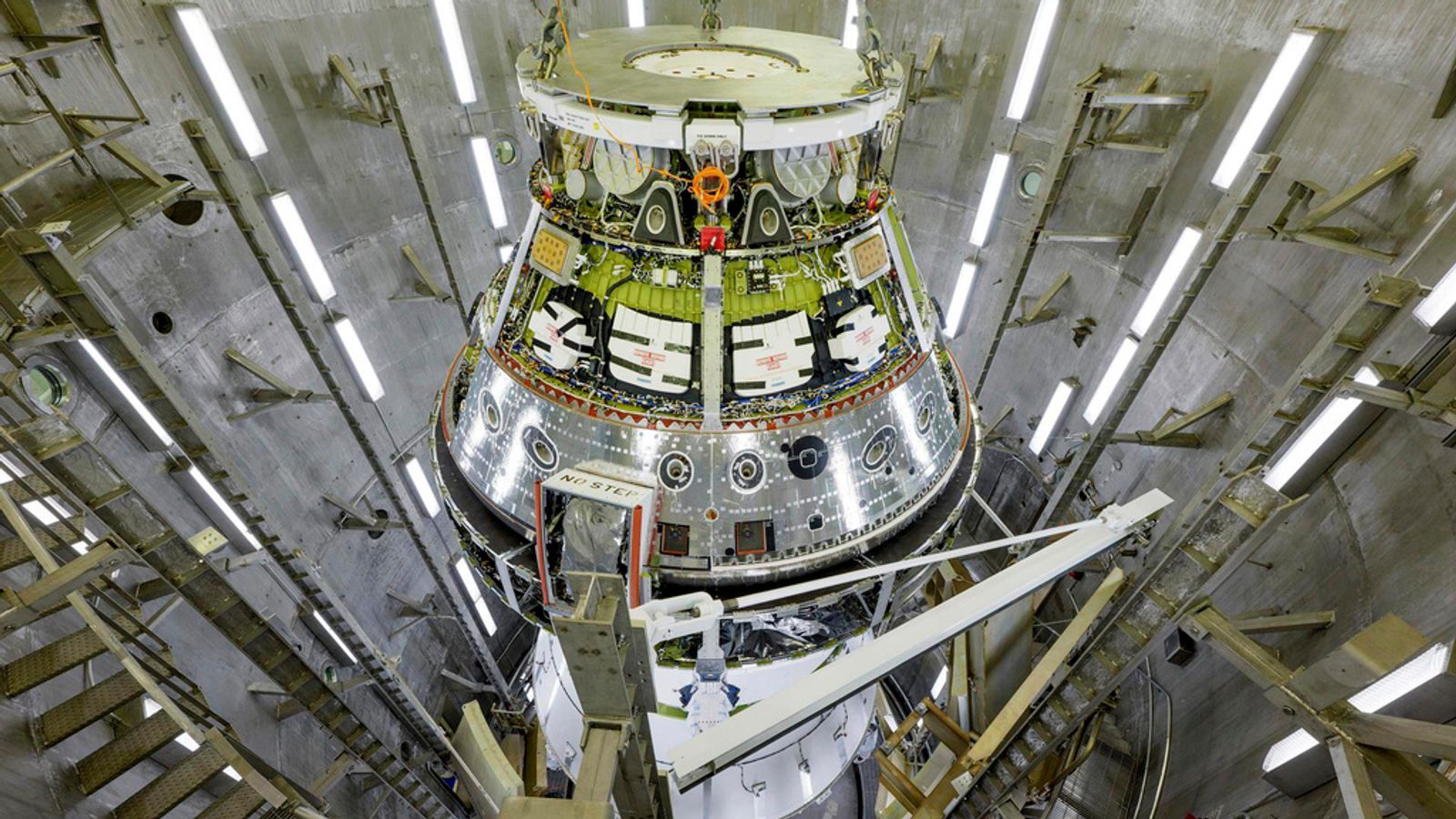
NASA plans to roll the 98m Space Launch System with the Orion crew capsule to Launch Pad 39B around 17 January, with final tests including a wet dress rehearsal at the end of January to load ~3.2m litres of propellant. Artemis 2 will be the first crewed lunar flyby since 1972, carrying four astronauts on a roughly 10-day mission, but the program remains over a year behind schedule after 2022 test-flight issues; engineers continue to address last‑minute glitches (including replacement of a bent abort‑system cable). Launch windows are limited to specific five‑day monthly ranges (6–11 Feb, 6–11 Mar, 1–6 Apr) and lift‑off could be scrubbed for weather, technical faults or range incursions; the mission also sits amid geopolitical pressure tied to US plans for lunar leadership.
Market structure: A successful Artemis 2 rollout and crewed flight mechanically benefits prime contractors (Lockheed Martin LMT, Northrop Grumman NOC, RTX RTX) and specialized suppliers (Aerojet Rocketdyne AJRD, Honeywell HON, KBR KBR) by increasing program backlog, bargaining power and follow‑on contract probability; expect primes to see a 3–8% revenue tailwind over 12–36 months reflecting new lunar work and service contracts. Smaller launchers and commercial space names (Rocket Lab RKLB, Virgin Galactic SPCE) are relatively disadvantaged because government lunar programs favor incumbents and long lead subcontracting, pressuring valuations and raising capital‑needs for small players.
Risk assessment: Short‑term (days–weeks) volatility spikes around rollout (17 Jan), wet dress rehearsal (end of Jan) and launch windows (6–11 Feb, 6–11 Mar, 1–6 Apr). Tail risks include a catastrophic mission failure causing >15–30% downside to primes and program pauses, congressional funding shifts that can shrink multi‑year demand, and single‑source supplier failures that delay deliveries; monitor DoD/NASA appropriations and insurer commentary for immediate signals.
Trade implications: Establish modest exposure: 2–3% long positions in LMT and NOC each, financed by a 0.5–1.0% short position in RKLB (or SPCE) to capture relative funding asymmetry; complement longs with 6‑month 10% OTM call buys sized ~25–40% of the equity stake to leverage a positive outcome while capping downside. Use a 3‑month put spread (30/50% OTM) on RKLB as a lower‑cost hedge; increase Aerospace & Defense ETF XAR allocation by +100–150 bps, enter before wet dress rehearsal and add on a successful rehearsal, trim ~40% on launch success, liquidate on program suspension beyond April.
Contrarian angles: Consensus underestimates supply‑chain bottlenecks — successful flight may not immediately translate to revenue recognition for tier‑2 suppliers, creating a 3–9 month roll forward in earnings; conversely, markets may overprice primes on a single successful mission (short‑term 5–12% re‑rating) and underprice the downside of a failure. Historical parallel: Apollo created decades of sustainment contracts rather than instant commercial markets — policy follow‑through and budgets (not media headlines) will drive multi‑year winners, so trade execution should be conditional on congressional appropriations and contract awards over the next 6–18 months.
AI-powered research, real-time alerts, and portfolio analytics for institutional investors.
Request DemoOverall Sentiment
neutral
Sentiment Score
0.05
