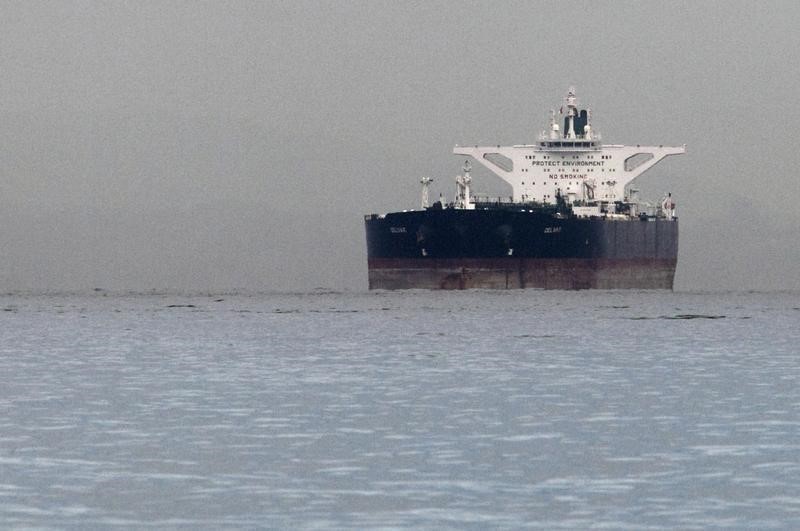
A Kuwaiti crude tanker, Al Salmi, was struck in an apparent Iranian drone attack at Dubai anchorage; a fire was extinguished and all 24 crew are safe, but authorities warned of possible oil spill. The fully loaded vessel carried ~2 million barrels bound for Qingdao, and Brent futures jumped >2% to $115.17/bbl, leaving Brent on track for a 59% gain in March. The incident is the latest in a series of Gulf/Strait of Hormuz attacks, raising near-term supply disruption risk and heightened volatility for oil and shipping markets.
The market is pricing an episodic but meaningful maritime risk premium into crude and freight markets that is likely to persist beyond the initial spike. Even modest, sustained rerouting around chokepoints (adding ~7–14 days to voyages) raises bunker consumption by ~10–15% and can increase voyage costs by $1–$3/bbl, which mechanically supports nearby Brent and widens inland/spot differentials over a 2–8 week window.
Second-order winners will be balance-sheet-light tanker owners and spot tanker charter markets where time-charter rates can double/triple in weeks when risk perceptions rise; logical losers are refinery hubs dependent on just-in-time long-haul crude flows (Asian coastal refiners) and logistics-intensive industries facing both higher sea freight and insurance premia. Insurance and reinsurance spreads are likely to reprice within 30–90 days, pushing marine P&I and cargo underwriters to tighten terms and increase premiums, which raises landed cost volatility for commodity traders.
Key catalysts that will reverse or amplify the premium are discrete and fast: a coordinated naval escort program or major diplomatic de-escalation can remove the premium in days, while a succession of successful strikes or formal port closures can entrench rerouting for months. Monitor TC rates, bunker spreads, and broker reports weekly; crude inventory builds in China or sudden SPR releases are the most effective policy levers to blunt the price impact over 4–12 weeks.
Execution should favor short-duration, convex exposure to freight and oil price volatility rather than long-dated one-way bets. Target instruments that capture short-term freight spikes, energy producer cash-flow sensitivity to $5–15/bbl moves, and defense/security upside in a 3–12 month horizon.
AI-powered research, real-time alerts, and portfolio analytics for institutional investors.
Request DemoOverall Sentiment
neutral
Sentiment Score
0.00
