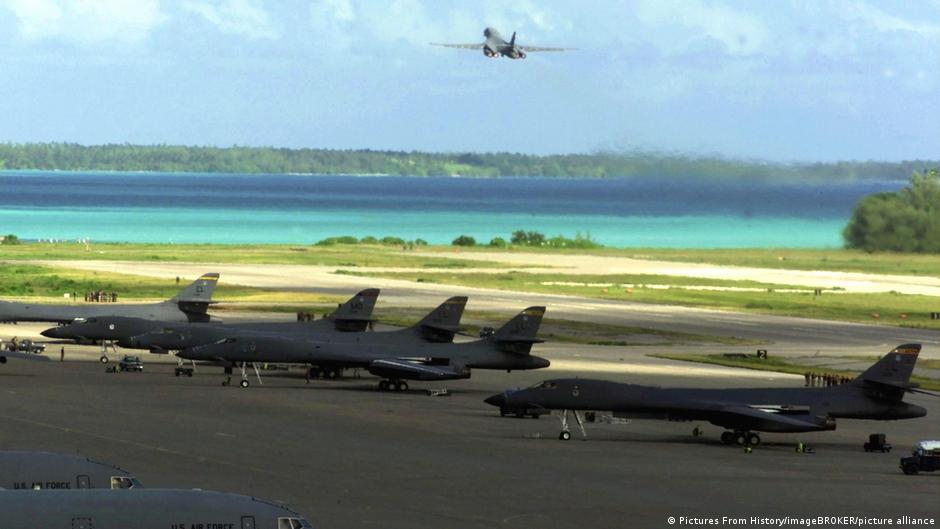
The UK has paused its plan to return the Chagos Islands to Mauritius after criticism from US President Donald Trump, leaving the 99-year Diego Garcia base lease deal in limbo. London said it would only proceed with US support, while Mauritius vowed to pursue diplomatic and legal avenues to secure the islands. The move underscores worsening UK-US relations and adds uncertainty around a strategically important military base.
The immediate market read is not about the islands themselves but about the signaling value to sovereign-risk pricing: when a treaty-facing issue gets subordinated to a changeable White House stance, the UK’s policy credibility premium widens. That matters for long-dated defense and infrastructure commitments because counterparties will now price a higher probability of renegotiation or delay whenever US operational access is implied. The first-order beneficiary is the status quo on base operations; the second-order winner is any asset or contractor whose economics improve when governments avoid politically charged land transfers and preserve existing basing arrangements.
The more interesting effect is on defense supply-chain optionality. If the base remains in limbo, procurement and maintenance spending tied to Diego Garcia’s continuity should remain intact, while any Mauritius-linked transition work gets deferred, effectively extending current vendor contracts and reducing near-term displacement risk for incumbent UK/US contractors. Conversely, if the diplomatic freeze persists into months, it becomes a modest headwind for regional project spend and a tailwind for assets exposed to higher geopolitical friction, including naval logistics, surveillance, and base-support services.
From a catalyst perspective, this is a days-to-months headline risk, not a structural macro event, unless it spills into broader UK-US defense coordination or reopens questions around legality of prior operations. The key reversal trigger is a public softening from Washington or a legal workaround that preserves US basing rights without formal approval; absent that, the default is delay rather than resolution. The market is likely underpricing how often second-order policy freezes become quasi-permanent, which is why the safest expression is to own continuity beneficiaries rather than speculate on a clean diplomatic settlement.
Contrarian take: the consensus may be over-focusing on the geopolitical theater and underestimating the domestic political upside for the UK government in avoiding a perceived concession. If London can frame the pause as a sovereignty-protection move, the negative read-through to sterling or UK assets may be limited, and the episode could even reduce near-term political risk around defense posture. The tradeable edge is therefore in dispersion: short transition uncertainty, long incumbency and continuity.
AI-powered research, real-time alerts, and portfolio analytics for institutional investors.
Request DemoOverall Sentiment
neutral
Sentiment Score
-0.05
Ticker Sentiment
