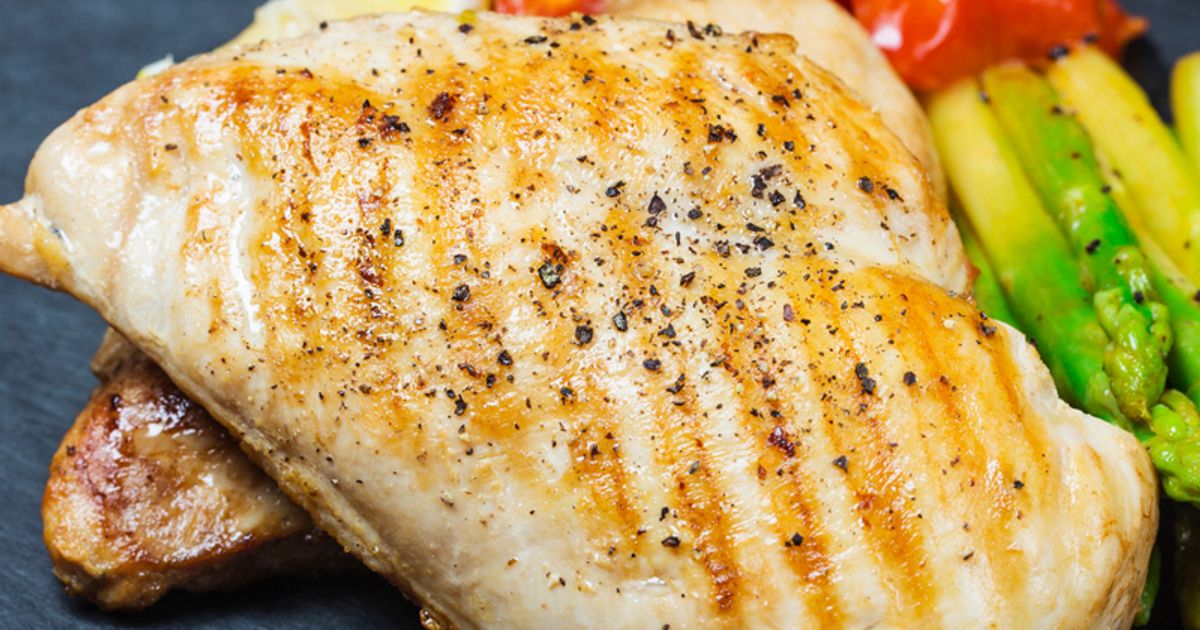
Suzanna's Kitchen recalled approximately 13,720 pounds of ready-to-eat grilled chicken breast fillet products after a third-party lab reported a positive Listeria result; the products were packaged as 10‑lb cases (two 5‑lb bags) and shipped to distribution centers in Alabama, Florida, Georgia, Missouri, New Hampshire, North Carolina and Ohio. The USDA reports no illnesses to date and is advising concerned consumers to contact healthcare providers; the incident is likely to cause localized reputational and short-term supply/distribution disruption for the processor and affected retailers but is not expected to be broadly market-moving.
Market structure: This recall (≈13,720 lbs) is operationally material for Suzanna’s Kitchen and any linked co-packer but immaterial to national poultry supply (US weekly chicken production ≈800M+ lbs), so immediate price impact on commodities is negligible. Winners are large, vertically integrated processors/retailers (scale, brand trust) and private-label lines that can absorb short-run demand; losers are small RTE specialists, third‑party co-packers, and any distributor tied to the lot. Cross-asset: limited bond/FX impact; tiny bump to equity volatility in small-cap food names and marginal short-term put demand for specialty processors.
Risk assessment: Tail risks include a broader outbreak (CDC-confirmed illnesses) causing expanded recalls, class-action suits, and regulatory inspections that could impose CAPEX for sanitation — a 100k+ lb escalation would move the event from local to regional significance. Immediate (days): localized shelf pulls and liability notices; short-term (weeks–months): sales displacement to competitors/private label and possible margin pressure from remediation costs; long-term (quarters+): increased QA compliance budgets and consolidation pressure on small processors. Hidden dependency: reliance on third‑party labs and shared facility lines; catalyst to watch: CDC/USDA illness reports, retailer recalls, and lawyer-led filings.
Trade implications: Tactical ideas favor large-cap defensives: overweight large grocers and diversified processors while trimming small-cap RTE meat exposure. Direct: small long positions in WMT/KR and relative long TSN vs short smaller, lower-margin processor exposure (e.g., PPC) for 1–3 month windows. Options: use cheap put spreads on targeted small processors to asymmetrically hedge downside and call spreads on distributors (SYY) to capture reallocation of distribution flows. Entry: act within 1–14 days; exit or re-evaluate at 30–90 days or upon escalation thresholds.
Contrarian angles: Consensus underestimates the regulatory follow‑through risk — even a small cluster can prompt category-wide testing that raises industry compliance costs 1–3% of sales for exposed players. Conversely, reaction could be overdone for majors; history (leafy-green and limited meat recalls) shows category demand often rebounds in 4–12 weeks, rewarding scale and diversified distributors. Unintended consequence: accelerated retailer in‑sourcing of RTE lines, favoring large grocers' private label over branded specialists.
AI-powered research, real-time alerts, and portfolio analytics for institutional investors.
Request DemoOverall Sentiment
mildly negative
Sentiment Score
-0.25
