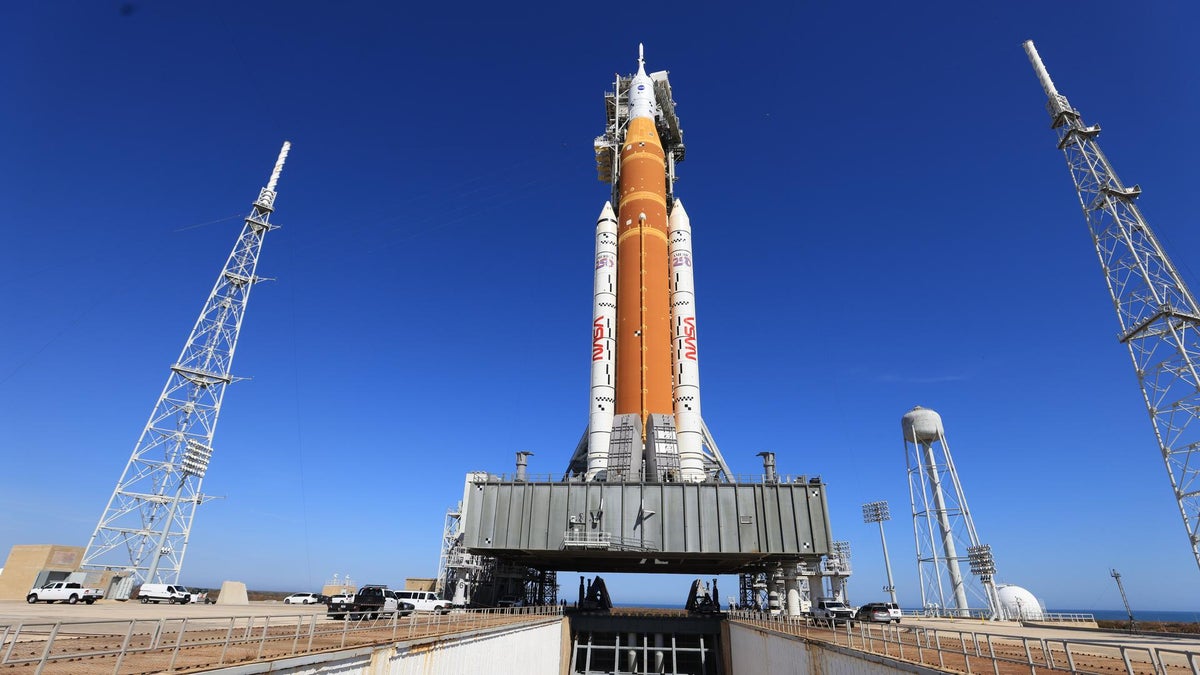
NASA completed a second wet dress rehearsal for the Artemis II mission, successfully fueling the Space Launch System, readying the Orion crew capsule and executing a mock countdown after a Feb. 2 attempt exposed hydrogen leaks and other issues. The crewed, 10-day lunar flyby will carry Christina Koch, Reid Wiseman, Victor Glover and Jeremy Hansen and serves as a critical systems verification ahead of Artemis III, which aims to return humans to the lunar surface by 2028. While the rehearsal reduces near-term technical uncertainty, NASA has not announced a launch date and schedule/execution risk for the program — and for related contractors and suppliers — remains a key consideration for investors.
Market structure: A successful wet dress rehearsal is a positive signal for prime NASA contractors (Lockheed Martin LMT for Orion integration, Northrop Grumman NOC for systems/boosters) and suppliers of cryogenic/hydrogen handling (Chart Industries GTLS). Boeing (BA) faces reputational and execution risk from SLS issues, so market share and pricing power should tilt toward diversified defense primes (LMT, NOC, RTX) and ETFs (ITA/XAR) rather than single-program manufacturers. Cross-asset impact will be small but directional: modest spread tightening in high-grade aerospace credit if program risk recedes, small upside to small-cap supplier equities, and no material commodity or FX moves expected absent a major launch outcome.
Risk assessment: Tail risks include a catastrophic test/launch failure that triggers multi-month program delays, +10-30% cost-overrun headlines, or congressional scrutiny reducing future NASA budgets — plan for a >10% drawdown scenario on related stocks. Immediate window (days) should see limited reaction; weeks–months could re-rate contractors as milestones stack toward Artemis III (2028). Hidden dependencies: subcontractor quality, Russian/supply-chain geopolitics for specialty materials, and government funding cycles; key catalysts are NASA schedule announcements and subcontract award notices in next 3–12 months.
Trade implications: Prefer 2–3% long positions in LMT and NOC, overweight XAR/ITA by +200–300bps, and add targeted supplier exposure (GTLS 0.5–1%). Implement call spreads (6–12 month) on LMT/NOC to capture re-rating while capping premium; pair trade: long LMT vs short BA (equal notional) to express program execution divergence. Entry: scale in over next 2–6 weeks around announcement cadence; targets +15–30% in 6–12 months, stop-loss -12%.
Contrarian angles: Markets may underappreciate that NASA success primarily benefits a narrow set of primes and not the broader commercial launch oligopoly (SpaceX remains dominant). The positive signal is necessary but not sufficient — cost overruns and political risk can invert gains quickly; historical parallels (Shuttle/Constellation) show multi-year budgetary and schedule drag. Beware crowded ETF trades; prefer selective single-name exposure and event-driven option structures to exploit short-term mispricings.
AI-powered research, real-time alerts, and portfolio analytics for institutional investors.
Request DemoOverall Sentiment
mildly positive
Sentiment Score
0.32
