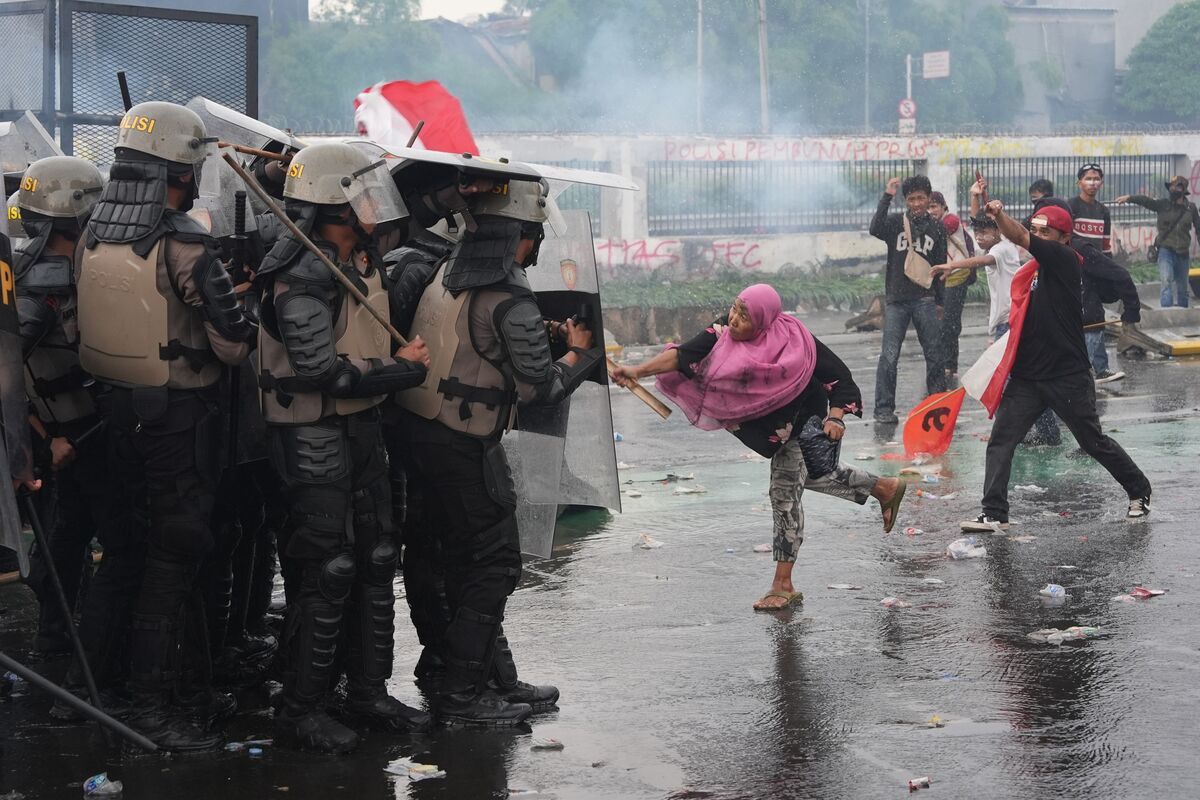
Indonesia is facing significant political and market instability as widespread protests, initially driven by wage and tax grievances, have intensified following the fatal clash involving a police vehicle and a demonstrator. This escalating unrest, characterized by public anger and clashes, has led to a decline in the rupiah and stocks, presenting a major test for President Prabowo Subianto's administration as authorities struggle to restore order.
Indonesia is experiencing a significant escalation in political and social instability, which is directly impacting its financial markets. Protests, initially centered on economic grievances such as wages and taxes, have intensified into violent clashes following the death of a demonstrator involving a police vehicle. This has triggered a negative market reaction, evidenced by a fall in both the Indonesian rupiah and local stocks. The situation poses a critical test for the new administration of President Prabowo Subianto, whose calls for calm are contrasted by the deployment of military personnel and riot police to contain the unrest. The strongly negative sentiment and high market impact score underscore the severity of the crisis, highlighting heightened geopolitical risk for investors exposed to the country.
AI-powered research, real-time alerts, and portfolio analytics for institutional investors.
Request DemoOverall Sentiment
strongly negative
Sentiment Score
-0.80
