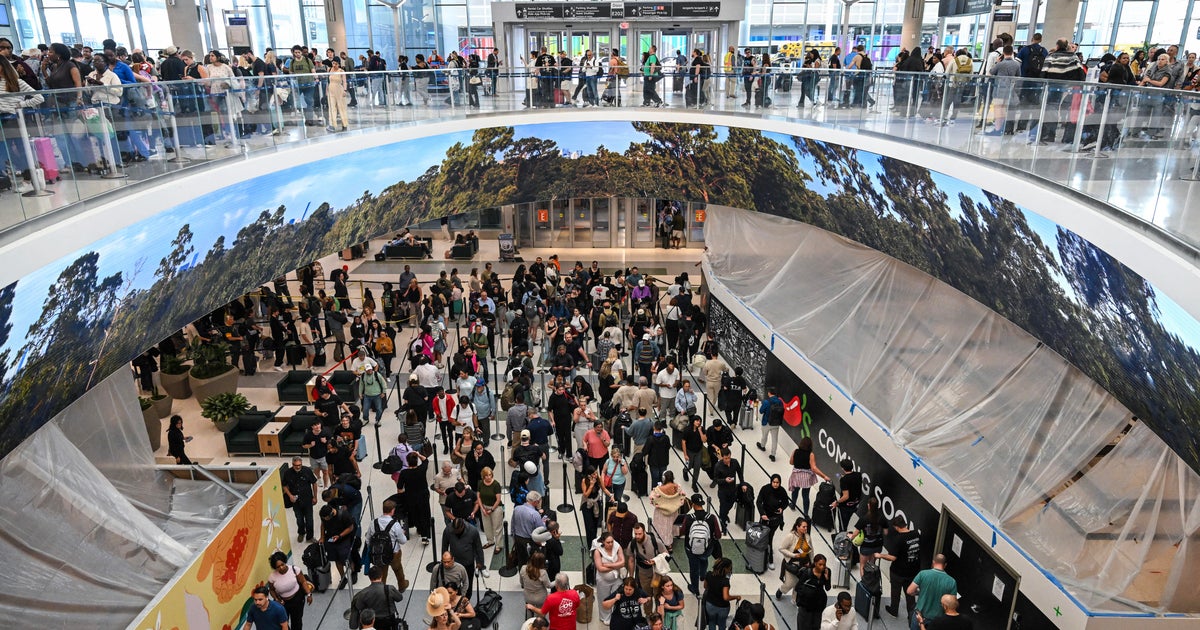
TSA officers have gone more than a month without a full paycheck, with systemwide daily callout rates above 10% and exceeding 40% at some airports, causing hours-long lines and operational strain. President Trump said he will sign an executive order directing DHS Secretary Markwayne Mullin to restart pay immediately, potentially using funds from last summer's "One Big Beautiful Bill Act," but legal authority and the specific statutory provision to be used remain unclear. The Senate approved most DHS funding early Friday but the House has yet to act; the unilateral pay move reduces immediate operational risk for airports but sustains legal and political uncertainty for carriers and federal agencies.
The administration’s unilateral channeling of DHS resources to stabilize airport operations creates a legal and implementation timing arbitrage: courts and appropriations committees can tie up funding for weeks, while operational staffing and traveler behavior adjust over months. Expect payroll delivery to be a binary, short-lived market event (days–2 weeks) but attrition and retraining to be a multi-month drag that requires recurring overtime and contractor spend to fully normalize throughput.
Second-order winners are vendors and contractors that offer durable automation and screening alternatives because airports will prefer capex over recurring headcount instability; incumbents with existing DHS contract footprints get acceleration on backlog work while smaller airports outsource more services. Airlines stand to recover transient revenue-per-flight if checkpoint throughput stabilizes, but airlines with concentrated schedules at affected hubs will see the fastest rebound — creating a dispersion opportunity within the carrier universe rather than a uniform sector lift.
Politically, this sets a precedent for executive reprogramming of appropriations ahead of an election cycle, raising the probability of legal precedent or statutory tightening that could increase budget volatility for DHS programs for the next 1–3 years. Market catalysts to watch: first court challenge or OMB inquiry (7–21 days), actual payroll flow into TSA accounts (3–10 days), and measured rehiring/OT spend in DHS budgets (2–6 months).
AI-powered research, real-time alerts, and portfolio analytics for institutional investors.
Request DemoOverall Sentiment
mildly negative
Sentiment Score
-0.25
