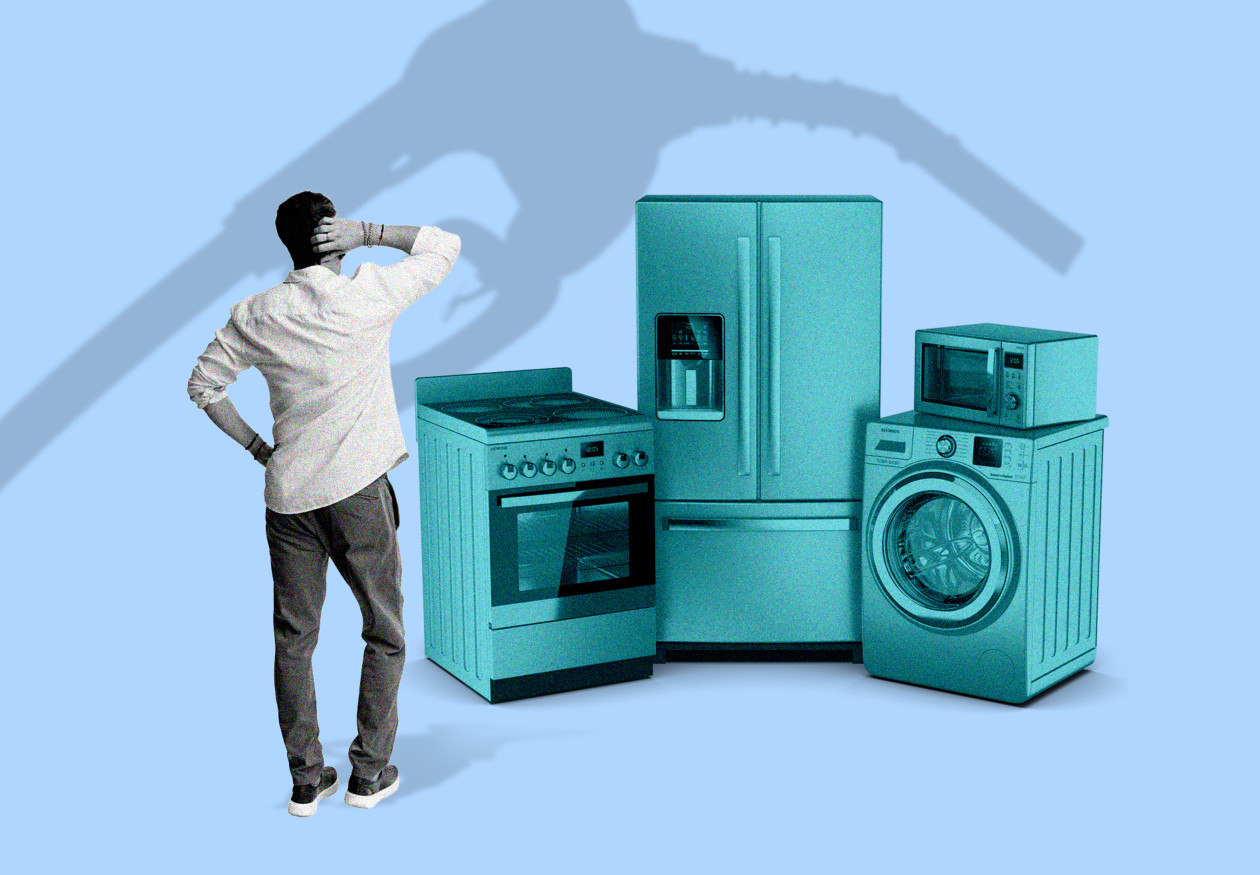
Rising gas prices are dampening Americans’ willingness to buy big-ticket appliances and furniture, with the article pointing to weaker demand for refrigerators, dishwashers and other major home goods. The piece cites earnings reports, polling, foot traffic and spending data showing consumers are pulling back on larger purchases, though high-end buyers appear more resilient. The read-through is mildly negative for appliance, furniture and other discretionary retailers.
This looks less like a simple demand wobble and more like a mix-shift away from discretionary replacement cycles toward necessities and price-sensitive channels. The first-order losers are big-ticket hardline retailers and appliance/furniture vendors with high average order values and financing reliance; the second-order loser is the upstream supply chain, where slower sell-through usually bleeds into lower order cadence for manufacturers, distributors, and freight. If that behavior persists for even one quarter, the margin hit can be outsized because fixed-cost leverage works in reverse when ticket counts fall faster than units. The cleaner relative winner is the affluent consumer segment, which should keep buying premium brands and higher-margin upgrades while the middle bracket defers. That tends to widen dispersion inside retail: value-oriented formats and lower-ticket categories hold up better than discretionary big-box aisles, while premium appliance and home-furnishing brands may preserve mix even if volume softens. The broader macro implication is that high energy prices are not just a tax on spending; they are also a timing mechanism that can push durable-goods demand forward or backward by several quarters. The key catalyst is gasoline normalization. If pump prices retreat meaningfully over the next 4-8 weeks, some of the postponed purchases should reappear quickly because these are deferrable, not destroyed, purchases. The risk is that sentiment converts into outright demand destruction if consumers conclude that housing turnover, wage growth, and financing costs are all working against replacement spending; that would stretch the weakness into the next 2-3 quarters and pressure inventories, promotions, and gross margins. The consensus may be underestimating how uneven this is: broad consumer data can look resilient while the middle-income buyer quietly disappears from the appliance and furniture categories. That argues for positioning around dispersion rather than a blanket consumer short. The best setup is to own the resilient premium end and short the most rate- and fuel-sensitive discretionary exposure until evidence of gas-price relief and improved foot traffic shows up in weekly data.
AI-powered research, real-time alerts, and portfolio analytics for institutional investors.
Request DemoOverall Sentiment
mildly negative
Sentiment Score
-0.25
