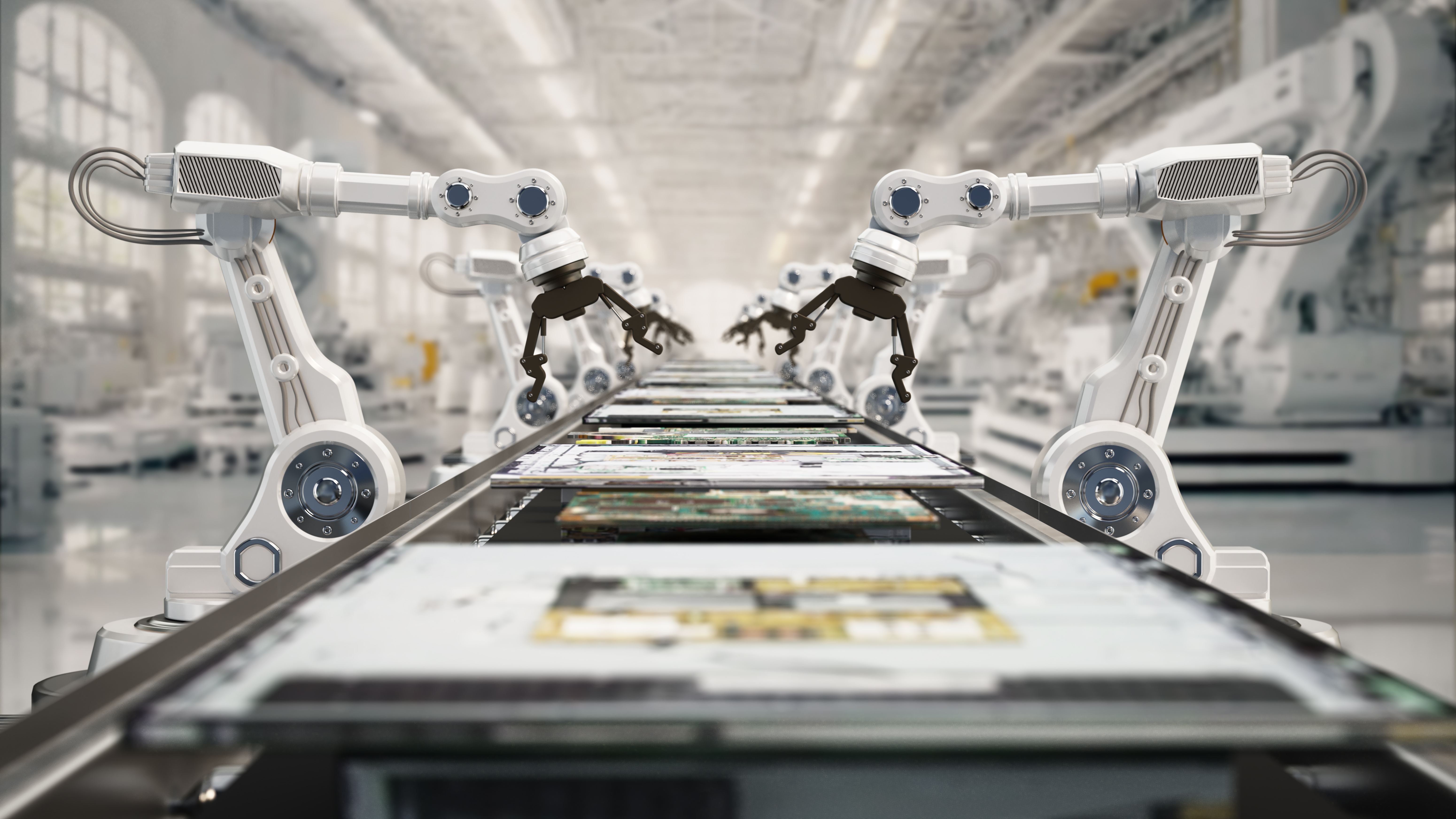
The burgeoning robotics market, projected to reach $130 billion by 2035, is being shaped by three pivotal companies. Amazon leads in operational execution, deploying over a million AI-enhanced robots in its logistics network for efficiency gains. Tesla aims to revolutionize humanoid robotics with Optimus, targeting a disruptive price point that could enable widespread industrial adoption, though its manufacturing and reliability targets are yet to be proven at scale. Concurrently, Nvidia provides the critical AI platforms, software, and simulation tools that underpin virtually all advanced robotics development, securing its position as an infrastructure provider across the industry.
The robotics market is projected to reach $130 billion by 2035, with $38 billion attributed to humanoid robots and $94 billion to industrial systems, indicating a significant growth opportunity. Amazon, Tesla, and Nvidia are identified as controlling essential infrastructure within this burgeoning sector, with the overall market sentiment being "extremely positive" and "bullish" for these companies. This suggests strong analyst conviction in their strategic positioning.
Amazon demonstrates current operational scale and efficiency, deploying over 1 million robots across 300+ facilities, achieving a 10% gain in fleet efficiency through its DeepFleet generative AI coordinator. This established infrastructure handles billions of packages annually, providing a compounding throughput advantage and solidifying Amazon's leadership in logistics automation.
Tesla's Optimus humanoid robot targets a disruptive price point of $20,000-$30,000, significantly below competitors like Boston Dynamics' Atlas ($140,000), aiming to transform humanoids from costly prototypes into viable industrial tools. However, the success of this strategy hinges on proving reliability, safety, serviceability, and lifetime maintenance at scale, as targets are not yet proven costs.
Nvidia provides the critical AI infrastructure for robotics, including the GR00T N1 foundation model, Isaac Lab for training, and Isaac Sim for digital twins, which accelerates real-world deployment by shortening synthetic data generation to hours. Its platform is widely adopted by industry leaders such as Boston Dynamics, Agility, Hyundai, and Foxconn, positioning Nvidia to benefit broadly from the robotics revolution regardless of specific market share leaders.
AI-powered research, real-time alerts, and portfolio analytics for institutional investors.
Request DemoOverall Sentiment
extremely positive
Sentiment Score
0.90
Ticker Sentiment
