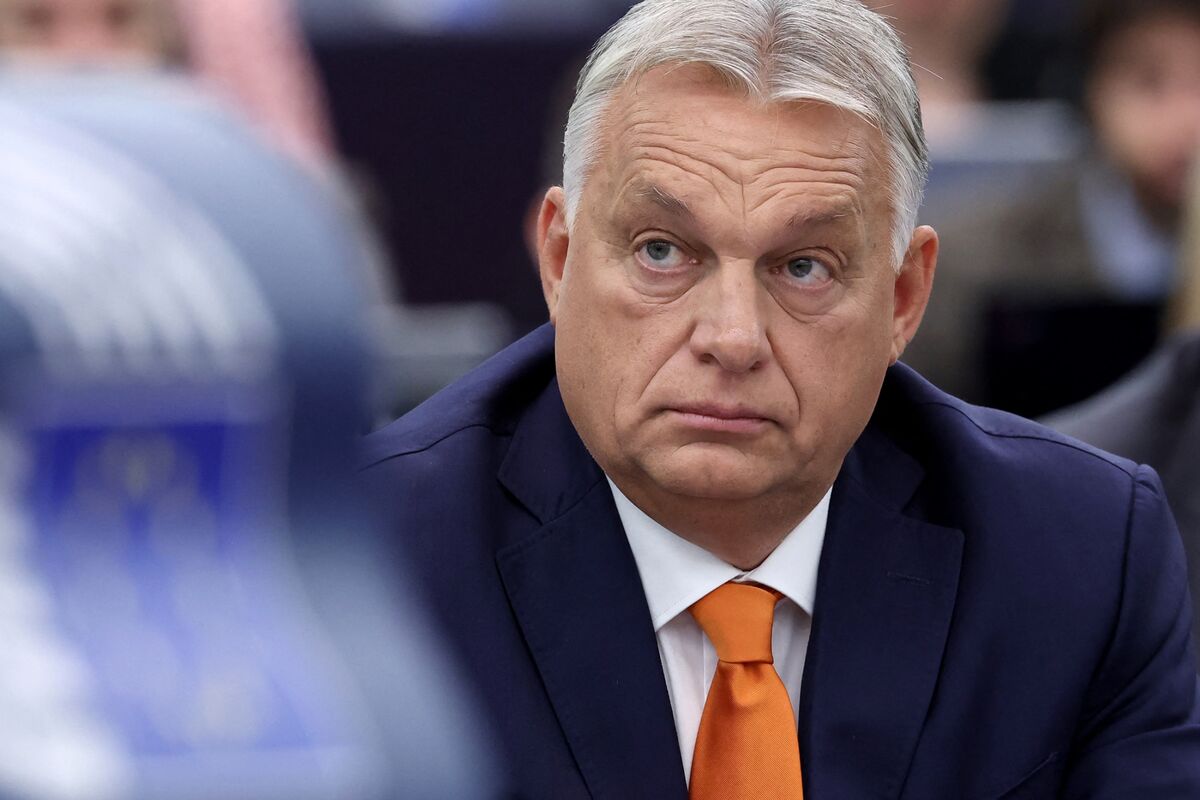
Budapest's mayor, Gergely Karacsony, filed a draft for an extraordinary assembly meeting at the government's request to adopt a resolution declaring the capital at risk of insolvency before year-end, with the opposition blaming recent national tax policies for the squeeze. Prime Minister Viktor Orban said he is prepared to provide a financial lifeline, raising the prospect of central government support that could ease municipal liquidity pressures but also alter sovereign/municipal credit and fiscal dynamics in Hungary. Investors should watch for details of any transfer or guarantees and whether this sets a precedent for state intervention in local finances.
Market structure: A government lifeline to Budapest shifts near-term winners to holders of municipal debt, domestic banks with municipal loan exposure (e.g., OTP.BU), and HUF-sensitive assets if state support reduces default probability. Losers include unsecured municipal bondholders absent guarantees, opposition-linked contractors, and any non-resident holders pricing political-risk premia; pricing power moves toward centrally aligned banks and state-favored contractors. Cross-asset: expect immediate knee-jerk HUF appreciation and 10y Hungarian sovereign yield compression of 30–80bp if support is explicit; Hungarian CDS should tighten materially (20–50bp). Commodities unaffected directly, but regional eurozone bank equities re-rate on perceived sovereign backstop.
Risk assessment: Tail risks include an EU legal spat or rating downgrade if bailout expands fiscal deficit — a low-probability high-impact outcome that could widen 10y yields >150bp and depreciate HUF >10% in 3–12 months. Short-term (days–weeks) hinge on the assembly’s resolution; medium-term (1–3 months) depends on clear transfer mechanics and conditionality; long-term (quarters) depends on whether this becomes recurring fiscal backstop raising sovereign debt/GDP. Hidden dependencies: contingent liabilities on Hungary’s budget and bank balance sheets; second-order effect is higher funding costs for other municipalities and potential ECB/EU political response.
Trade implications: Immediately favor long exposure to Hungarian sovereigns and HUF via 1–3 month instruments if the government announces explicit guarantees within 7 days; add selective bank longs (OTP.BU, 2–3% NAV) with stop at -12%. Use options to shape risk: buy 3-month EUR/HUF puts (strike ~5% below spot) sized 1–2% NAV to capture asymmetric HUF appreciation. Hedge tail-risk by buying 1y HUN sovereign CDS or put protection on core Hungarian bank CDS if yields widen >100bp.
Contrarian angles: Consensus will price a guaranteed rescue; that may be underdone on fiscal strain — if aid is limited or conditional, municipal credit remains impaired and bank subordinated debt could be the real loser. Historical parallels: sovereign backstops (Irish bank guarantees 2010) initially tightened spreads but later increased sovereign stress — watch cumulative contingent liabilities exceeding 2–3% of GDP as a trigger to reverse longs. A mispriced outcome: short-dated HUF instruments may be too cheap to hedge; consider staging exits at 30–50bp of realized spread tightening.
AI-powered research, real-time alerts, and portfolio analytics for institutional investors.
Request DemoOverall Sentiment
moderately negative
Sentiment Score
-0.35
