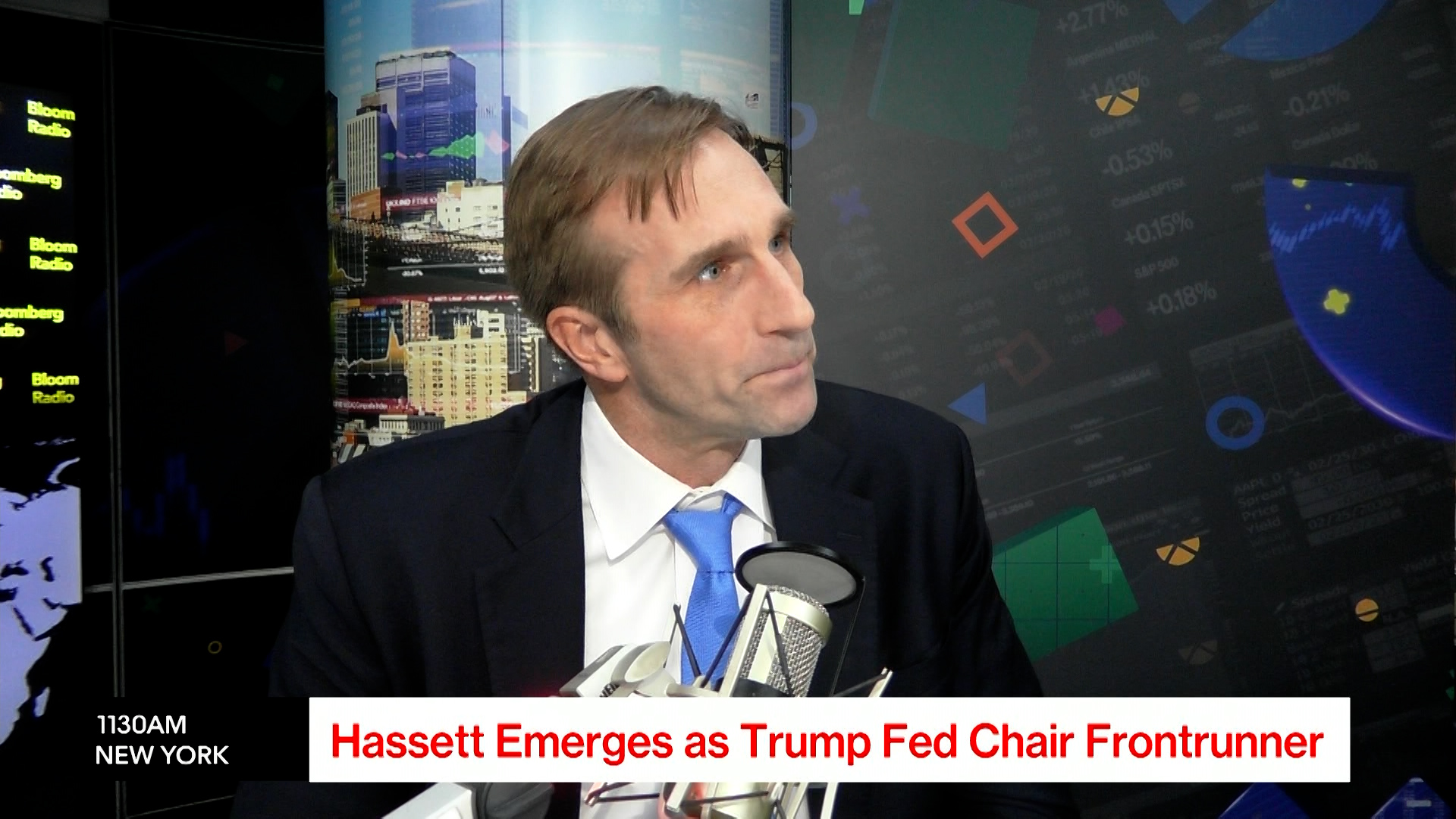
Bloomberg reporting that White House NEC economist Kevin Hassett has emerged as a potential front‑runner for Fed chair sent two- and ten-year yields lower and equities higher, reflecting market sensitivity to Fed leadership and rate policy. Commentators view Hassett, along with Warsh, Rieder and Waller, as credible macro economists but note the risk he could align more with the President’s preference for lower rates; the FOMC remains split and decisions are expected to stay data-dependent. Markets are described as “unsettled” due to a pullback in retail flows, weak retail earnings and sales, and uncertainty around upcoming labour and inflation prints (notably the Dec. 16 payrolls and Dec. 18 inflation data), which are pivotal for rate expectations into year-end.
Market structure: The market is repositioning for a subtly dovish Fed candidate (Hassett) which compresses real yields and benefits long-duration assets and mega-cap growth (GOOGL, NVDA). Expect 2s/10s to trade 10–30bp lower on dovish guidance, lifting P/E multiples by 3–7% for high-duration names while compressing bank NIMs and regional bank valuations. Lower USD and higher EM risk appetite are incremental positives for commodities and EM FX in the 1–3 month window.
Risk assessment: Key tail risks are political interference that erodes Fed credibility (causing a >50bp back-up in yields) and a surprise inflation print (core CPI MoM >0.3%) that forces hawkish repricing. Immediate catalysts: Dec 16 payrolls and Dec 18 CPI; Black Friday/Cyber Monday retail sales are the 2–3 week retail-health acid test. Hidden dependency: weak retail → weaker cyclical capex → semiconductor demand shock in Q1 if holiday sales miss by >5% vs seasonality.
Trade implications: Tactical bias is long selective growth and IG duration vs short banks/cyclicals for 1–3 months. Direct plays: overweight GOOGL (2–3% portfolio) and long 10y real-duration via TLT or futures if 10s <3.8% (threshold for adding). Use call spreads to express upside into Jan–Feb expiries; hedge beta with short KRE (1–2%).
Contrarian angles: Consensus assumes permanent dovish tilt — that is underdone risk if the Fed defends independence. Vol crush in tech options may be overdone; consider selling short-dated volatility against disciplined hedges. Historical parallel: 2019 dovish repricing rallied growth but reversed quickly when labor data surprised; set clear macro stop-loss triggers (unemployment ↑≥0.2ppt or core CPI MoM >0.3%).
AI-powered research, real-time alerts, and portfolio analytics for institutional investors.
Request DemoOverall Sentiment
mildly negative
Sentiment Score
-0.25
Ticker Sentiment
