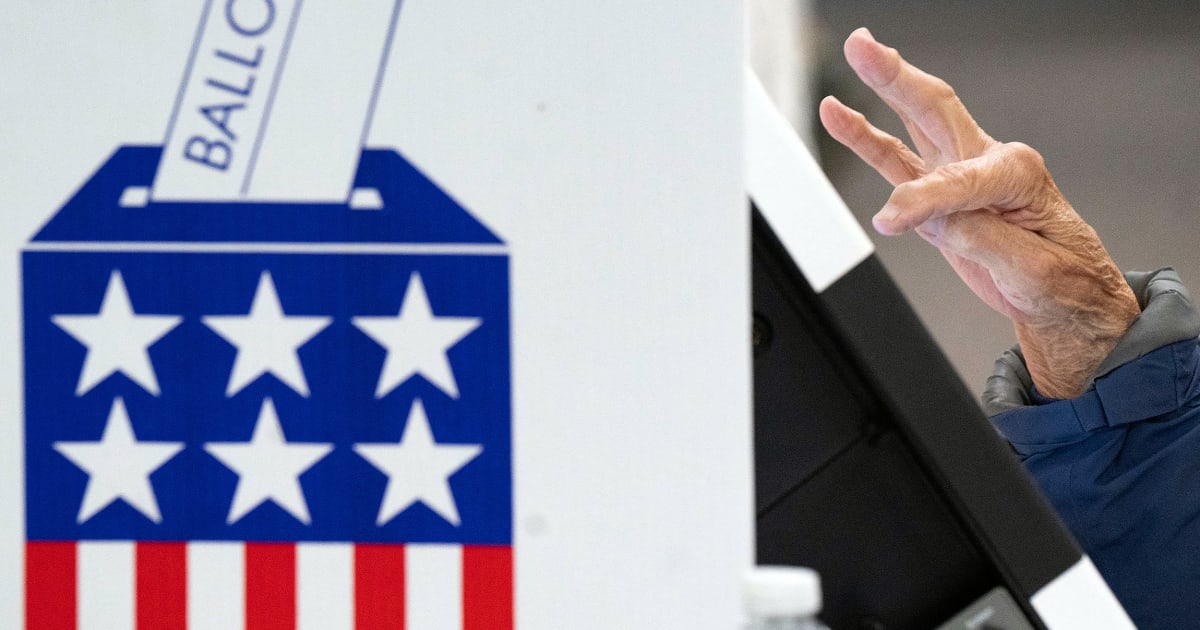
President Trump publicly urged the Republican Party to "nationalize" voting—saying the federal government should take over elections in "at least many, 15 places"—and doubled down after an initial White House and GOP effort to reframe his remarks as a reference to the SAVE Act. His comments, which dismiss constitutional limits that delegate election administration to states, prompted pushback from party leaders and raise governance and legal concerns. For investors, the episode heightens political and rule-of-law risk and increases policy uncertainty around election administration, but it is unlikely to trigger immediate, market-moving legislation.
Market structure: Immediate winners are partisan media and subscription-driven publishers (e.g., NYT) and vendors of election-security/forensics services; losers are cyclical small caps and ad-revenue-dependent platforms if political volatility depresses ad budgets. Pricing power shifts toward paywalled news (+sub growth) and cybersecurity/defense contractors as clients pay premiums for auditable systems; expect short-lived spikes in information-service revenues measurable over 1–3 months.
Risk assessment: Tail risk (low probability, high impact) is a constitutional/legal crisis if any federal attempt to administer state elections proceeds — market dislocation, litigation, and sector-specific regulatory shock could knock 5–15% off risk assets in 1–3 months. Hidden dependencies: state courts, advertising budgets, and insurance/ESG policy responses; catalysts include court decisions, congressional bills (SAVE Act progress), and major local election disputes over the next 30–120 days.
Trade implications: Near-term (days–weeks) favor headline-risk hedges (VIX) and safe havens (gold, high-quality Treasuries); short-to-medium term (weeks–6 months) favor selective longs in NYT (subscription monetization) and small longs in defense/cybersecurity (LMT, GD) versus shorts in ad-dependent social platforms (META, SNAP) if ad spend softens by >5% QoQ. Use option structures (1-month call spreads on VIX, 3–6 month put protection on concentrated equity exposures) to limit carry.
Contrarian angles: Consensus understates monetization upside for trusted news during prolonged political noise — historically NYT has seen 10–30% subscription bumps after sustained political events. Conversely, overbetting on systemic federal takeover is likely overdone; a blocked attempt would snap volatility lower, so size tail-hedges small (0.5–2% of portfolio) and be ready to flip to carry trades if VIX falls >40% from short-term peak.
AI-powered research, real-time alerts, and portfolio analytics for institutional investors.
Request DemoOverall Sentiment
moderately negative
Sentiment Score
-0.45
Ticker Sentiment
