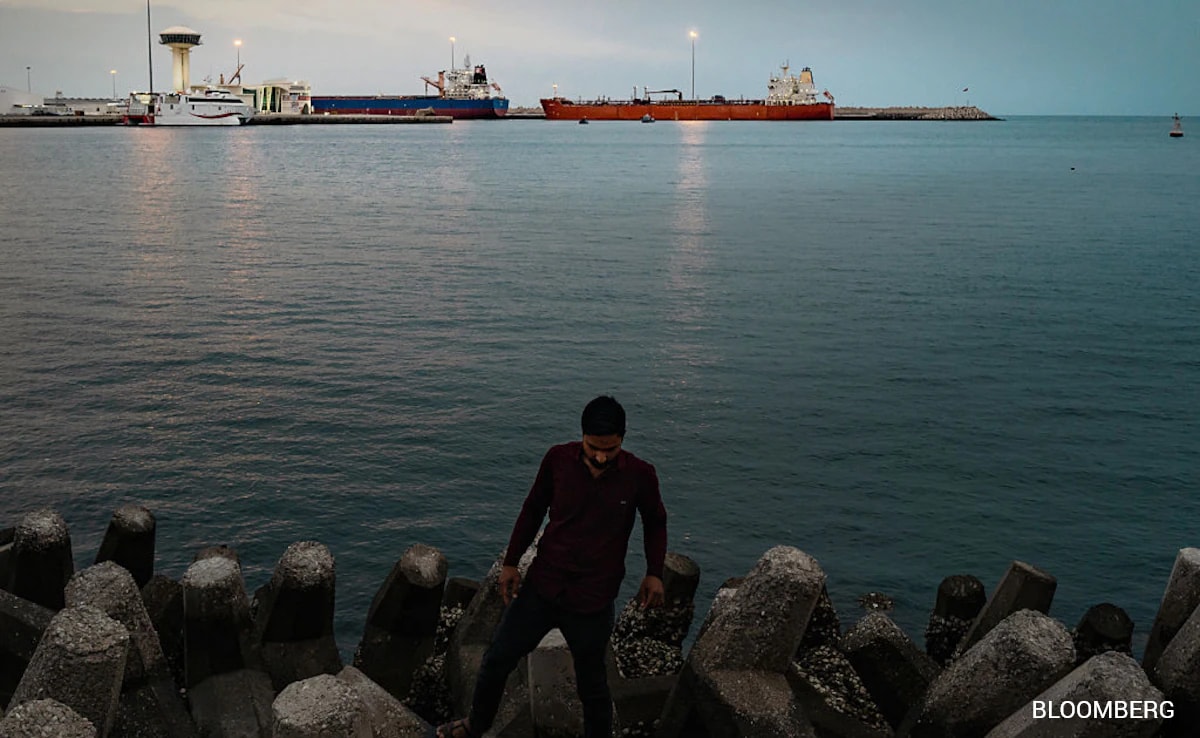
At least 10 foreign-flagged ships bound for India are stranded in the Persian Gulf and 18 India-flagged vessels (with LPG, crude and LNG) are anchored west of the Strait of Hormuz, with 485 seafarers on board. The Strait carries ~40% of India’s crude and ~90% of its LPG in peacetime; insurance premiums have jumped from commercial levels of ~0.04% of insured value pre-war to as high as ~0.7% in one case. Eight Indian-flagged vessels have safely transited, including two LPG carriers (BW TYR and BW ELM) carrying ~94,000 tonnes of LPG, arriving in Mumbai (est. Mar 31) and New Mangalore (est. Apr 1). This disruption heightens short-term supply risk and price/insurance volatility for oil, LPG and LNG flows to India.
The immediate market reaction will be driven less by crude balances and more by transport friction: longer voyages, higher bunker burn, and constrained spot LPG/LNG tanker availability will transmit into visible basis moves (Middle East vs Atlantic), freight rate spikes, and front-month backwardation in small-scale carriers. Insurance and war-risk costs are acting like a per-transaction tariff that raises delivered energy costs discretely for importers with low contract flexibility; that transfers measurable margin pain to downstream consumers and traders who cannot reprice quickly.
Over the coming weeks the dominant drivers will be freight/insurance and logistical churn rather than production cuts — expect volatility concentrated in charter markets and spot cargo arbitrage windows for LPG/LNG and refined products; cash markets will feel this first, term contracts later as sellers reprice. Politically mediated corridor solutions (naval escorts, Iran coordination agreements) are binary catalysts that could unwind most of the premia within days; conversely escalation or formal interdiction regimes would institutionalize the higher-cost trading equilibrium for months.
Strategically, this episode accelerates three medium-term responses: (1) accelerated contracting of regional storage and transshipment capacity, (2) buyers locking longer-term supply contracts with destination flexibility, and (3) increased capital allocation into owner-operators of energy-specialized tonnage and insurance/reinsurance capacity that can price war-risk risk-adjusted returns. Each of these creates actionable, time-phased return streams — immediate convexity in freight/spot commodity curves and multi-quarter carry for capacity/insurance owners.
AI-powered research, real-time alerts, and portfolio analytics for institutional investors.
Request DemoOverall Sentiment
moderately negative
Sentiment Score
-0.45
