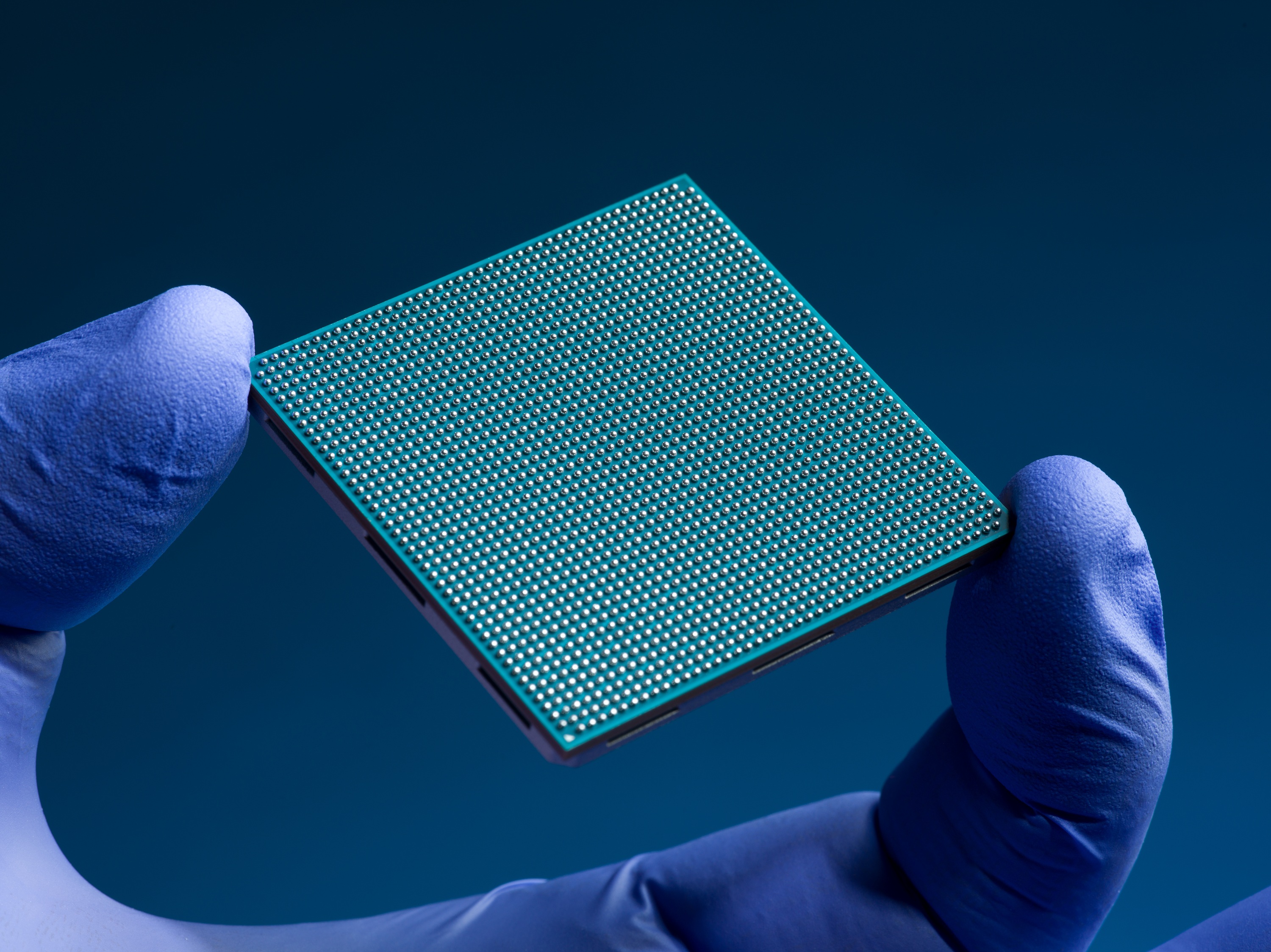
NASA’s High Performance Spaceflight Computing project is advancing a new radiation-hardened processor designed to deliver up to 100x the computational capacity of current spaceflight computers, with test results already showing performance at 500x existing radiation-hardened chips. The chip is intended to enable more autonomous spacecraft, faster scientific data analysis, and future Moon and Mars missions, with commercial applications in defense, aviation, and automotive markets. The announcement is positive for space-tech innovation but is unlikely to move broad markets.
This is less about a single product launch and more about a multi-year reset in the economics of autonomous systems. The key second-order effect is that compute, not propulsion or sensors, becomes the gating item for Mars-class autonomy, so every incremental watt of radiation-tolerant processing unlocks disproportionate mission capability. That shifts value capture upstream toward chip design, packaging, validation, and mission-software stacks rather than the legacy primes that historically owned the spacecraft bill of materials.
Microchip is the obvious near-term beneficiary, but the larger story is that certification creates a very high moat with a long follow-on revenue tail. Space-qualified semiconductors are a tiny TAM today, yet the same hardening and reliability know-how translates into defense avionics, industrial robotics, aviation, and safety-critical automotive compute where qualification cycles are long and customers pay for uptime. If the performance claims hold through qualification, the company is gaining a credibility asset that can support pricing power and share gains far beyond space.
The contrarian risk is timing: “promising test results” does not equal fleet adoption, and aerospace programs can stretch for years before revenue scales. There is also a real substitution risk if commercial compute vendors and FPGA/ASIC alternatives close part of the gap faster than expected, compressing the scarcity premium. In addition, once the technology is validated, the market may overestimate near-term revenue while underestimating the integration burden, which tends to delay meaningful P&L contribution by 12-36 months.
The most interesting competitive implication is that better onboard AI reduces bandwidth dependence, which can flatten demand for some ground infrastructure and partially shift mission value from downlink-heavy architectures to edge-compute architectures. That is mildly negative for legacy telemetry and some communications workflows, but positive for firms positioned around autonomy, onboard processing, and mission software. The article also hints at a dual-use pathway: defense customers can effectively subsidize maturation, making this more investable than a pure-space niche.
AI-powered research, real-time alerts, and portfolio analytics for institutional investors.
Request DemoOverall Sentiment
moderately positive
Sentiment Score
0.55
