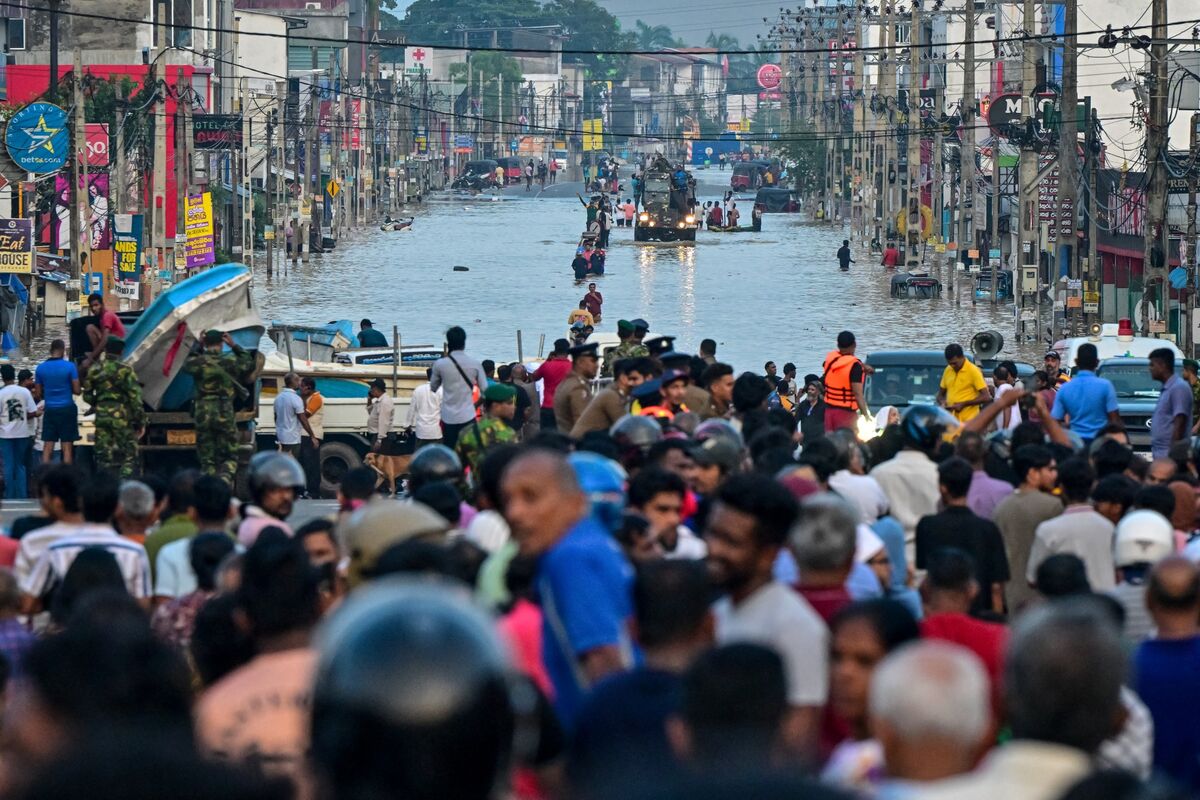
Sri Lanka has established a reconstruction fund to repair damage from Cyclone Ditwah, described by President Anura Kumara Dissanayake as the nation’s "largest and most challenging natural disaster" in about 20 years. No funding amount was disclosed; the fund will be overseen by appointees from the private sector, the Ministry of Foreign Affairs, the Ministry of Finance and the Presidential Secretariat, a move that signals potential near-term fiscal strain and possible implications for public finances and investor attention to Sri Lankan sovereign and infrastructure risk.
Market structure: Immediate winners are global reinsurers and regional materials exporters (steel/cement/logistics) who can capture reconstruction demand; losers are Sri Lanka sovereign bondholders, local banks, tourism/hospitality operators and importers facing LKR weakness. Reconstruction bidding will favor large foreign contractors and material suppliers with FX pricing power, likely boosting pricing power for exporters in India/China by 5-15% on incremental volumes over 6–18 months.
Risk assessment: Tail risks include a sovereign default or political breakdown that triggers 200–500bp spread widening for similar frontier EM names and >20% LKR depreciation; these could occur within 0–90 days if IMF/donor support stalls. Hidden dependencies: low domestic insurance penetration means immediate insurer payouts could be muted while fiscal burden rises, prolonging market stress into quarters; key catalysts are donor/IMF funding decisions within the next 30–90 days and election timelines.
Trade implications: Near-term (days–weeks) prefer defensive EM underweight and buy USD/USTs; short Sri Lanka sovereigns or buy CDS protection if available as a 1–2% tactical hedge, target 20–30% price move. Medium-term (3–12 months) overweight global reinsurers (RNR, RE) and selected materials names (HCMLY, NUE) sized 1–3% each to capture higher premium pricing; hedge via short EEM or EMB put spreads to protect against EM contagion.
Contrarian angles: Consensus may overestimate insurer losses and underweight construction beneficiaries — because insurance penetration is low, reinsurers' earnings upside may be delayed and smaller than feared; conversely, markets may oversell EM beta by 5–10% creating an opening to buy selective EM exposures after spread normalization. Historical parallels (2004 tsunami, 2010 floods) show donor flows often cushion default risk but political mismanagement can prolong credit stress.
AI-powered research, real-time alerts, and portfolio analytics for institutional investors.
Request DemoOverall Sentiment
moderately negative
Sentiment Score
-0.40
