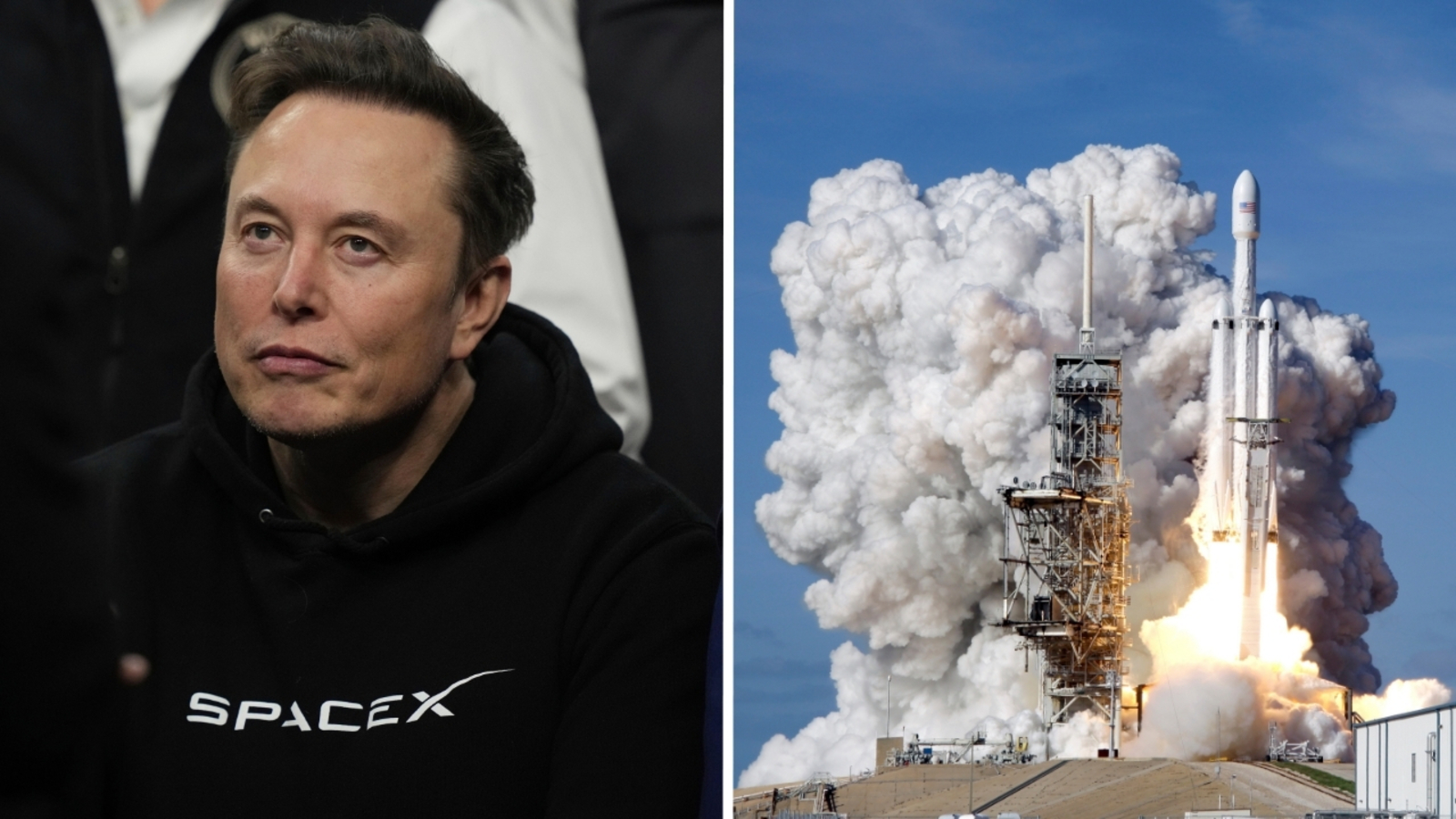
SpaceX has filed confidential SEC paperwork for an IPO that could raise as much as $75 billion and potentially value the company at about $1.5 trillion, with a possible offering as soon as June. At a 42% stake, Elon Musk could become the world's first trillionaire, and the deal would eclipse Saudi Aramco's $29 billion 2019 IPO. SpaceX owns Starlink and recently integrated X and xAI; it has won roughly $6 billion in U.S. government contracts, raising conflict-of-interest scrutiny, and one current investor is Donald Trump Jr. via 1789 Capital.
A large public listing of SpaceX-era assets will act as a liquidity faucet for late-stage private markets and a re-rating event for any public company exposed to orbital infrastructure. Expect private valuations to compress as buyers compare early-stage cap tables to a newly observable public multiple and transparent revenue cadence; this repricing pressure will play out over quarters as post-IPO comps and financial disclosures arrive.
On competitive dynamics, incumbents in satellite connectivity and boutique launch services face two simultaneous shocks: a lower marginal cost curve from scale-led production and a public-market-funded acceleration of capacity buildout. This is likely to accelerate price-based competition for consumer and enterprise broadband, compressing ARPU and increasing churn for legacy GEO/MEO operators over 12–36 months, while advantaging firms with government-contract stickiness or differentiated tech moats.
Governance and political angles create asymmetric tail risk: concentrated control plus cross-ownership of politically sensitive businesses elevates procurement and regulatory scrutiny. Congress and agencies can create de-facto market barriers (contract limits, extra audits, tighter national-security reviews) that would reduce the expected revenue tail; those outcomes tend to crystallize over legislative or budget cycles (6–18 months).
Finally, bank syndicates and public equity flows will matter: a standout “mega-IPO” redistributes underwriting fees and can pull incremental allocation away from thematic tech and late-stage venture allocations, tightening liquidity for other high-growth names near term. Watch issuance calendars and lockup expiries — these flow dynamics will create tradable windows of volatility rather than a single directional move.
AI-powered research, real-time alerts, and portfolio analytics for institutional investors.
Request DemoOverall Sentiment
mildly positive
Sentiment Score
0.25
