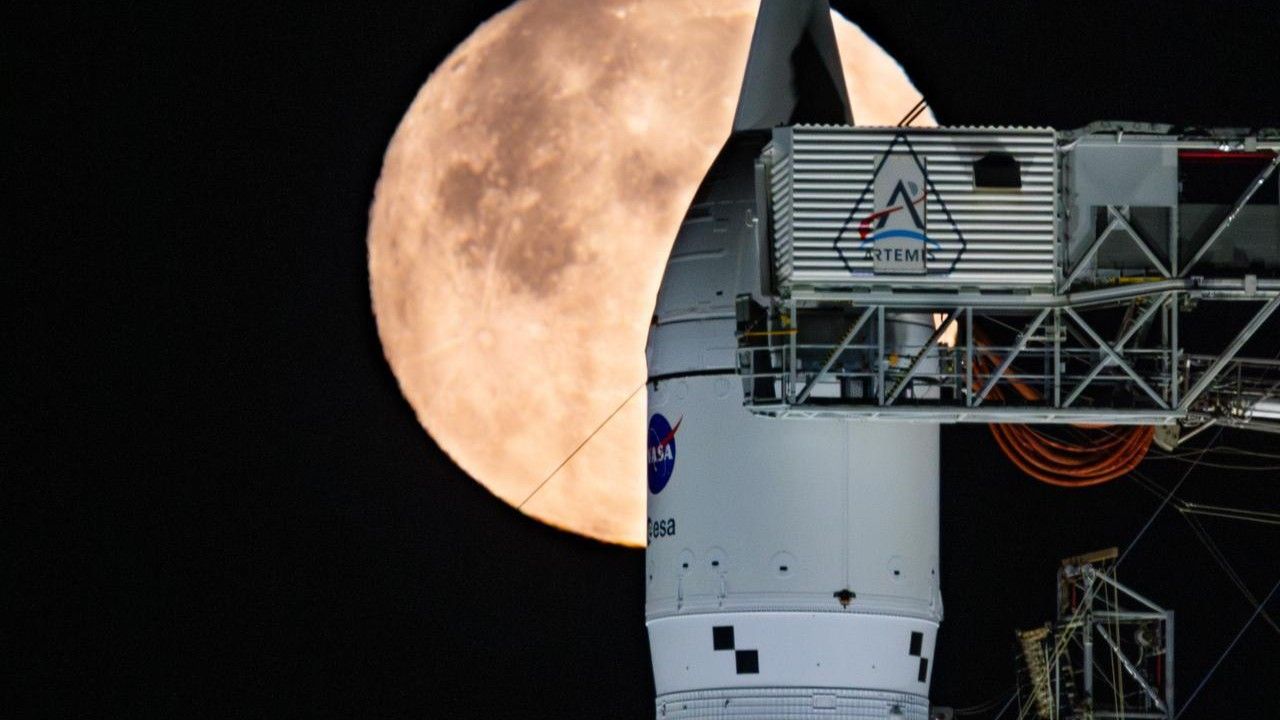
A wet dress rehearsal for NASA's Artemis II Space Launch System (Jan. 31–Feb. 2) was terminated at T‑5 minutes 15 seconds due to a recurring hydrogen leak at the tail service mast umbilical quick disconnect after teams had fully tanked both stages with more than 700,000 gallons of cryogens. The leak mirrors issues from Artemis I, is under investigation (possible seal damage from rollout vibrations), and has moved NASA off its Feb. 8–11 launch window toward targeting March 6–11; officials say repairs may be performed at the pad rather than requiring a rollback to the VAB.
Market structure: Delays in Artemis wet dress rehearsals are a negative catalytic event for launch-integrator reputations and will transiently pressure primes with concentrated program exposure (Boeing BA > Northrop NOC > Lockheed LMT). Suppliers of cryogenic hardware (Chart Industries GTLS) face mixed signals: near-term revenue/timing risk from schedule slips but structurally higher demand for LH2/cryogenic systems over 12–36 months as space programs scale. Broader demand for launch services is unchanged; this is a supply-timing shock, not a demand collapse, so pricing power for commercial launch providers remains intact.
Risk assessment: Tail risks include a rollback to VAB or a major in-flight anomaly that triggers multi-quarter program pauses and congressional scrutiny—probability ~5–15% over 12 months but would depress contractor shares by 15–40%. Immediate (days) impact is volatility spikes; short-term (weeks–months) is schedule-driven revenue timing; long-term (quarters–years) fundamentals hinge on government budgets and fixed-price contract pass-throughs. Hidden dependencies: single-point interfaces (quick-disconnect seals, pad infrastructure) create outsized idiosyncratic operational risk across the supply chain.
Trade implications: Tactical trades should be small, asymmetric and time-boxed: short-dated volatility trades on execution-risk names (BA) and longer-dated selective buys on contractors with diversified portfolios (LMT, NOC) and cryo-equipment suppliers (GTLS). Use put spreads to limit capital at risk and call/credit spreads on suppliers to profit from sell-the-news if schedule slips are priced in. Rotate from pure commercial aerospace into defense primes and infrastructure suppliers if delays extend beyond two months.
Contrarian angles: Consensus focuses on schedule risk; it underestimates contract stickiness—most revenue is cost-plus or milestone-driven, so multi-quarter revenue declines are limited unless NASA rescopes funding. If March windows proceed or patch-at-pad fixes work, shares like BA could snap back 10–25% quickly—creating mean-reversion opportunities. Historical parallel: post-Artemis-1 leaks (2021–22) saw short-lived drawdowns followed by recovery once technical fixes proved durable.
AI-powered research, real-time alerts, and portfolio analytics for institutional investors.
Request DemoOverall Sentiment
mildly negative
Sentiment Score
-0.25
