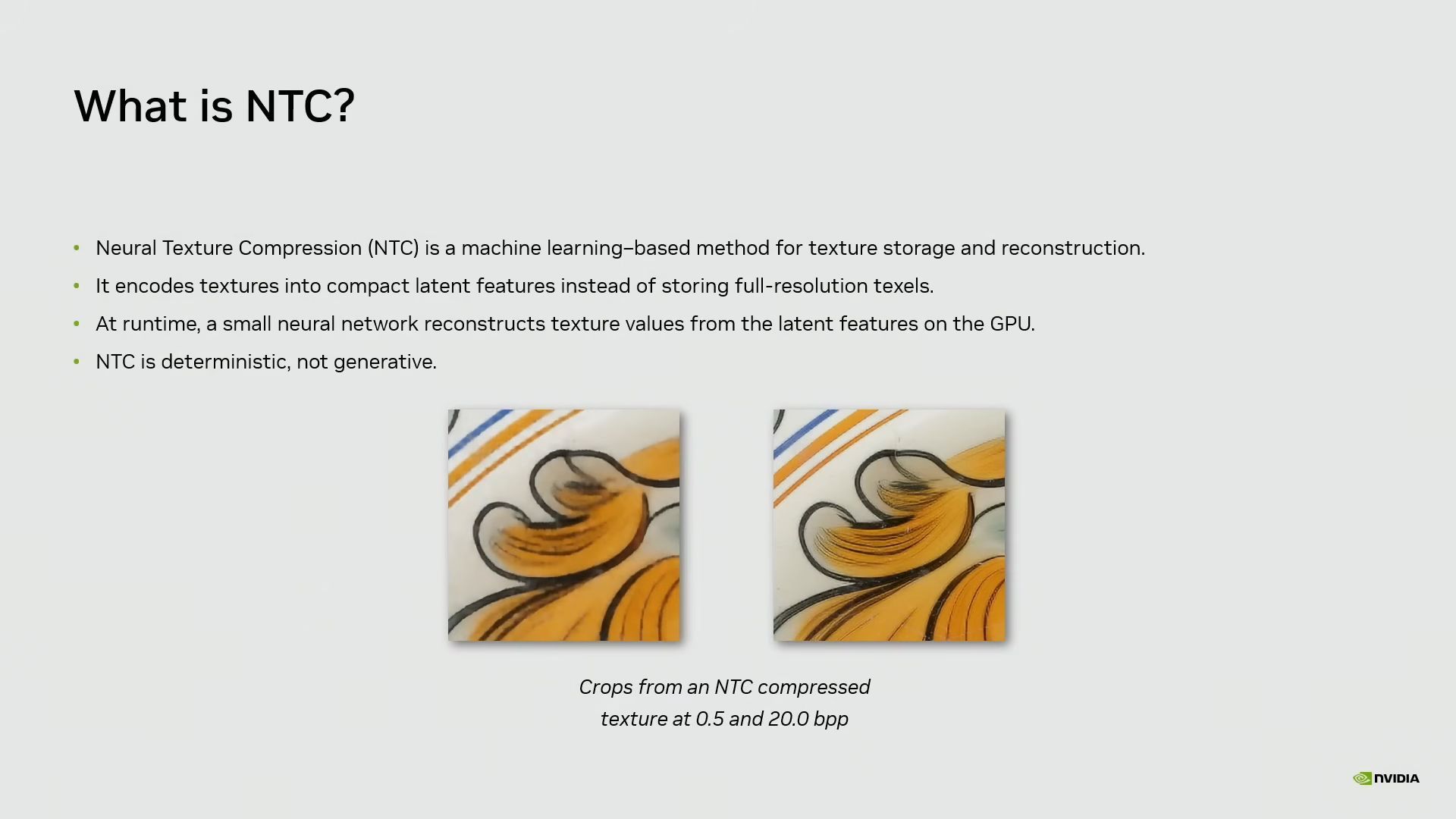
Nvidia demoed Neural Texture Compression (NTC) cutting VRAM use in a Tuscan Villa scene from 6.5 GB to 970 MB (~85% reduction) and compressing a 272 MB texture set to 11.37 MB (~24x reduction) with no visible quality loss. Its Neural Materials demo produced up to 7.7x faster 1080p render times with preserved image quality. Microsoft has standardized similar functionality as Cooperative Vectors in DirectX and Intel/AMD have shown comparable demos; no commercial games support the tech yet but industry adoption is likely.
Neural texture / material decompression shifts cost and complexity from raw memory/storage to matrix compute and software toolchains. That reframes the hardware battleground: vendors that win developer mindshare and provide the most efficient matrix engines capture disproportionate long-term value even if unit GPU volumes compress. Expect product segmentation to bifurcate between high-memory SKUs (for legacy workflows) and tensor-accelerator-optimized SKUs (for neural rendering), changing ASP dynamics and aftermarket demand curves.
Publishers and cloud providers are second-order winners: smaller asset footprints lower distribution friction, speed patch cycles, and expand addressable installs for high-fidelity titles, which boosts LTV for live-service games. Cloud gaming vendors can raise effective utilization per GPU by packing more sessions when textures are compacted and shading work is offloaded to matrix units; that creates optionality for Azure/AWS partners to monetize new GPU-backed services even without selling more physical cards.
Adoption is the gating factor — integration into major engines, middleware tooling, and robust QA across lighting/edge cases will take quarters to a couple of years. Tail risks include perceptible artifacts in adversarial lighting, fragmentary vendor implementations that slow standardization, and an offsetting demand decline for high-VRAM cards if developers universally adopt neural pipelines; conversely, faster standardization via DirectX-level support could accelerate monetization of tensor-capable silicon.
From a market-timing perspective, the clearest catalysts are engine integrations, multisession cloud pilots, and public commitments from top AAA studios; absence of those announcements will keep valuation reaction muted. That creates a defined multi-quarter window to buy optional exposure to winners of the developer ecosystem while keeping downside hedges for adoption delays or competitive parity from AMD/Intel.
AI-powered research, real-time alerts, and portfolio analytics for institutional investors.
Request DemoOverall Sentiment
mildly positive
Sentiment Score
0.40
Ticker Sentiment
